Overview
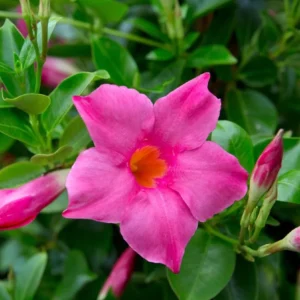
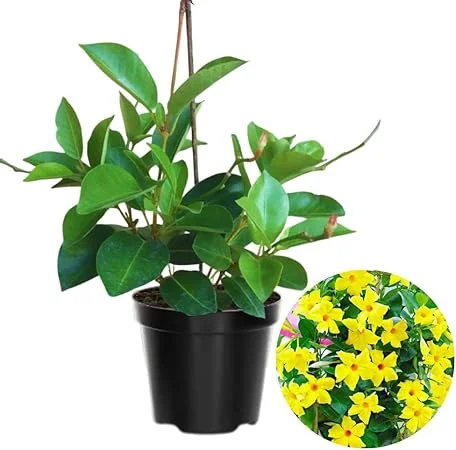
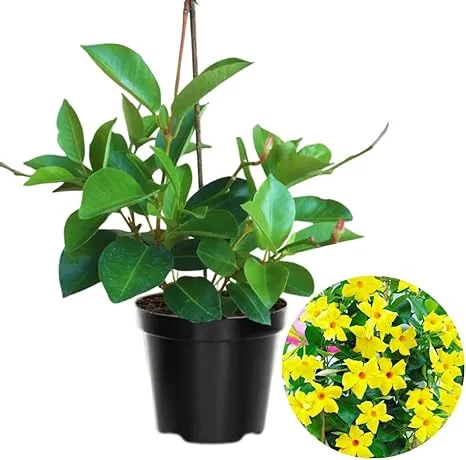
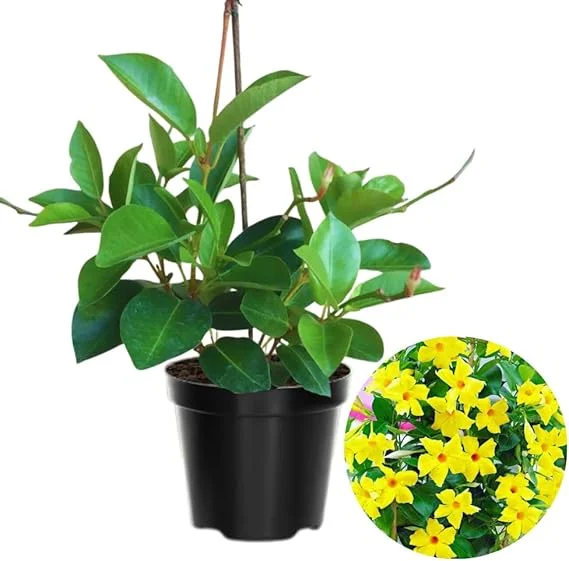
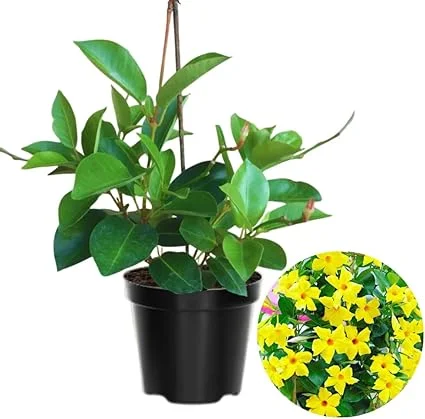
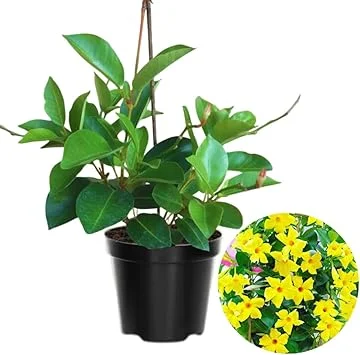
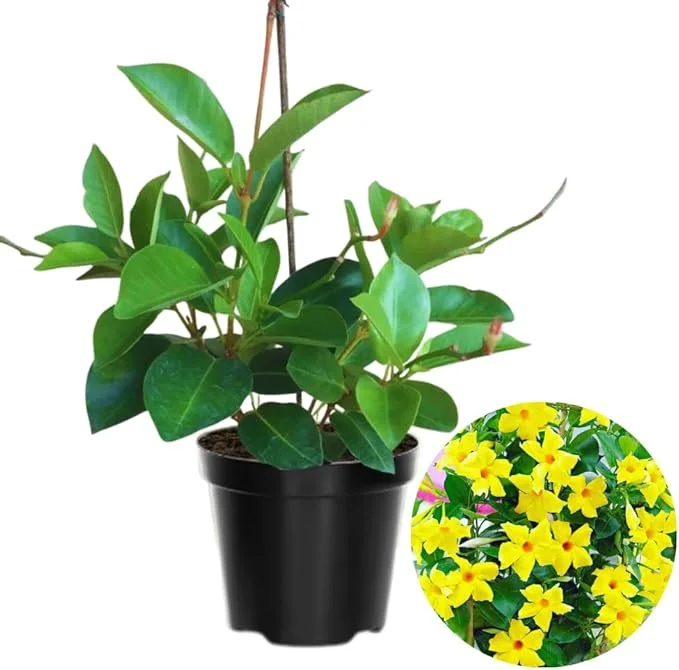
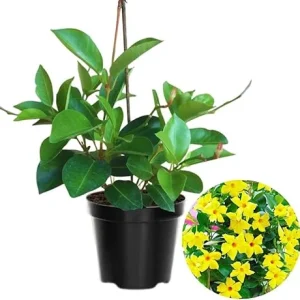
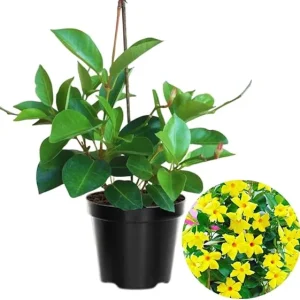
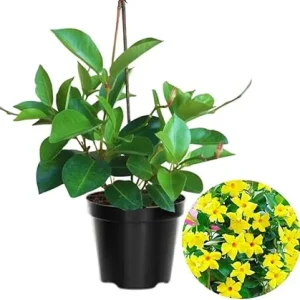
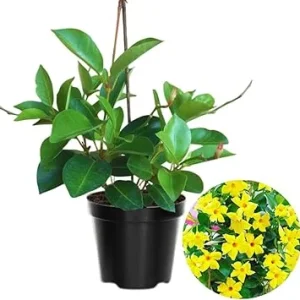
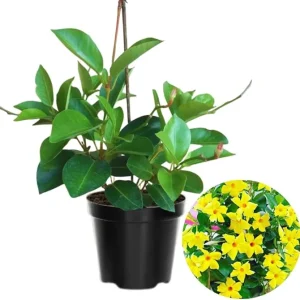
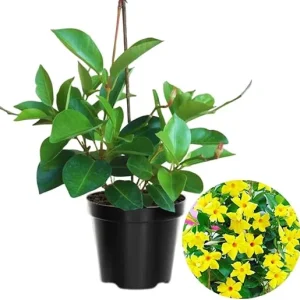
Introduce a touch of tropical elegance to your garden or home with the vibrant yellow mandevilla vine plant. This offering includes two healthy starter plants, each measuring 4 to 6 inches tall, poised to transform your landscape with their dazzling blooms. Mandevilla, scientifically known as Mandevilla sanderi, is renowned for its showy, trumpet-shaped flowers that appear in abundance, creating a spectacular display. These vigorous climbers are perfect for adding vertical interest to patios, balconies, or garden beds, and their cheerful yellow hue brings a sunny disposition wherever they are placed. Often referred to simply as mandevilla flowers, these plants are celebrated for their extended blooming season and relatively easy care, making them a favorite among both novice and experienced gardeners seeking a splash of exotic color.
The Mandevilla is a fantastic choice for those looking to create a lush, vibrant environment. Its climbing habit allows it to elegantly adorn trellises, arbors, or fences, while its versatility also makes it suitable for hanging baskets or container planting. With the right conditions, these tropical beauties will provide continuous blossoms from spring through fall, ensuring your outdoor or indoor space remains bright and inviting. This dual pack of starter plants offers an excellent foundation for establishing a stunning display, promising a garden filled with captivating yellow blooms.
Key Benefits
The yellow mandevilla vine plant offers a multitude of benefits that make it an exceptional addition to any plant collection. Its striking appearance and adaptable nature contribute to its widespread appeal, providing both aesthetic pleasure and gardening satisfaction.
- Prolific and Long-Lasting Blooms: Mandevilla plants are celebrated for their ability to produce an abundance of bright, trumpet-shaped mandevilla flowers continuously from late spring until the first frost. This extended blooming period ensures a consistent burst of color in your garden or patio throughout the warmer months.
- Versatile Growth Habit: As a tropical vine plant, the mandevilla can be trained to climb trellises, arbors, or fences, creating a dramatic vertical focal point. It also thrives in hanging baskets, window boxes, or containers, allowing for flexible placement in various garden settings or even indoors.
- Low Maintenance: Despite their exotic appearance, mandevillas are surprisingly easy to care for. They require minimal pruning to maintain shape and encourage new blooms, and their watering needs are moderate once established, making them suitable for busy gardeners.
- Attracts Pollinators: The vibrant yellow blooms are a magnet for hummingbirds, bees, and butterflies, helping to bring essential pollinators to your garden and enhance its biodiversity. Enjoy the lively activity these charming visitors bring.
- Tropical Ambiance: With their lush foliage and brilliant flowers, mandevillas instantly create a resort-like atmosphere, transforming any space into a tropical oasis. They are perfect for evoking a sense of warmth and relaxation.
- Indoor/Outdoor Flexibility: While primarily grown outdoors in warmer climates, mandevillas can be successfully grown indoors in cooler regions, provided they receive adequate light. This allows you to enjoy their beauty year-round.
- Compact Size for Starters: Receiving two 4-6 inch tall starter plants means you get healthy, young specimens that are easy to establish and will quickly grow to fill their intended space, providing a rewarding growth experience.
Plant Care & Growing Tips
Proper mandevilla care is essential for ensuring your yellow mandevilla vine plant thrives and produces its signature abundant blooms. These tropical beauties prefer specific conditions to flourish, but once established, they are relatively forgiving. Understanding their needs will lead to a spectacular display of mandevilla flowers throughout the growing season.
Sunlight Requirements: Mandevillas absolutely love sunlight. For the most prolific blooming, plant your mandevilla in a location that receives full sun, meaning at least 6-8 hours of direct sunlight per day. In extremely hot climates, some afternoon shade can be beneficial to prevent scorching, but generally, the more sun, the better. If growing indoors, place the plant in your brightest window, preferably a south-facing one, or supplement with grow lights.
Watering Schedule and Soil Moisture: These plants prefer consistently moist, but not waterlogged, soil. Water thoroughly when the top inch or two of soil feels dry to the touch. During hot summer months, this might mean daily watering, especially for plants in containers. Reduce watering in cooler weather and during the plant’s dormant period. Good drainage is crucial; never let the plant sit in standing water, as this can lead to root rot. When considering growing mandevilla, remember that proper hydration is key.
Soil Type and Drainage: Mandevillas thrive in a well-draining potting mix that is rich in organic matter. A good quality all-purpose potting mix, possibly amended with some perlite or sand to enhance drainage, is ideal. For garden beds, ensure the soil is loose and drains freely. Avoid heavy, clay soils that retain too much moisture.
Temperature Range and USDA Hardiness Zone: Being a tropical plant, mandevilla prefers warm temperatures. It thrives in temperatures between 60-80°F (15-27°C). It is not frost-tolerant and will need to be brought indoors or protected when temperatures drop below 45°F (7°C). Mandevillas are typically grown as annuals in USDA Zones 3-8 but can be perennial in USDA Zones 9-11. If you’re in a colder zone, consider overwintering your plant indoors.
Fertilization Schedule and Type: To encourage continuous blooming, feed your tropical vine plant with a balanced liquid fertilizer every 2-4 weeks during the active growing season (spring through fall). Look for a fertilizer with a slightly higher phosphorus content to promote flowering. Reduce or cease fertilization during the cooler, dormant months.
Common Problems and Solutions: Mandevillas are generally robust but can occasionally encounter issues. Pests like aphids, spider mites, or mealybugs can appear, especially on indoor plants. Treat infestations with insecticidal soap or neem oil. Yellowing leaves can indicate overwatering or nutrient deficiency. Adjust watering practices and ensure proper fertilization. Lack of blooms usually points to insufficient sunlight; relocate the plant to a brighter spot if possible.
Size & Details
This offering provides two robust yellow mandevilla vine plant starter plants, each meticulously cultivated to reach a height of 4 to 6 inches upon arrival. These young plants are ideal for establishing quickly in your desired location, whether in a garden bed, a decorative container, or a hanging basket. Mandevillas are known for their vigorous growth rate, and these starters will rapidly develop into impressive specimens, often reaching several feet in length or height within a single growing season when provided with optimal conditions. The mature size of a tropical vine plant can vary significantly depending on whether it’s grown in a container or in the ground, and if it’s provided with a support structure to climb. Typically, they can grow anywhere from 3 to 10 feet tall as a climbing vine, or cascade beautifully in hanging arrangements.
The plants are shipped as healthy starter plants, ready for transplanting into their permanent homes. They will arrive without a pot, carefully packaged to ensure their vitality during transit. Expect the first flush of characteristic mandevilla flowers to appear as the plant matures during the warmer months, continuing to bloom profusely through the fall. These plants are grown for their ornamental value and their ability to bring a continuous display of vibrant color. Understanding mandevilla care from this young stage will set you up for a successful and rewarding gardening experience.
Frequently Asked Questions
- Q: How big does this plant get? A: These are starter plants measuring 4-6 inches tall. With proper care and support, your yellow mandevilla vine plant can grow into a vine reaching 3 to 10 feet in length, depending on whether it’s grown in a container or in the ground.
- Q: Is this an indoor or outdoor plant? A: Mandevillas are primarily outdoor plants in warmer climates (USDA Zones 9-11). However, they can be successfully grown indoors as houseplants in cooler regions, provided they receive ample bright light, making it a versatile tropical vine plant.
- Q: How much sunlight does it need? A: For the best blooming performance, your mandevilla needs at least 6-8 hours of direct sunlight per day. In very hot climates, some afternoon shade can be beneficial to protect the leaves from scorching.
- Q: What condition will it arrive in? A: You will receive two healthy, live starter plants, each 4-6 inches tall. They will be carefully packaged for safe transit and arrive without a pot, ready for you to plant.
- Q: Is this plant easy to care for? A: Yes, mandevillas are considered relatively easy to care for, especially with proper sunlight and watering. They are quite forgiving and reward consistent mandevilla care with abundant blooms.
- Q: How long until it blooms? A: Your young yellow mandevilla vine plant will typically begin to produce its beautiful mandevilla flowers as it matures, usually starting in late spring or early summer and continuing through fall, given adequate growing conditions.
- Q: Can I grow this plant in a container? A: Absolutely! Mandevillas thrive in containers, making them excellent choices for patios, balconies, or porches. Just ensure the container has good drainage and is large enough to accommodate its growth.
- Q: What is the best soil for growing mandevilla? A: Mandevillas prefer a well-draining potting mix that is rich in organic matter. A standard all-purpose potting mix works well, possibly amended with perlite for enhanced drainage.
- Q: Will it survive winter in my zone? A: Mandevillas are not frost-tolerant. In USDA Zones 9-11, they can be perennial. In colder zones, they are typically grown as annuals or can be overwintered indoors by bringing them inside before temperatures drop below 45°F (7°C).
- Q: How often should I fertilize my mandevilla? A: During the active growing season (spring to fall), fertilize your mandevilla every 2-4 weeks with a balanced liquid fertilizer, preferably one slightly higher in phosphorus to encourage more blooms.


Reviews
There are no reviews yet.