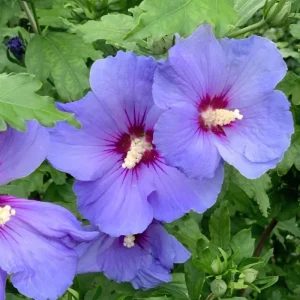
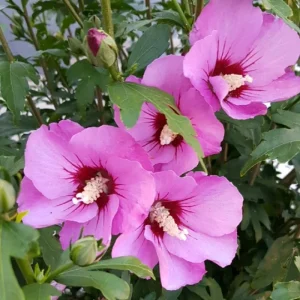
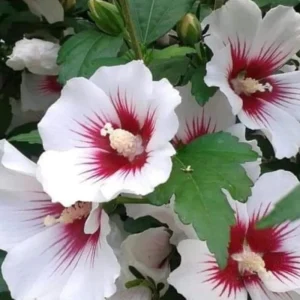
Overview
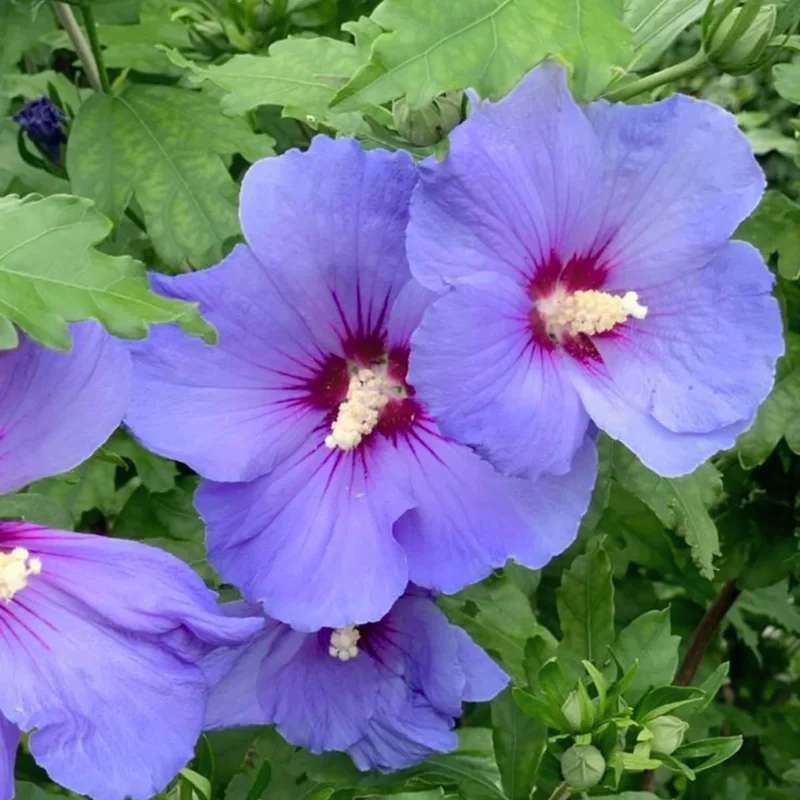
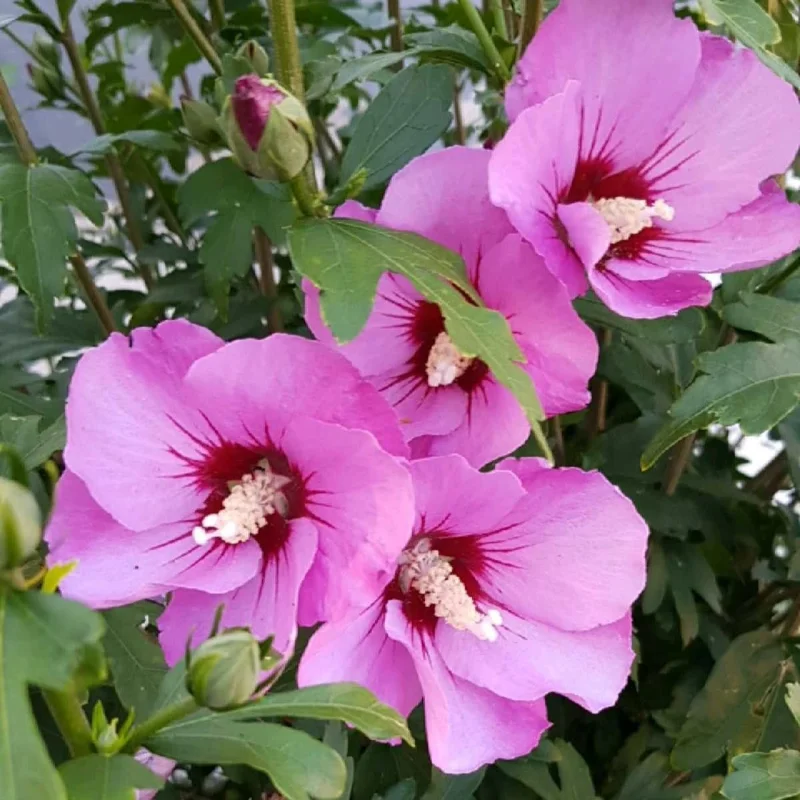
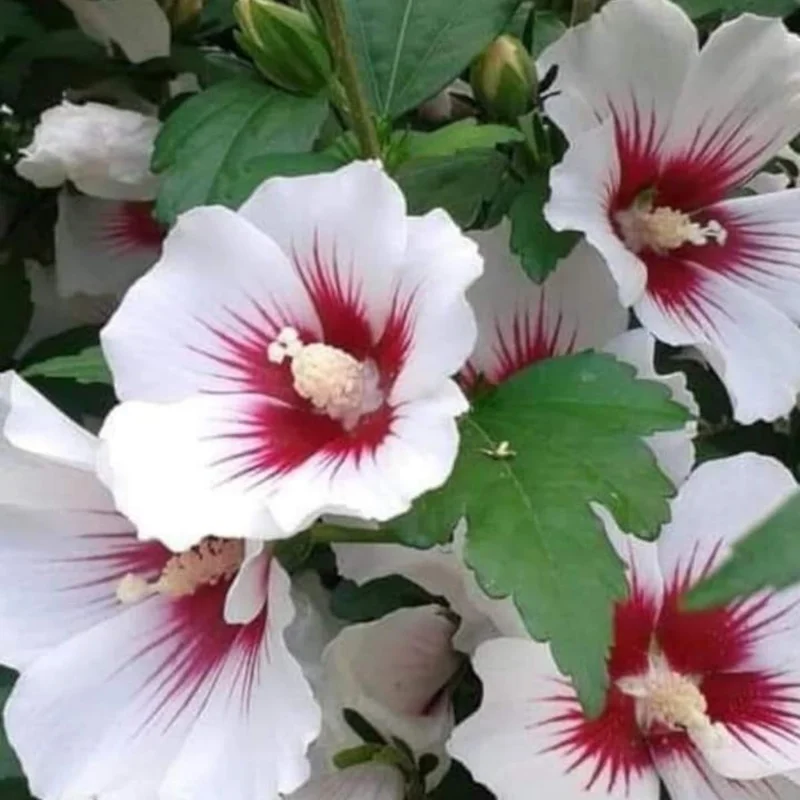
Introduce timeless elegance to your outdoor space with the stunning White Rose of Sharon live plant. This beautiful Althea Hibiscus, often known as the hardy hibiscus bush, is a deciduous shrub celebrated for its profusion of large, trumpet-shaped white flowers that bloom from mid-summer through fall. Arriving as a well-rooted plant, 6-12 inches tall, in a quart pot, it’s ready to establish itself and become a focal point in your landscape. While it may arrive dormant and leafless during late fall and winter, this is a natural part of its growth cycle, ensuring a vigorous return in spring. The Althea Hibiscus plant is a resilient and low-maintenance choice, perfect for gardeners seeking long-lasting beauty with minimal fuss.
The White Rose of Sharon live plant is a versatile shrub that can be used as a specimen plant, in mixed borders, or even as an informal hedge. Its upright growth habit and impressive floral display make it a favorite for adding vertical interest and a touch of classic charm to any garden setting. Enjoy the continuous show of pristine white blooms that attract pollinators and create a serene atmosphere throughout the warmer months. This plant is a true garden workhorse, providing reliable color year after year.
Key Benefits
The White Rose of Sharon live plant offers numerous advantages for any gardener looking to enhance their outdoor environment:
- Extended Bloom Season: Enjoy a prolonged display of beautiful white flowers from mid-summer all the way through fall, providing continuous color when many other plants are fading. This extended bloom period makes it a valuable asset for garden aesthetics.
- Hardy Perennial: As a hardy hibiscus bush, it is robust and resilient, returning year after year with minimal effort. It’s well-suited for a wide range of climates, particularly USDA Zones 5-9, ensuring its longevity in your garden.
- Low Maintenance: This plant is remarkably easy to care for, requiring little more than adequate sunlight and well-draining soil to thrive. It’s an excellent choice for both experienced gardeners and those new to gardening.
- Attracts Pollinators: The large, showy flowers are a magnet for bees, butterflies, and hummingbirds, contributing to a healthy and vibrant ecosystem in your garden.
- Versatile Landscape Use: Perfect for creating stunning garden backdrops, framing patios, or adding a touch of elegance to outdoor spaces. Its mature size makes it suitable for various landscape designs.
- Drought Tolerant Once Established: While it appreciates consistent moisture, the White Rose of Sharon live plant becomes quite tolerant of dry periods once its root system is well-developed, adding to its resilience.
- Deer Resistant: Generally, deer tend to avoid Rose of Sharon, making it a good choice for areas where deer browsing can be a problem for other plants.
Plant Care & Growing Tips
Caring for your White Rose of Sharon live plant is straightforward, ensuring a spectacular display of blooms each year. This hardy deciduous shrub thrives in full sun, meaning it requires at least 6 hours of direct sunlight per day to produce the most abundant flowers. While it can tolerate partial shade, flowering may be reduced. Ensure your planting location receives ample light for optimal growth and bloom production. Proper sunlight is crucial for the health and vitality of your Althea Hibiscus plant.
When it comes to watering, the Rose of Sharon prefers consistently moist, but not waterlogged, soil, especially during its establishment period. Once mature, it becomes more tolerant of drought, but regular watering during dry spells will encourage better flowering. The key is well-draining soil; avoid heavy clay soils that retain too much moisture, as this can lead to root rot. Amend heavy soils with organic matter to improve drainage. This perennial hibiscus is hardy and adaptable, growing well in USDA Zones 5-9.
Fertilization is not always necessary for the hardy hibiscus bush, especially if planted in rich soil. However, if your soil is poor or you want to encourage more vigorous growth and flowering, a balanced slow-release fertilizer can be applied in early spring. Pruning is best done in late winter or early spring while the plant is dormant. This helps maintain its shape, promotes new growth, and encourages a greater abundance of flowers, as Rose of Sharon blooms on new wood. Watch for common pests like aphids or Japanese beetles, and treat with organic insecticides if infestations occur. Proper Rose of Sharon care will ensure a thriving and beautiful plant.
Size & Details
This offering includes one White Rose of Sharon live plant, which arrives well-rooted in a quart-sized nursery pot. The plant’s current height ranges from 6 to 12 inches tall, providing a healthy start for your garden. As a mature specimen, the Rose of Sharon typically grows to an impressive size of 8-12 feet in height and spreads 6-10 feet wide, creating a substantial and impactful presence in your landscape. Its growth rate is moderate, allowing it to establish and reach its mature size within a few years with proper care.
During the late fall and winter months, it is natural for the plant to enter dormancy. In this state, it will shed its leaves and appear leafless. This is a normal and healthy process for a deciduous shrub and is not an indication of a problem. New growth will emerge vigorously in the spring, followed by its spectacular summer blooms. This perennial hibiscus is shipped ready for planting, allowing you to easily integrate it into your garden design.
Frequently Asked Questions
- Q: How big does this plant get? A: The White Rose of Sharon live plant typically grows to a mature size of 8-12 feet tall and 6-10 feet wide, creating a substantial shrub in your garden.
- Q: What size pot does it come in? A: Your plant will arrive well-rooted in a quart-sized nursery pot, with a height of 6-12 inches, ready for planting.
- Q: Is this an indoor or outdoor plant? A: This is an outdoor plant, a hardy deciduous shrub that thrives in garden settings and is well-suited for USDA Zones 5-9.
- Q: How much sunlight does it need? A: The Althea Hibiscus plant performs best in full sun, requiring at least 6 hours of direct sunlight daily to produce abundant blooms.
- Q: Is this plant easy to care for? A: Yes, the Rose of Sharon is considered a low-maintenance and hardy plant, making it a great choice for gardeners of all experience levels. Its Rose of Sharon care requirements are minimal.
- Q: What condition will it arrive in? A: Your plant will arrive well-rooted and healthy. During late fall and winter, it will be dormant and leafless, which is normal for this type of plant.
- Q: When is the best time to plant? A: It can be planted in spring, summer, or fall. If planting in summer, ensure consistent watering during establishment.
- Q: Will it survive winter in my zone? A: This hardy hibiscus bush is suitable for USDA Zones 5-9, meaning it can withstand winter temperatures in these regions and will return in spring.
- Q: Does this perennial hibiscus attract pollinators? A: Yes, the large, showy flowers of the Rose of Sharon are very attractive to bees, butterflies, and hummingbirds.
- Q: Can I use this plant for a hedge? A: Absolutely! Its upright growth habit and ability to be pruned make it an excellent choice for an informal hedge or privacy screen.


Reviews
There are no reviews yet.