Overview
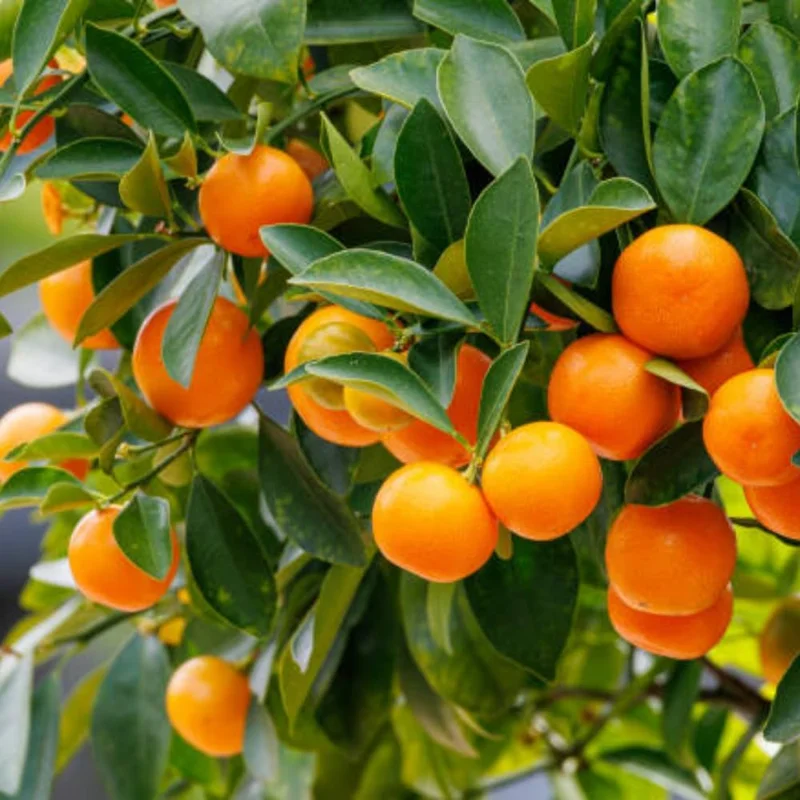
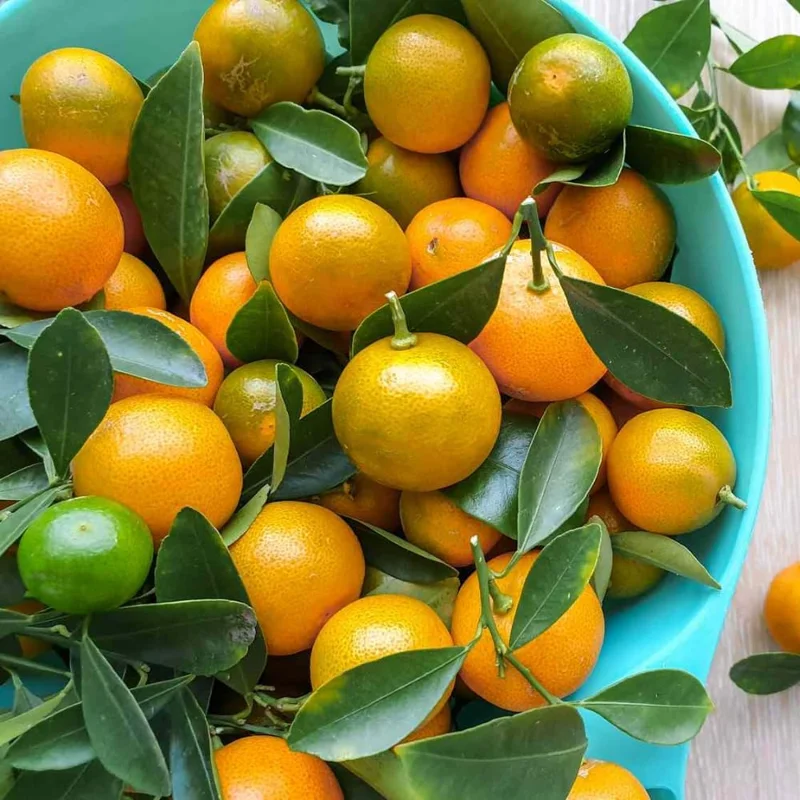
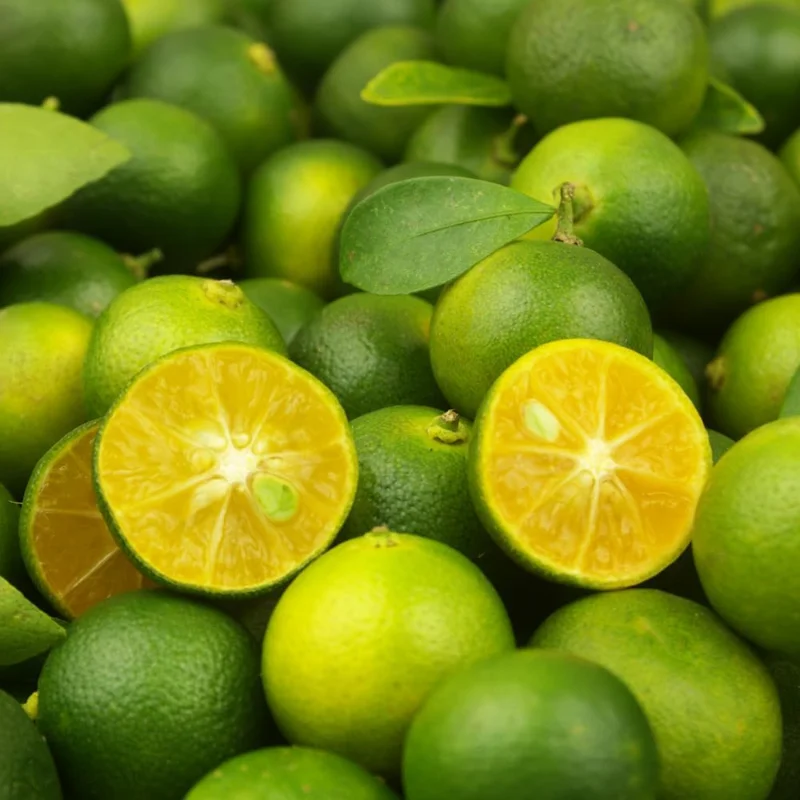
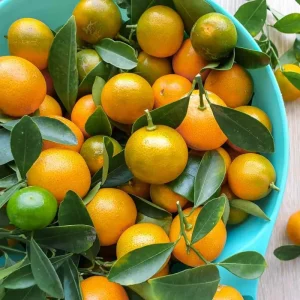
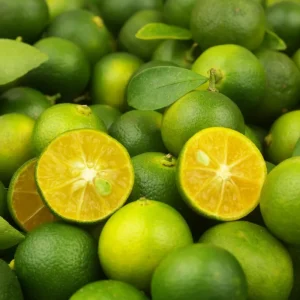
Introduce a touch of the tropics to your home or garden with a magnificent calamansi tree live plant. This vibrant citrus variety, also known as Calamondin or Kalamansi, is celebrated for its lush green foliage, delicate white blossoms, and an abundance of small, tart, orange-like fruits. Originating from the Philippines, the calamondin citrus tree is a versatile and rewarding addition to any plant collection, whether you’re an experienced gardener or just starting your citrus journey. Our premium calamansi tree live plant arrives healthy and well-established, ready to bring beauty and bounty to your environment. It’s an excellent choice for those looking to enjoy fresh, homegrown citrus with relative ease.
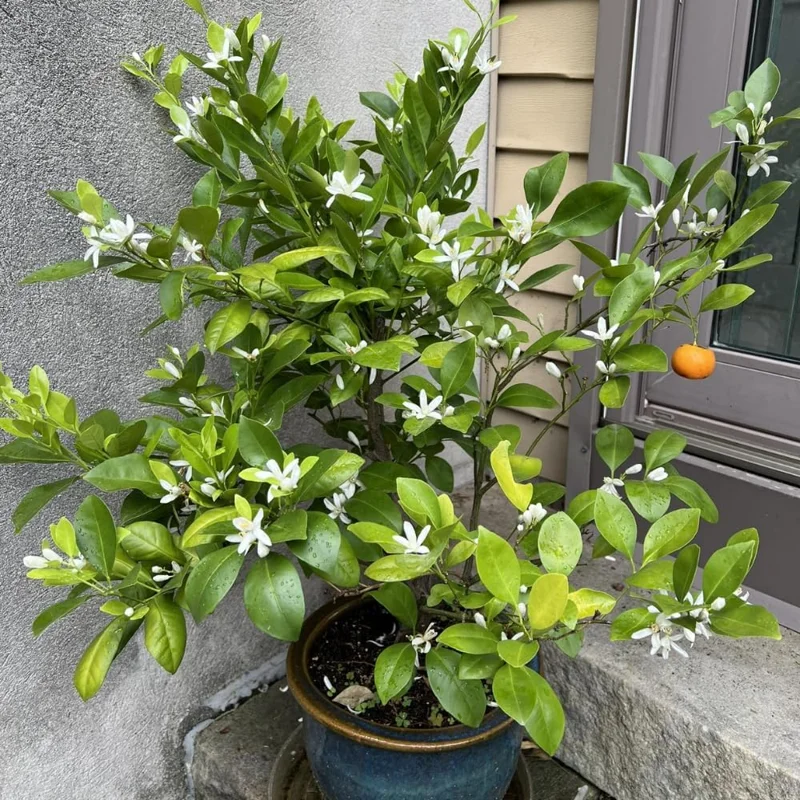
The calamansi tree live plant is not just a fruit producer; it’s also a beautiful ornamental specimen. Its glossy, dark green leaves provide year-round appeal, while the fragrant white flowers add an enchanting aroma to your space. These trees are known for their ability to produce fruit year-round under optimal conditions, providing a continuous supply of the zesty calamansi fruit. This makes it a highly desirable plant for culinary enthusiasts and home gardeners alike. Discover the joy of growing your own citrus with this exceptional kalamansi fruit tree.
Key Benefits
Adding a calamansi tree live plant to your home or garden offers numerous advantages, from its ornamental beauty to its practical culinary uses. This resilient citrus tree is a fantastic investment for anyone seeking fresh, homegrown produce and a touch of natural elegance.
- Year-Round Fruit Production: Under the right conditions, your calamansi tree live plant can produce its unique, tart fruits throughout the year, ensuring a continuous supply for your culinary needs.
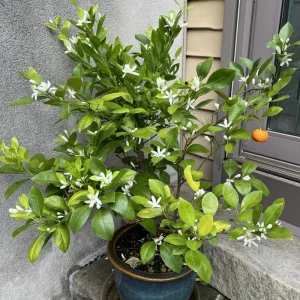
- Fragrant Blossoms: Enjoy the delightful, sweet aroma of the tree’s white flowers, which can fill your home or patio with a refreshing citrus scent, enhancing your living environment.
- Versatile Culinary Uses: Calamansi fruits are highly prized for their sour, distinctive flavor, perfect for beverages, marinades, sauces, desserts, and as a garnish.
- Attractive Ornamental Plant: With its glossy green leaves, fragrant flowers, and vibrant orange fruits, the calamondin citrus tree serves as a beautiful decorative element for both indoor and outdoor spaces.
- Container Growing Friendly: This citrus tree thrives in pots, making it an ideal choice for patios, balconies, or sunny indoor locations, especially for those with limited garden space.
- Low Maintenance: Once established, the calamansi tree live plant is relatively easy to care for, requiring consistent watering and full sun exposure to flourish.
- Health Benefits: Calamansi fruit is rich in Vitamin C and antioxidants, contributing to a healthy diet and lifestyle.
Plant Care & Growing Tips
Proper care is essential for a thriving calamansi tree live plant. These robust citrus trees are relatively easy to maintain, but understanding their specific needs will ensure abundant fruit production and vigorous growth. Providing the right environment and consistent care will allow your kalamansi fruit tree to flourish and become a productive part of your home or garden.
For optimal growth and fruit yield, your calamansi tree live plant requires plenty of sunlight. It prefers full sun exposure, meaning at least 6-8 hours of direct sunlight per day. If grown indoors, place it near a south-facing window or use supplemental grow lights. Soil moisture needs are moderate; water regularly, allowing the top inch or two of the soil to dry out between waterings. Avoid overwatering, which can lead to root rot, but also ensure the soil doesn’t dry out completely, especially when the tree is fruiting. The ideal soil type is a well-draining potting mix, specifically formulated for citrus plants, with a slightly acidic to neutral pH. Ensure the pot has drainage holes to prevent waterlogging.
This calamansi tree live plant thrives in USDA Hardiness Zones 9-11 outdoors. In colder climates, it’s best grown in a container and brought indoors before the first frost. Protect it from temperatures below 30°F (-1°C). Fertilize your calamansi tree every 1-2 months during the growing season (spring and summer) with a balanced citrus-specific fertilizer. Reduce feeding in fall and winter. Pruning can be done to maintain shape, remove dead or crossing branches, and encourage new growth. Watch out for common pests like aphids, scale, and spider mites, and treat them promptly with organic insecticidal soap if needed. Understanding how to provide proper calamansi tree care will lead to a healthy and productive plant.
Size & Details
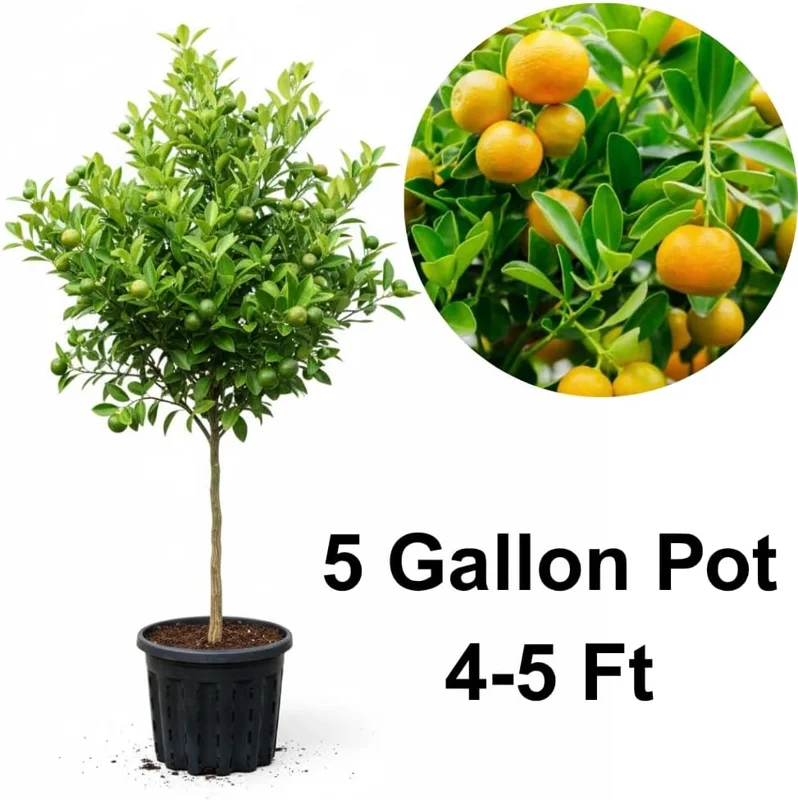
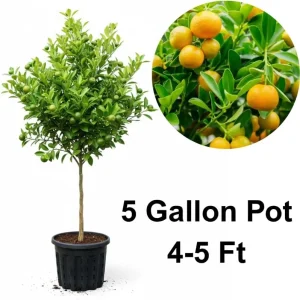
This calamansi tree live plant arrives as a well-established specimen, typically measuring 4 to 5 feet tall from the base of the pot to the top of the foliage. It is carefully nurtured and shipped in a 5-gallon nursery pot, providing a robust root system and a head start for vigorous growth in your home or garden. The plant is ready for immediate placement in its chosen location, whether that’s a larger decorative planter or directly into the ground in appropriate climates. With proper care, this calamondin citrus tree can continue to grow, reaching mature heights suitable for container growing or as a small garden tree.
The tree’s dimensions are approximately 12 x 12 x 40 inches, accounting for the pot and plant. While it produces fruit year-round under ideal conditions, the main blooming period is typically from spring to summer, followed by fruit development. The compact nature of this citrus variety makes it an excellent choice for those interested in growing calamansi indoors or in smaller outdoor spaces. Its relatively fast growth rate means you won’t have to wait long to enjoy its fragrant flowers and delicious fruits.
Frequently Asked Questions
- Q: How big does this plant get? A: This calamansi tree live plant arrives 4-5 feet tall in a 5-gallon pot. With proper care, it can grow larger, especially if planted in the ground, but it also adapts well to container growing, allowing you to manage its size.
- Q: Is this an indoor or outdoor plant? A: This calamansi tree live plant can be grown both indoors and outdoors. It thrives outdoors in USDA Hardiness Zones 9-11. In colder zones, it is best grown in a container and brought indoors during winter.
- Q: How much sunlight does it need? A: Your calamansi tree live plant requires full sun exposure, meaning at least 6-8 hours of direct sunlight daily for optimal growth and fruit production.
- Q: Is this plant easy to care for? A: Yes, this calamondin citrus tree is considered low maintenance once established. Consistent watering, full sun, and occasional fertilization are key to its success.
- Q: What condition will it arrive in? A: The plant arrives in a 5-gallon pot, 4 to 5 ft tall, healthy and ready for planting. We ensure it is well-packaged to prevent damage during transit.
- Q: Can I use calamansi fruit in cooking? A: Absolutely! Calamansi fruit is highly versatile in cooking and beverages, used in marinades, sauces, drinks, and as a tart garnish. It’s a key ingredient in many Asian cuisines.
- Q: When is the best time to plant? A: While this calamansi tree live plant can be planted any time of year in warm climates, spring is generally the ideal time to allow it to establish before summer’s heat. For indoor plants, planting can occur year-round.
- Q: Will it survive winter in my zone? A: This kalamansi fruit tree is hardy in USDA Zones 9-11. If you are outside these zones, it must be protected from frost by bringing it indoors during winter.
- Q: How often should I water my calamansi tree? A: Water your calamansi tree live plant regularly, allowing the top inch or two of the soil to dry out between waterings. Adjust frequency based on temperature, humidity, and whether it’s indoors or outdoors.
- Q: Is growing calamansi indoors difficult? A: Not at all! With adequate sunlight (or grow lights) and proper watering, growing calamansi indoors is quite manageable and rewarding, allowing you to enjoy fresh fruit even in colder climates.


Reviews
There are no reviews yet.