Overview
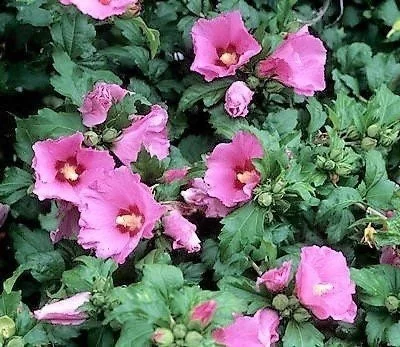
Transform your garden with the exquisite Aphrodite Rose of Sharon live plant, a stunning deciduous shrub known for its spectacular, large, pink-purple flowers with a deep red eye. This beautiful Hibiscus syriacus plant, often referred to as Syrian ketmia or shrub althea, is a garden favorite for its dramatic, long-lasting blooms that appear from mid-summer into fall, providing vibrant color when many other plants are fading. Each purchase includes one healthy plant in a 1 gallon Althea pot, carefully nurtured and ready to thrive in your outdoor space. Originally native to south-central and southeast China, this resilient shrub has been widely cultivated and introduced across Asia and is particularly cherished in North America.
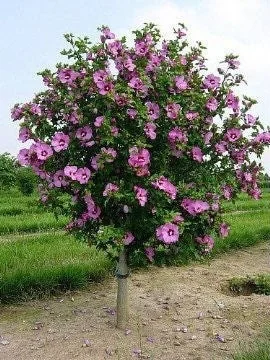
The Aphrodite Rose of Sharon live plant is a robust and easy-to-grow shrub, making it an excellent choice for both novice and experienced gardeners. Its upright, vase-shaped habit makes it ideal for use as a specimen plant, in mixed borders, or as an informal hedge. The lush green foliage provides a beautiful backdrop to the showy flowers, which attract pollinators like butterflies and hummingbirds. This variety is celebrated for its sterile or near-sterile seeds, meaning it produces fewer unwanted seedlings compared to other Rose of Sharon types, making garden maintenance simpler.
Embrace the charm and beauty of this exceptional flowering shrub. The Aphrodite Rose of Sharon live plant offers a reliable display of color and texture, enhancing the aesthetic appeal of any garden setting. Its adaptability to various soil types and urban conditions further solidifies its status as a versatile and desirable landscape plant.
Key Benefits
Adding the Aphrodite Rose of Sharon live plant to your garden brings a multitude of advantages, offering both aesthetic appeal and environmental benefits. This resilient shrub is a fantastic choice for anyone looking to enhance their outdoor living space with minimal effort.
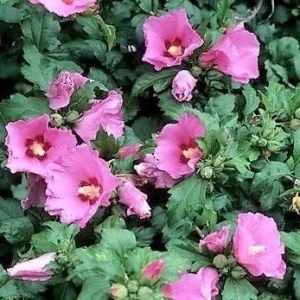
- Spectacular Late-Season Blooms: Enjoy an abundance of large, showy pink-purple flowers with a distinct red eye from mid-summer through fall. These blooms provide crucial color when many other plants have finished their display, extending the beauty of your garden. The vibrant petals of the Aphrodite Rose of Sharon live plant create a striking visual impact.
- Attracts Pollinators: The nectar-rich flowers are a magnet for beneficial insects such as butterflies and bees, as well as hummingbirds, contributing to a healthy and biodiverse garden ecosystem. This ecological benefit makes the Hibiscus syriacus plant a valuable addition.
- Low Maintenance & Drought Tolerant: Once established, this shrub is remarkably resilient and requires minimal care. It tolerates a range of soil conditions and is quite drought-tolerant, making it suitable for gardeners seeking beautiful plants without constant attention. This simplifies Rose of Sharon care significantly.
- Versatile Landscape Use: Its attractive upright form and moderate size make it perfect for various garden applications, including specimen planting, mixed borders, privacy screens, or informal hedges. The Aphrodite Rose of Sharon live plant can adapt to many design needs.
- Sterile Seed Production: Unlike some other Rose of Sharon varieties, ‘Aphrodite’ produces few or no viable seeds. This characteristic means less unwanted self-seeding in your garden, reducing the need for constant weeding and maintenance.
- Adaptable to Urban Environments: This shrub is known for its tolerance to urban pollution and various growing conditions, making it an excellent choice for city gardens and landscapes.
- Long-Lived Perennial: As a hardy, deciduous perennial, the outdoor flowering shrub will return year after year, providing reliable beauty and growth for many seasons to come.
Plant Care & Growing Tips
Caring for your Aphrodite Rose of Sharon live plant is straightforward, ensuring years of beautiful blooms. This hardy shrub thrives with basic attention to its environmental needs. For optimal growth, plant your 1 gallon Althea in a location that receives full sun to partial shade. Full sun (at least 6 hours of direct sunlight daily) will encourage the most abundant flowering, while partial shade can be tolerated, especially in hotter climates, though flowering might be slightly reduced. Ensure good air circulation around the plant to prevent fungal issues.
When it comes to watering, the Hibiscus syriacus plant prefers consistently moist soil, especially during its establishment period and during dry spells. However, it is important to avoid waterlogging, as this can lead to root rot. Water deeply once or twice a week, allowing the top layer of soil to dry out slightly between waterings. Once mature, the Aphrodite Rose of Sharon live plant is quite drought-tolerant. For soil, it is adaptable to a wide range of soil types, but thrives best in well-draining, fertile soil with a slightly acidic to neutral pH. Incorporating organic matter at planting can improve soil structure and fertility.
This shrub is hardy in USDA Zones 6-9. Pruning is best done in late winter or early spring before new growth begins. Rose of Sharon blooms on new wood, so pruning at this time encourages more flowers. You can prune to maintain shape, control size, or remove any dead or crossing branches. Fertilize in early spring with a balanced slow-release fertilizer designed for flowering shrubs. Watch out for common pests like aphids or whiteflies; these can usually be managed with horticultural oil or insecticidal soap. Proper spacing and good cultural practices will help ensure your Rose of Sharon care routine is simple and effective.
Size & Details
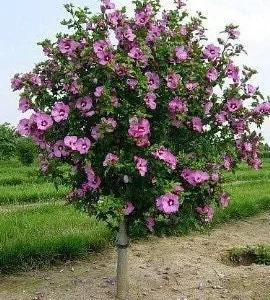
The Aphrodite Rose of Sharon live plant you will receive is a live plant, carefully grown in a 1 gallon Althea nursery pot, ready for planting upon arrival. At the time of shipment, the plant typically stands approximately 12-24 inches tall, depending on the season and growth stage. This allows for a robust root system to be well-developed, ensuring a smooth transition to your garden. Once established, this vigorous shrub can reach a mature height of 8-12 feet and a spread of 6-10 feet, forming an attractive, upright, vase-shaped specimen. Its growth rate is moderate to fast, allowing it to establish quickly in your landscape.
The stunning pink-purple blooms, characteristic of the Aphrodite Rose of Sharon live plant, typically emerge from July through September, offering a spectacular display of color during the late summer and early fall. This extended bloom period ensures your garden remains vibrant when many other plants have finished flowering. The plant is well-suited for outdoor cultivation within its recommended USDA hardiness zones, providing a reliable and beautiful addition to your perennial garden year after year. The deep green foliage provides a lovely contrast to the vibrant flowers, making it a focal point in any garden design. This outdoor flowering shrub is delivered with its root ball intact within the pot, minimizing transplant shock.
Frequently Asked Questions
- Q: How big does this Aphrodite Rose of Sharon live plant get? A: Once mature, the Aphrodite Rose of Sharon live plant typically reaches a height of 8-12 feet with a spread of 6-10 feet, forming an attractive, upright, vase-shaped shrub. Its size can be managed with annual pruning.
- Q: What size pot does the Hibiscus syriacus plant come in? A: Each plant is shipped in a 1 gallon Althea nursery pot, ensuring a healthy root system and good establishment upon planting in your garden.
- Q: Is this an indoor or outdoor plant? A: The Aphrodite Rose of Sharon live plant is primarily an outdoor flowering shrub, best suited for garden beds, borders, or as a specimen plant in USDA Zones 6-9. It is not typically grown as an indoor houseplant.
- Q: How much sunlight does the Rose of Sharon care require? A: For the best flowering performance, this shrub needs full sun, meaning at least 6 hours of direct sunlight per day. It can tolerate partial shade, but flowering may be less abundant.
- Q: Is this plant easy to care for, especially for beginners? A: Yes, the Aphrodite Rose of Sharon live plant is considered a low-maintenance and hardy shrub, making it an excellent choice for beginners. Once established, it is quite tolerant of various conditions and requires minimal attention beyond basic watering and occasional pruning.
- Q: What condition will the outdoor flowering shrub arrive in? A: Your plant will arrive healthy and well-packaged in its 1 gallon pot, with its root system intact and soil secured, ready for immediate planting in your garden.
- Q: How long until it blooms? A: Depending on the time of year you receive it and its current growth stage, your Aphrodite Rose of Sharon live plant may bloom in its first season, typically from mid-summer through fall, if planted and cared for properly.
- Q: Will this 1 gallon Althea survive winter in my zone? A: This particular variety is hardy in USDA Zones 6-9. If you are within these zones, it should reliably survive winter and return each spring. In colder zones, it may require winter protection or might be grown as an annual.
- Q: What is the best time to plant the Aphrodite Rose of Sharon live plant? A: The best time to plant this shrub is in spring or early fall, allowing it sufficient time to establish its root system before extreme summer heat or winter cold.
- Q: Is the ‘Aphrodite’ variety invasive? A: No, the ‘Aphrodite’ cultivar is known for being sterile or nearly sterile, meaning it produces very few viable seeds. This significantly reduces its potential for self-seeding and spreading, unlike some other Rose of Sharon varieties.


Reviews
There are no reviews yet.