Overview
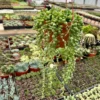
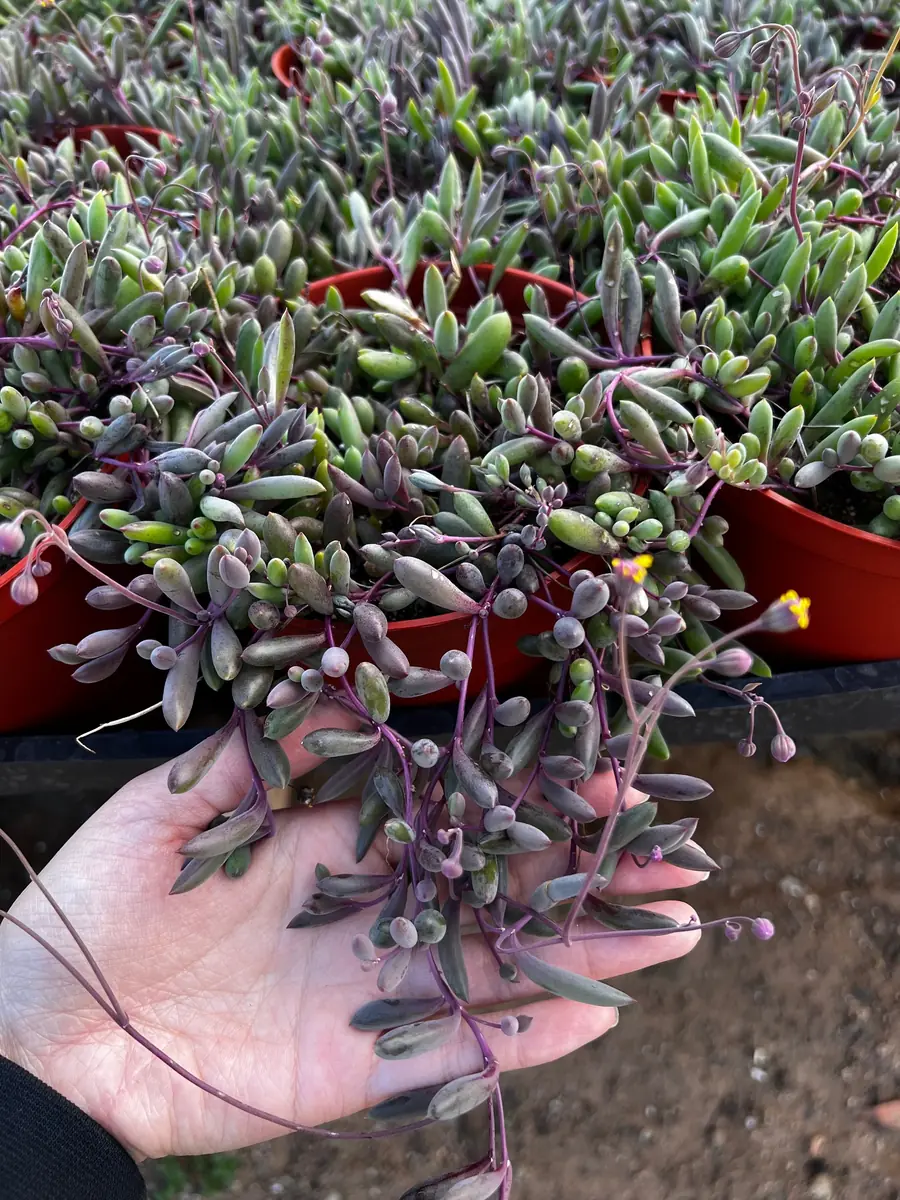
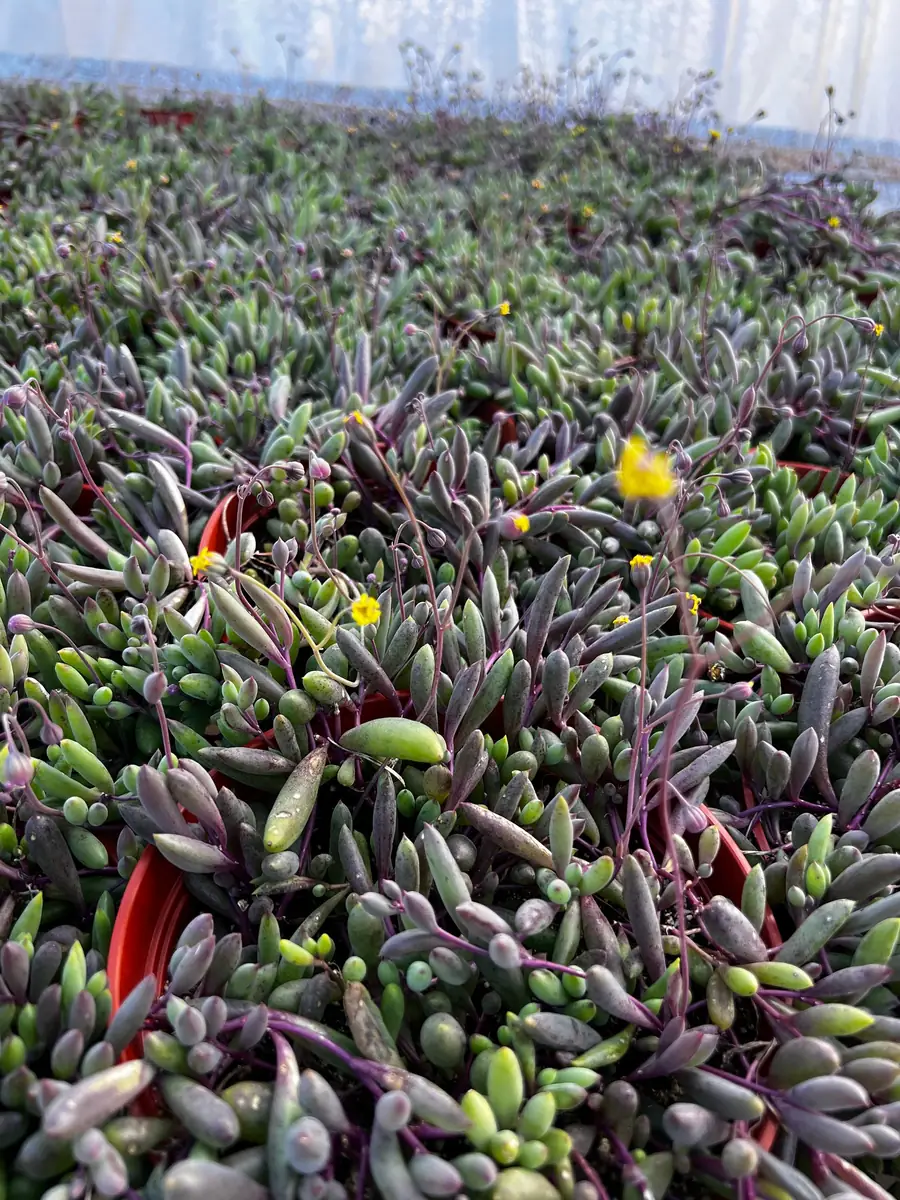
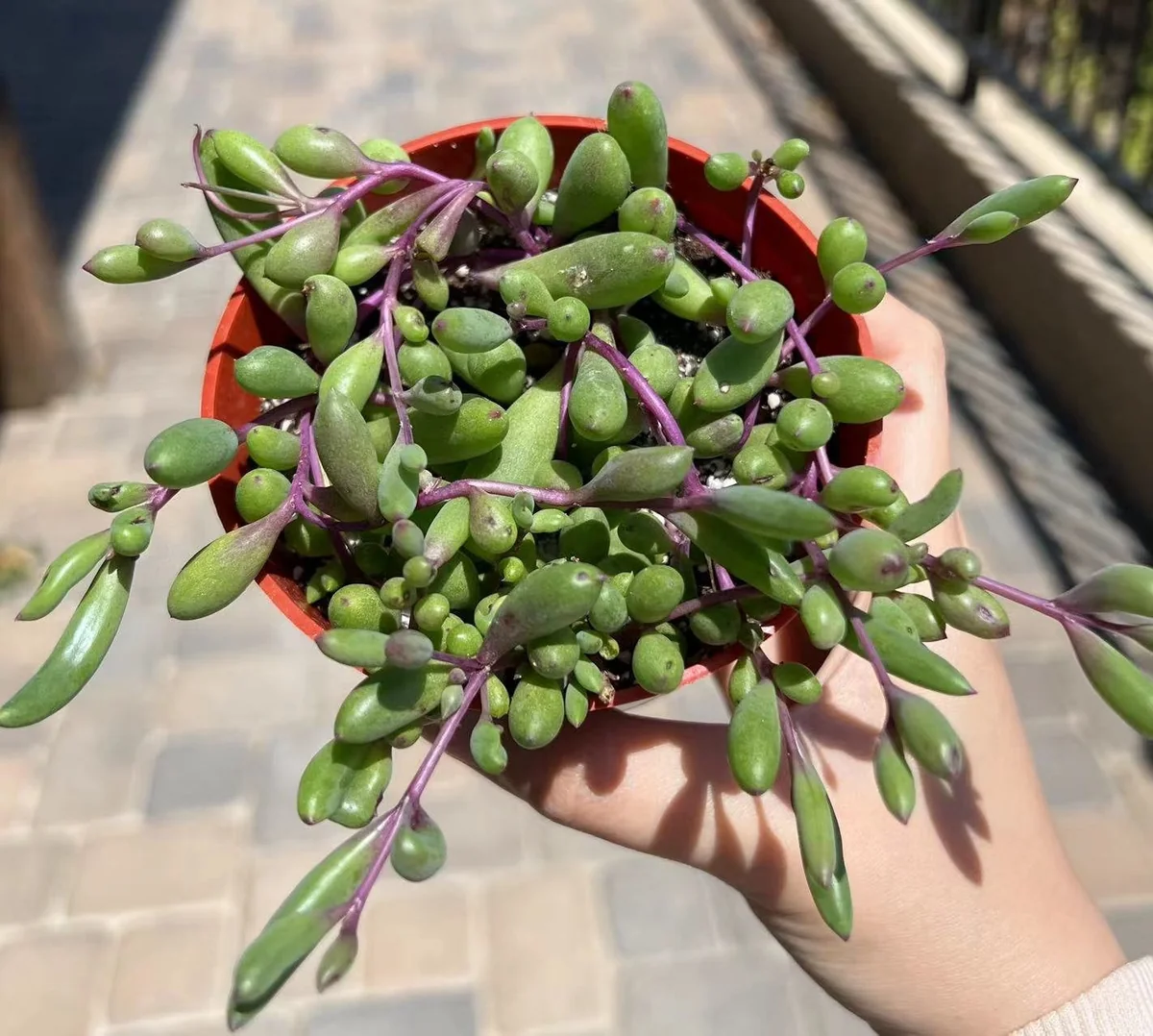
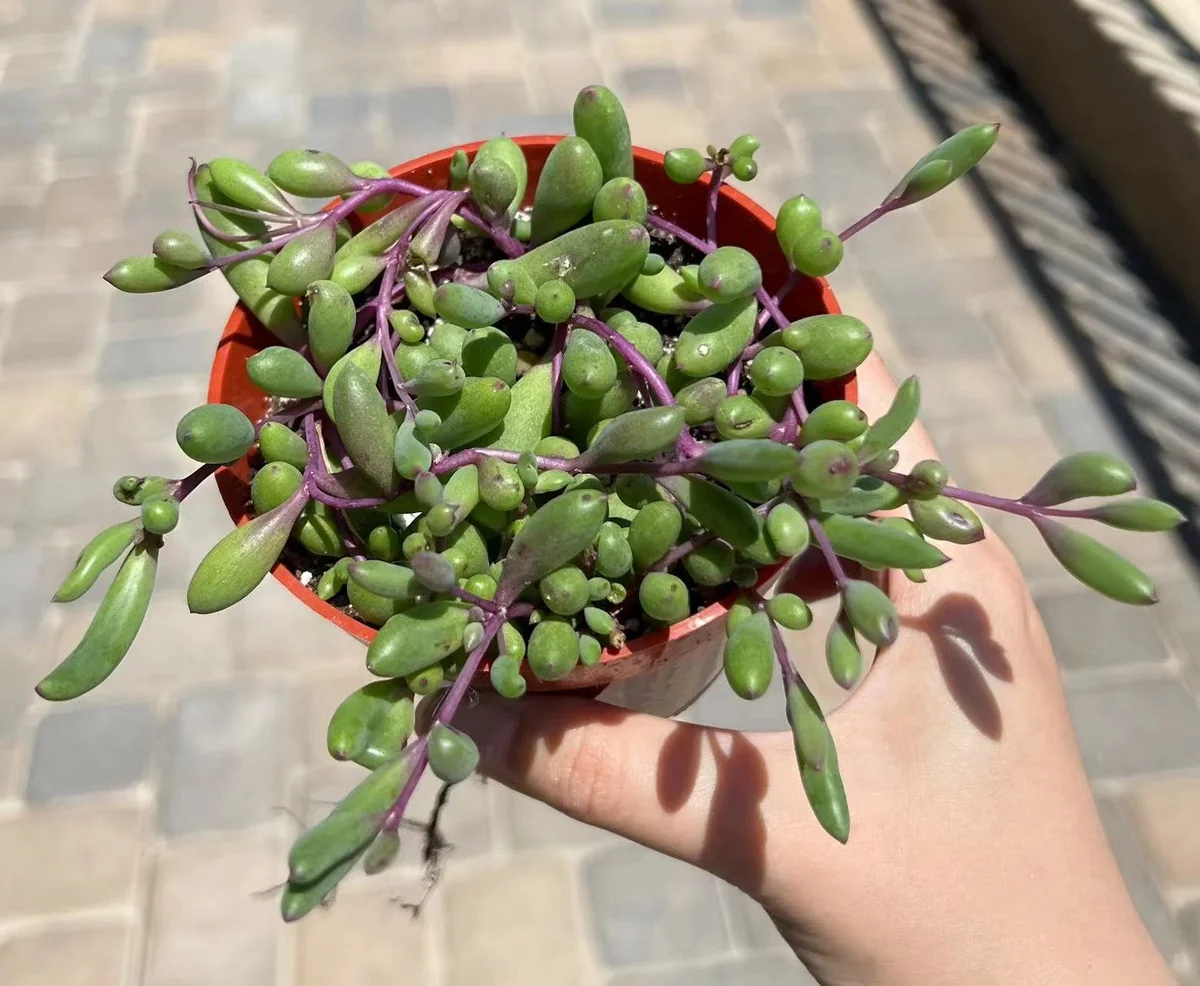
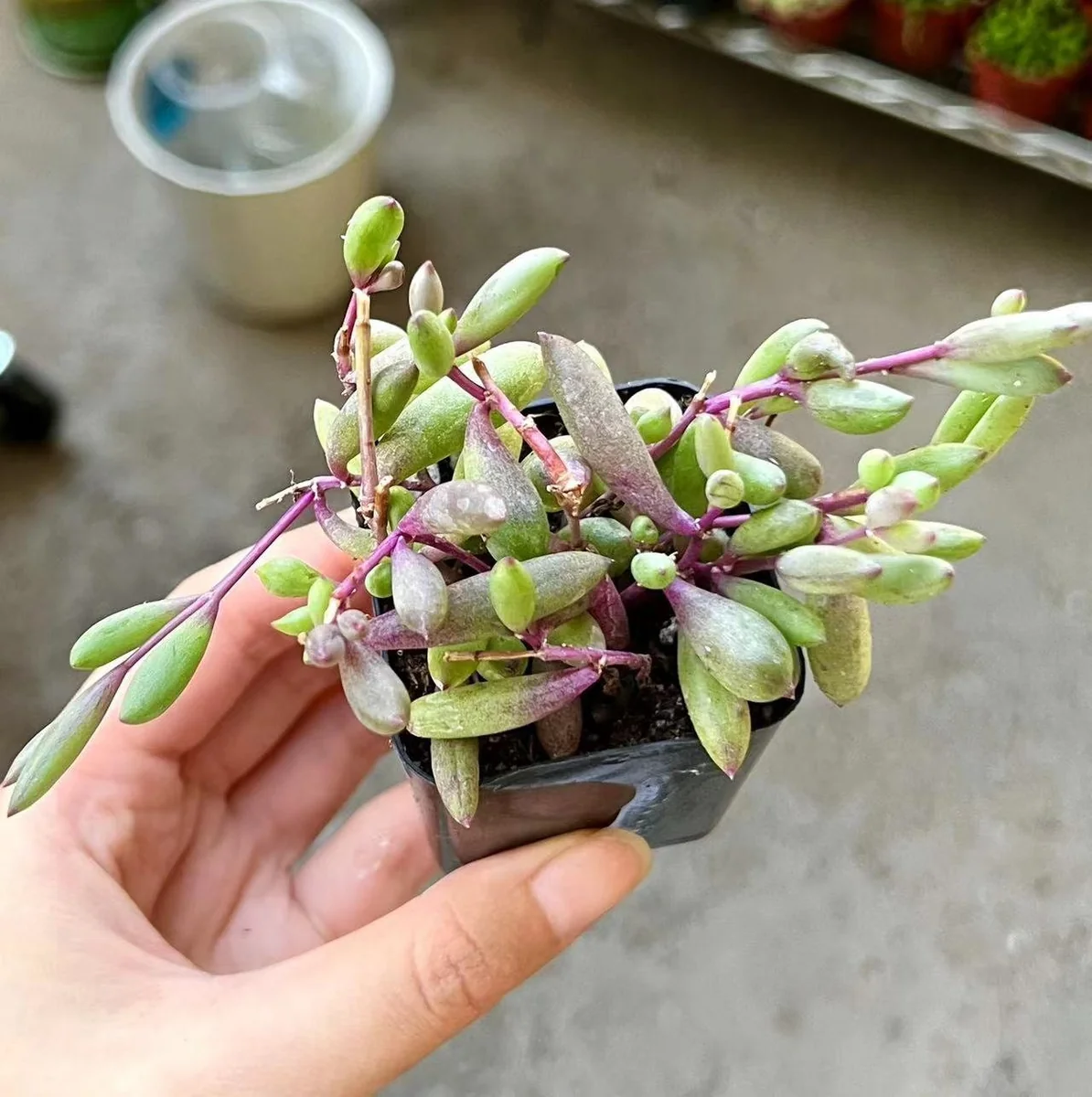
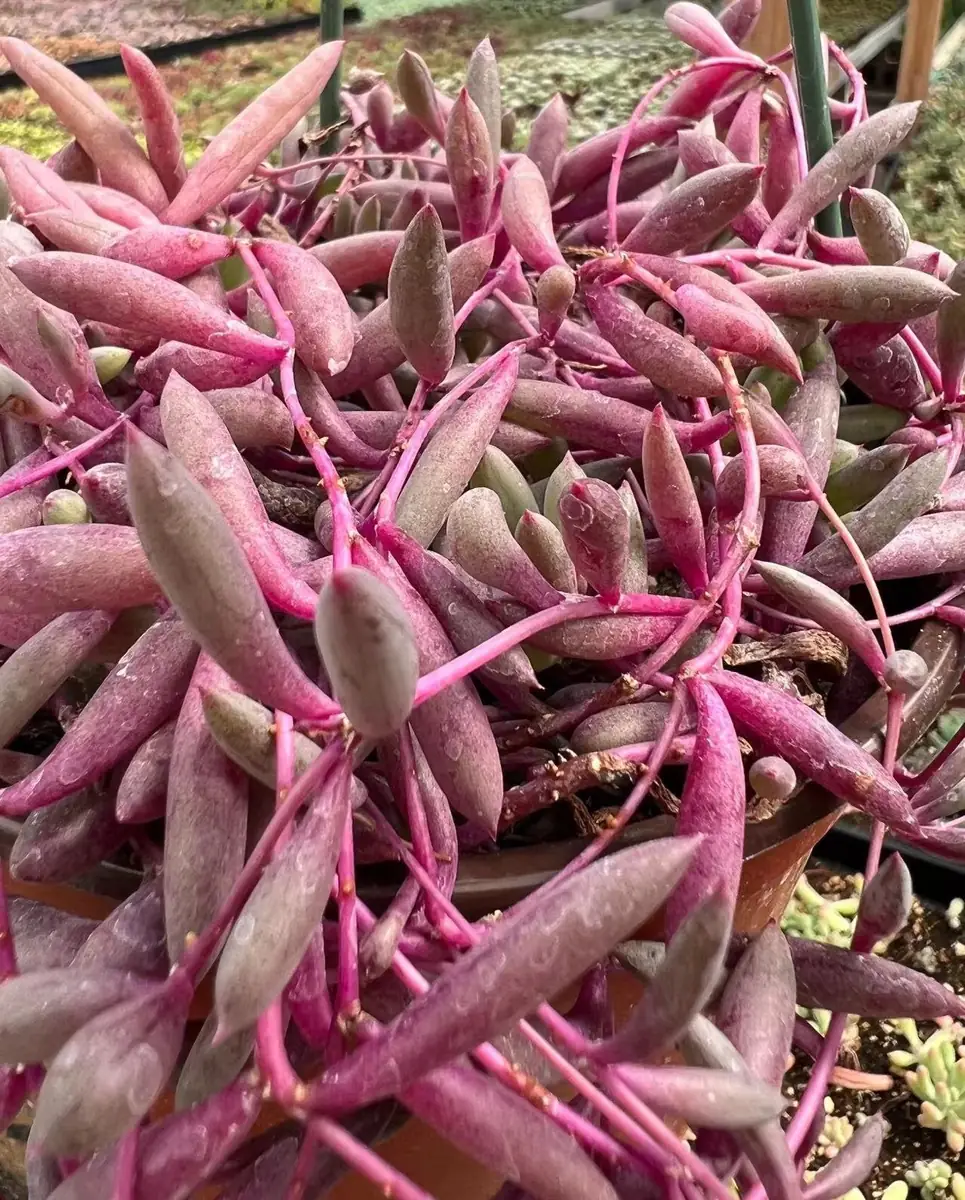
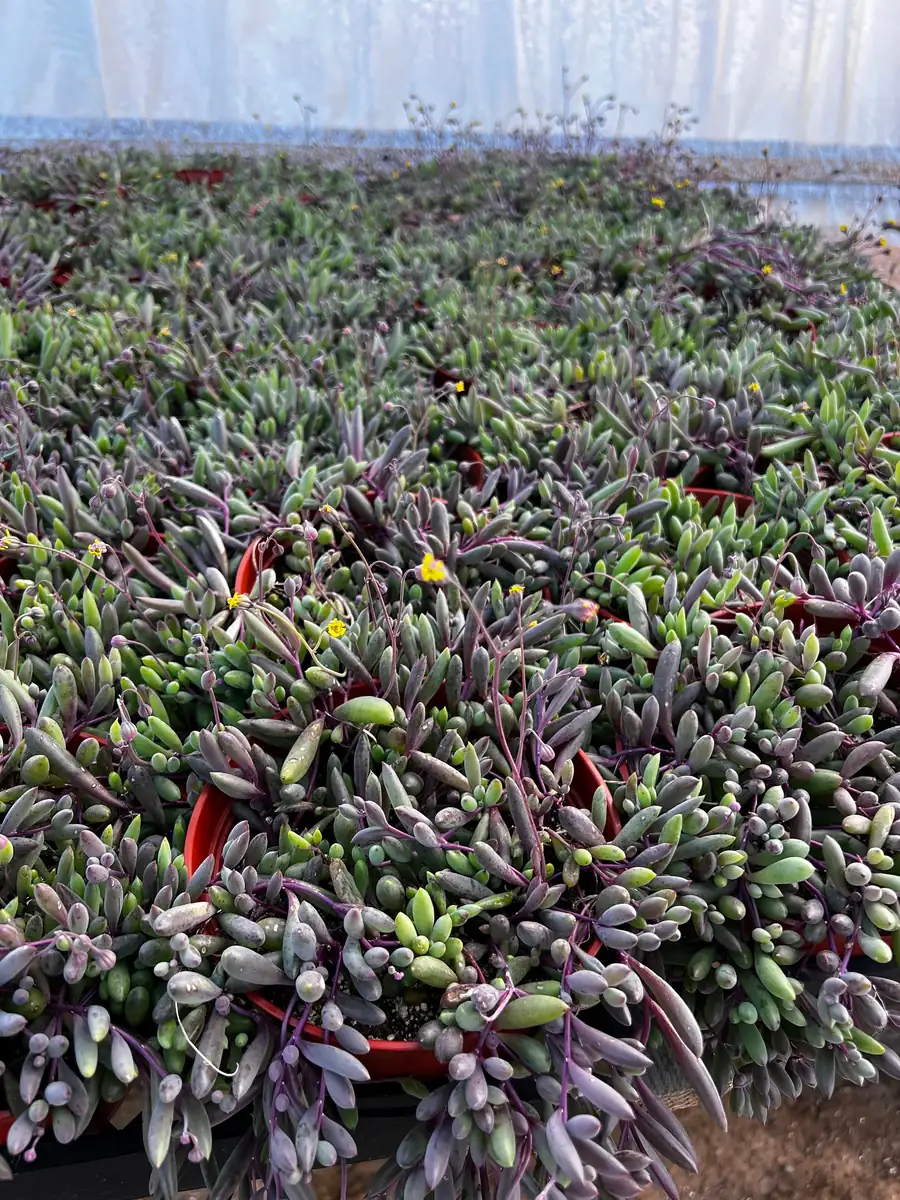
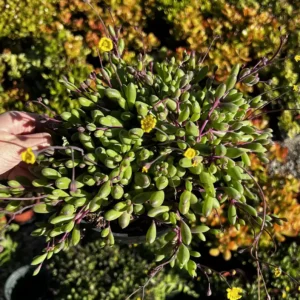
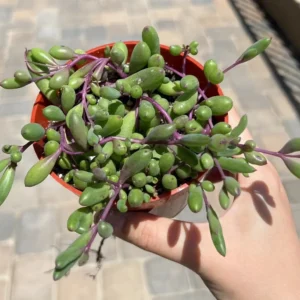
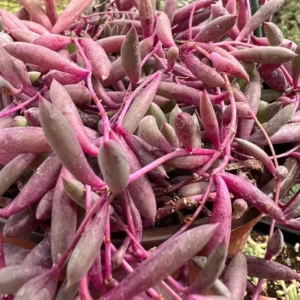
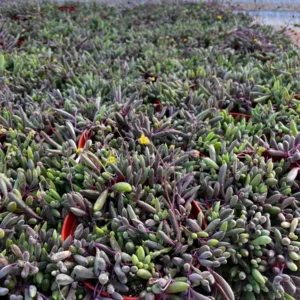
Introduce a splash of vibrant color and unique texture to your plant collection with the ruby necklace succulent live plant. This captivating succulent, scientifically known as Othonna Capensis, is celebrated for its distinctive foliage that can shift from green to beautiful shades of red and purple when exposed to ample sunlight. Often referred to as Little Pickles plant or String of Rubies, its trailing growth habit makes it an excellent choice for hanging baskets, shelves, or as a vibrant groundcover in appropriate climates. This slow-growing succulent is a true gem, offering continuous visual interest with its compact appearance and striking inflorescences. Its waxy leaves are not only attractive but also help the plant retain moisture, making it wonderfully drought-tolerant and suitable for various growing conditions.
The Othonna Capensis is a versatile and visually appealing plant that can thrive both indoors in bright locations and outdoors in warmer regions. Its ease of care and stunning color transformation make it a favorite among both novice and experienced gardeners. Whether you’re looking for a unique addition to your succulent arrangement or a charming hanging plant, the ruby necklace succulent live plant is an excellent choice that promises to add elegance and character to any space.
Key Benefits
The ruby necklace succulent live plant offers a multitude of benefits, making it an outstanding choice for diverse garden styles and indoor decor. Its unique characteristics contribute to its popularity and ease of integration into various settings.
-
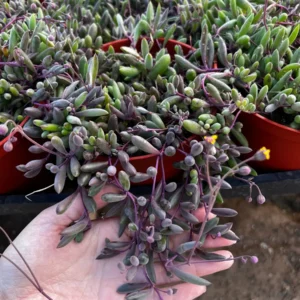
Stunning Color Transformation: The small, round leaves of the ruby necklace succulent live plant can turn a vibrant red or purple under bright sunlight, adding a dynamic burst of color to your home or garden. This natural color change provides continuous visual interest.
-
Drought-Tolerant Nature: Othonna Capensis is incredibly resilient, capable of surviving long periods without water thanks to its thick, waxy leaves. This makes it an ideal choice for busy individuals or those in hot, arid regions, requiring minimal watering.
-
Low Maintenance: This succulent is remarkably easy to care for, thriving with minimal intervention. It’s perfect for beginners or those seeking beautiful plants that don’t demand constant attention. Understanding othonna capensis care is straightforward.
-
Versatile Display Options: With its trailing growth habit, the ruby necklace succulent live plant is perfect for hanging baskets, elevated planters, or as a cascading element in mixed succulent arrangements. It also looks fantastic on shelves or windowsills.
-
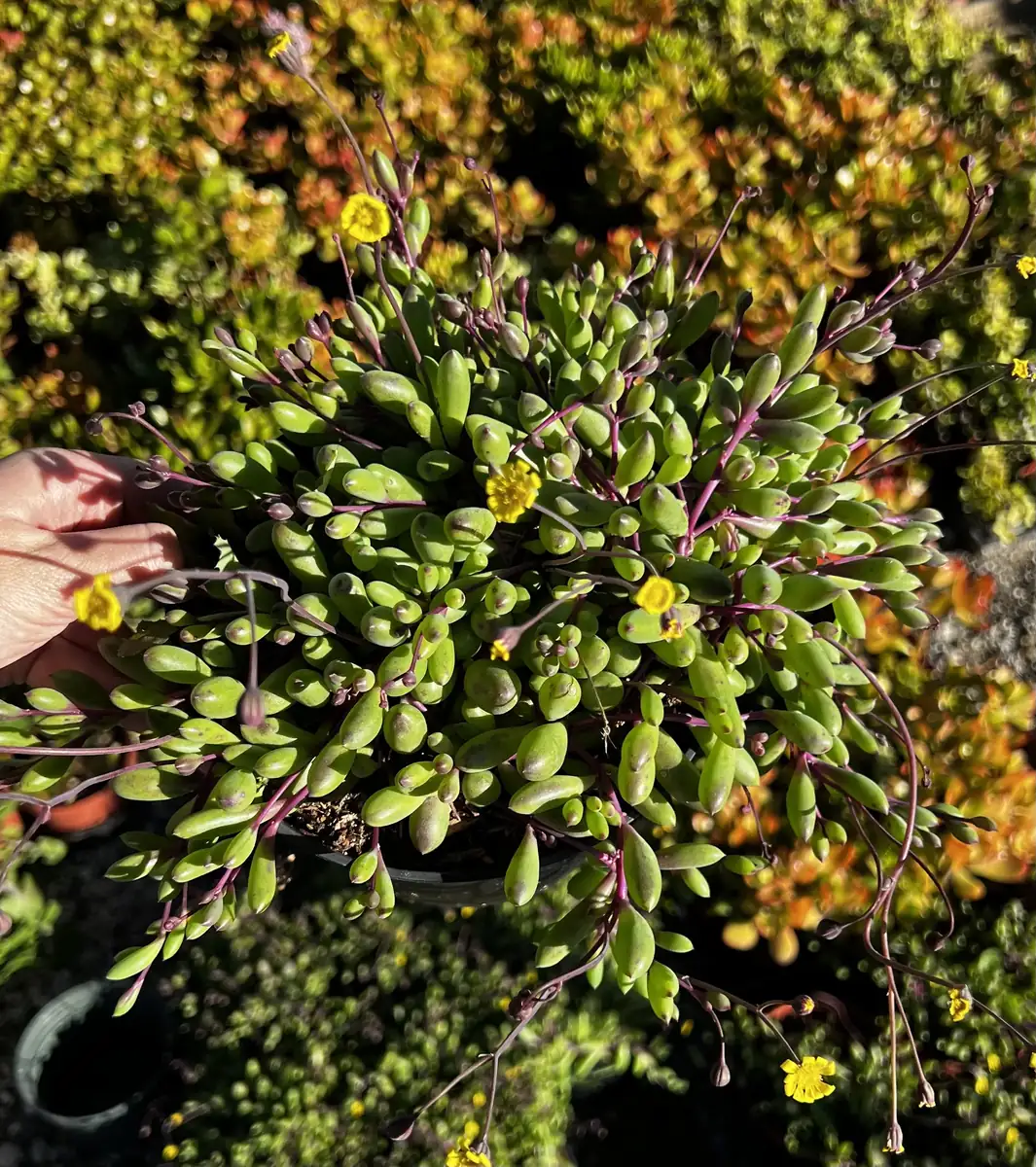
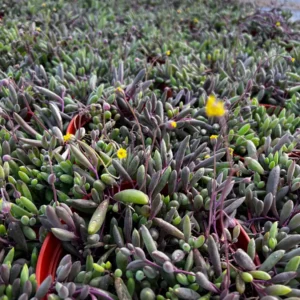
Attractive Foliage and Flowers: Beyond its colorful leaves, the Othonna Capensis produces numerous small yellow flowers surrounded by bright red bracts, giving it its ‘Ruby Necklace’ moniker. These add an extra layer of charm and appeal.
-
Compact and Appealing Form: The leaves are arranged in a rosette pattern, contributing to a compact and attractive appearance. This makes it suitable for smaller spaces or as part of a larger display without overwhelming other plants.
-
Air Purification: Like many succulents, the ruby necklace succulent live plant contributes to a healthier indoor environment by naturally filtering air and improving humidity levels.
Plant Care & Growing Tips
Proper othonna capensis care ensures a healthy and vibrant plant. This succulent is generally low-maintenance, but understanding its specific needs will help it thrive. For optimal growth and the most intense purple-pink coloration, provide plenty of sunlight. Aim for at least 6 hours of bright, direct sunlight daily. If growing indoors, a south-facing window is ideal. Without sufficient light, the plant’s vibrant colors may fade to a greener hue. Gradually introduce the plant to increased sunlight to prevent scorching, especially if it’s coming from a less exposed environment. This will also help achieve the desired purple pink succulent appearance.
Watering should be done sparingly. As a succulent, the Othonna Capensis stores water in its leaves and stems, making it highly drought-tolerant. Allow the soil to dry out completely between waterings, typically every 2-4 weeks, depending on temperature and humidity. Overwatering is the most common cause of issues for this plant, leading to root rot. When you do water, soak the soil thoroughly until water drains from the bottom of the pot, then discard any excess water. The right watering technique is crucial for a healthy ruby necklace succulent live plant.
The ideal soil for trailing succulent care is a well-draining potting mix, specifically formulated for succulents and cacti. This type of soil prevents waterlogging, which is vital for the plant’s health. A mix containing perlite, pumice, or coarse sand will improve drainage. The Othonna Capensis prefers temperatures between 60-80°F (15-27°C) and is hardy in USDA zones 9-11. Protect it from frost, as it is not cold-hardy. Fertilize sparingly, if at all, during the growing season (spring and summer) with a diluted succulent fertilizer. Avoid fertilizing in fall and winter when the plant is dormant. Common problems include root rot from overwatering and etiolation (stretching) from insufficient light. Regular inspection for pests like mealybugs can help maintain plant health. This comprehensive approach to othonna capensis care will ensure your plant flourishes.
Size & Details
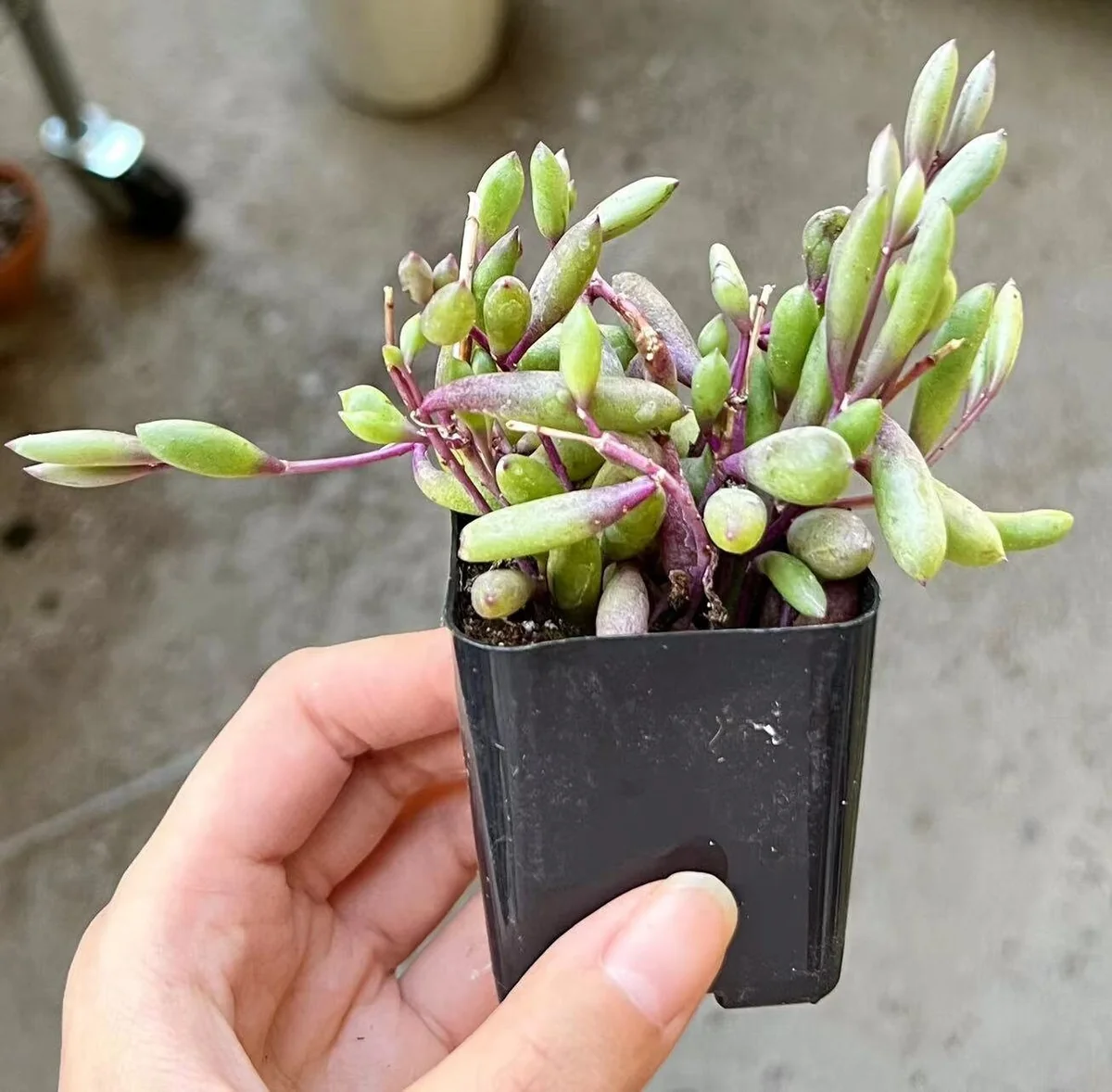
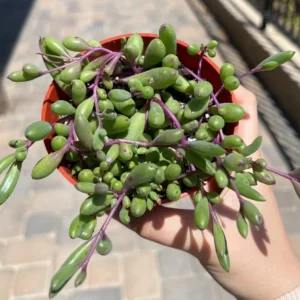
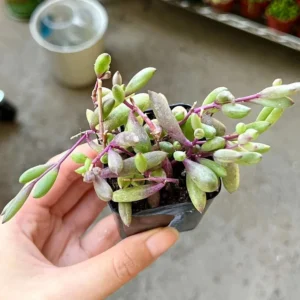
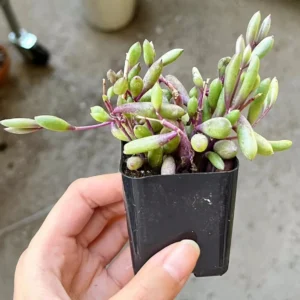
The ruby necklace succulent live plant, Othonna Capensis, is provided as a live plant in a 2-inch nursery pot, ready for transplanting or display. This compact size is perfect for starting your collection or adding to an existing arrangement. While it is a slow-growing succulent, its trailing stems can eventually reach lengths of 12-18 inches, creating a beautiful cascading effect. The plant typically ships with established roots and foliage, similar in size and appearance to the product images. It is ideal for container gardening, hanging baskets, or as a vibrant accent in rock gardens in suitable climates. Expect your plant to arrive healthy and ready to adapt to its new environment, continuing its growth into a mature, colorful specimen. The ability of this little pickles plant to thrive in various pot sizes, including 4-inch and 6-inch options, allows for flexible display choices as it grows.
Frequently Asked Questions
-
Q: How big does this ruby necklace succulent live plant get? A: The Othonna Capensis is a trailing succulent whose stems can grow to lengths of 12-18 inches over time, creating a lovely cascading effect. Its growth rate is considered slow, allowing for easy management.
-
Q: What size pot does it come in? A: This particular ruby necklace succulent live plant is shipped in a 2-inch nursery pot. It can be easily repotted into larger containers like 4-inch or 6-inch pots as it grows.
-
Q: Is this an indoor or outdoor plant? A: The ruby necklace succulent live plant can thrive both indoors and outdoors. Indoors, it needs a spot with bright, direct sunlight. Outdoors, it is best suited for USDA zones 9-11, where it can enjoy full sun exposure.
-
Q: How much sunlight does it need? A: For the best color and health, the ruby necklace succulent live plant requires at least 6 hours of bright, direct sunlight daily. This intense light exposure is what helps its leaves develop their characteristic purple-pink coloration.
-
Q: Is this plant easy to care for? A: Yes, Othonna Capensis is considered a low-maintenance plant, making it excellent for beginners. Its drought-tolerant nature and minimal care requirements contribute to its ease of growth, especially with proper othonna capensis care.
-
Q: What condition will it arrive in? A: Your ruby necklace succulent live plant will arrive as a healthy, established plant in its nursery pot, ready for you to introduce it to its new home. We take care to ensure safe packaging for transit.
-
Q: How often should I water my little pickles plant? A: Water the little pickles plant only when the soil has completely dried out. This typically means watering every 2-4 weeks, but always check the soil moisture before watering to prevent overwatering, which can lead to root rot.
-
Q: Can I use this plant in a hanging basket? A: Absolutely! The trailing habit of the ruby necklace succulent live plant makes it an excellent choice for hanging baskets, allowing its colorful stems to cascade beautifully.
-
Q: Why are my purple pink succulent leaves turning green? A: If your purple pink succulent leaves are turning green, it likely indicates a lack of sufficient sunlight. Increase its exposure to bright, direct light to encourage the vibrant red and purple hues to return.
-
Q: What type of soil is best for trailing succulent care? A: For optimal trailing succulent care, use a well-draining succulent or cactus potting mix. This prevents water from sitting around the roots, which is crucial for the health of Othonna Capensis.


Reviews
There are no reviews yet.