
Overview
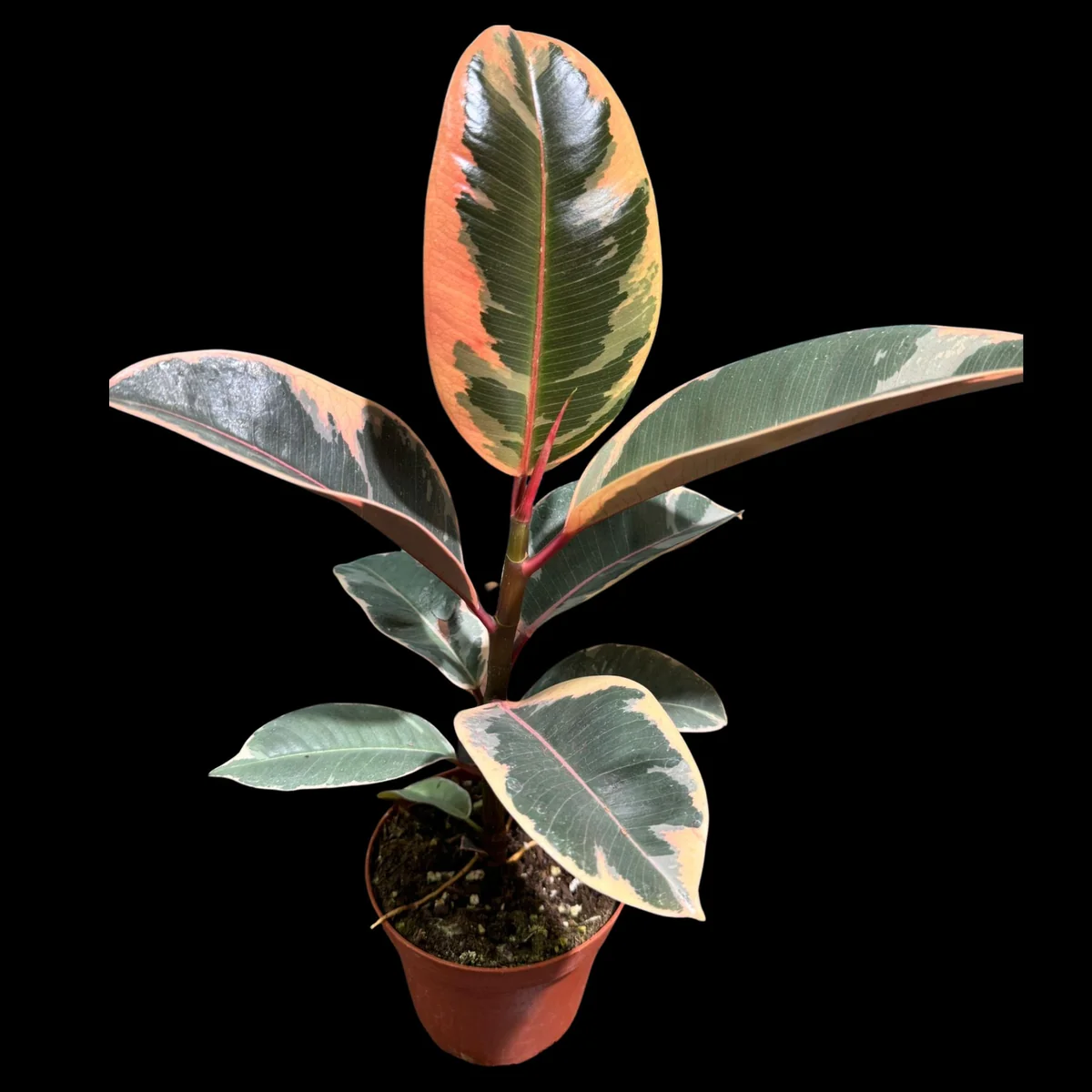
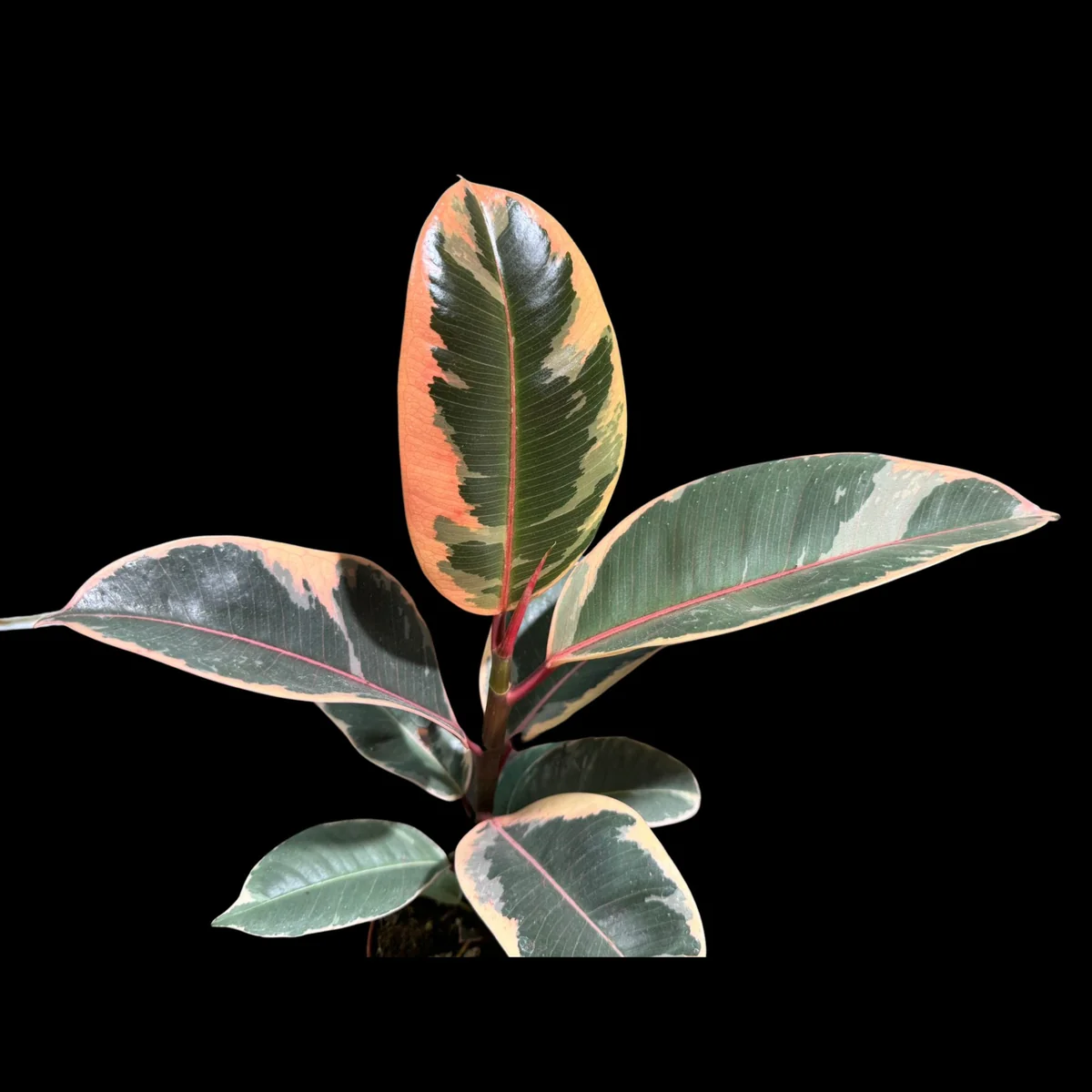
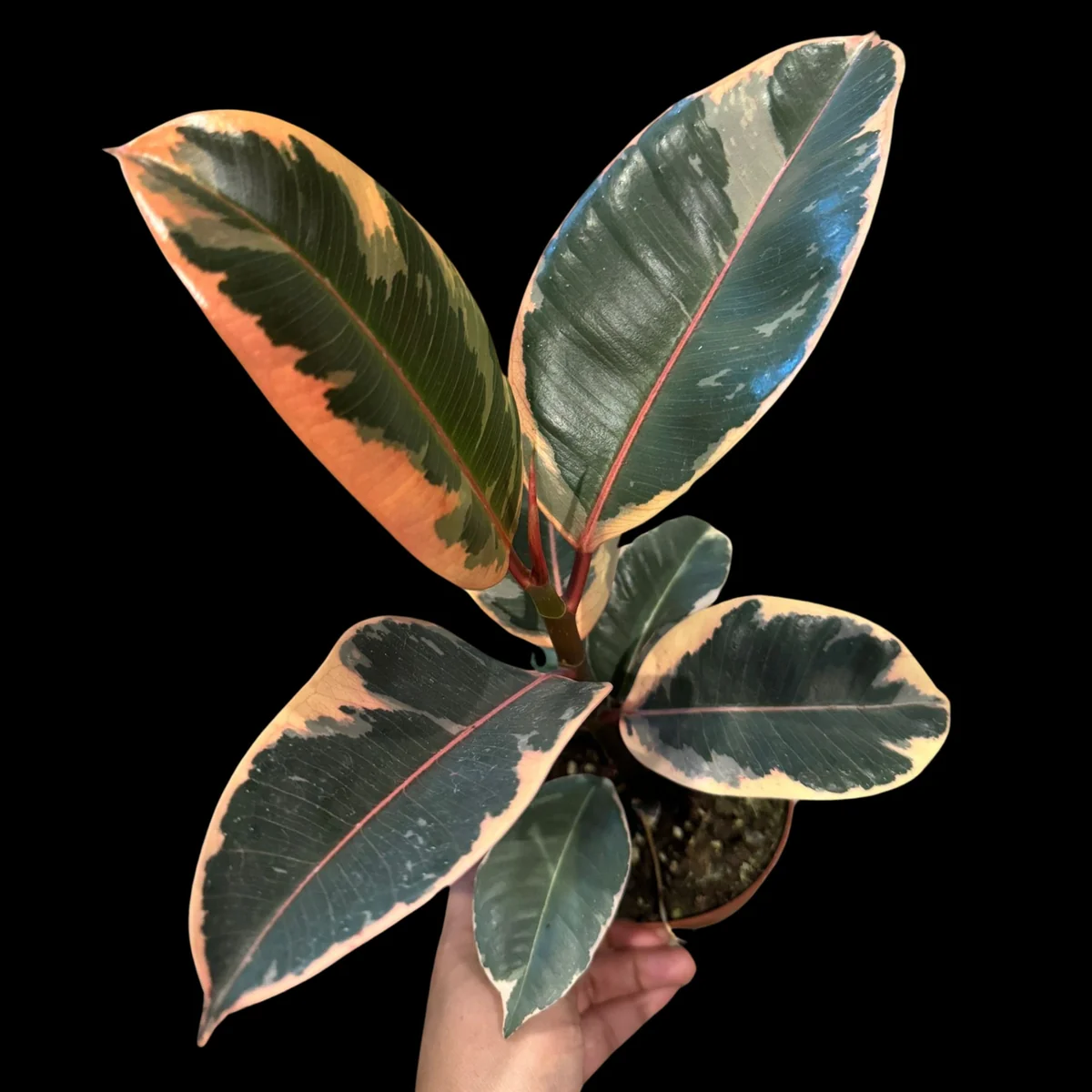
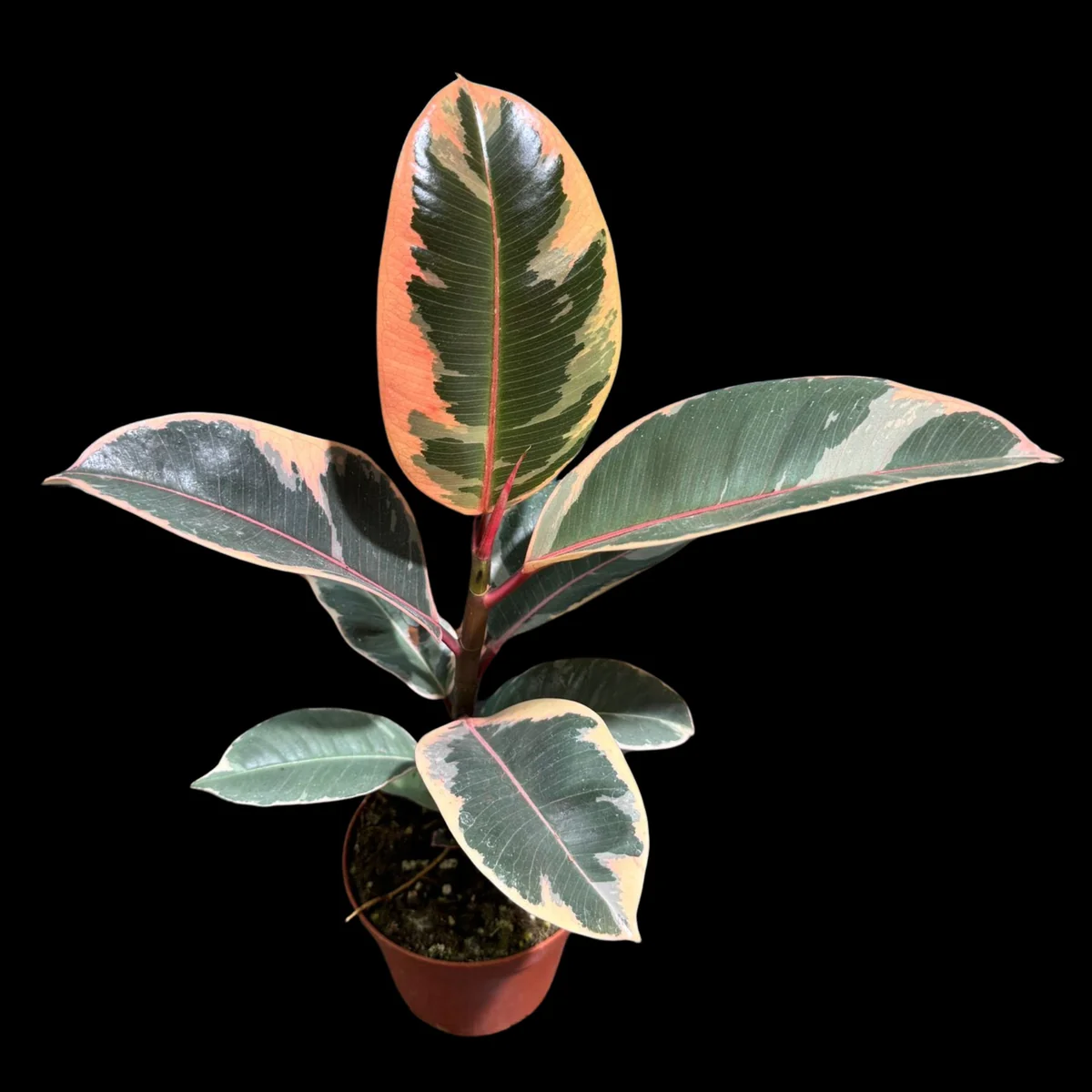
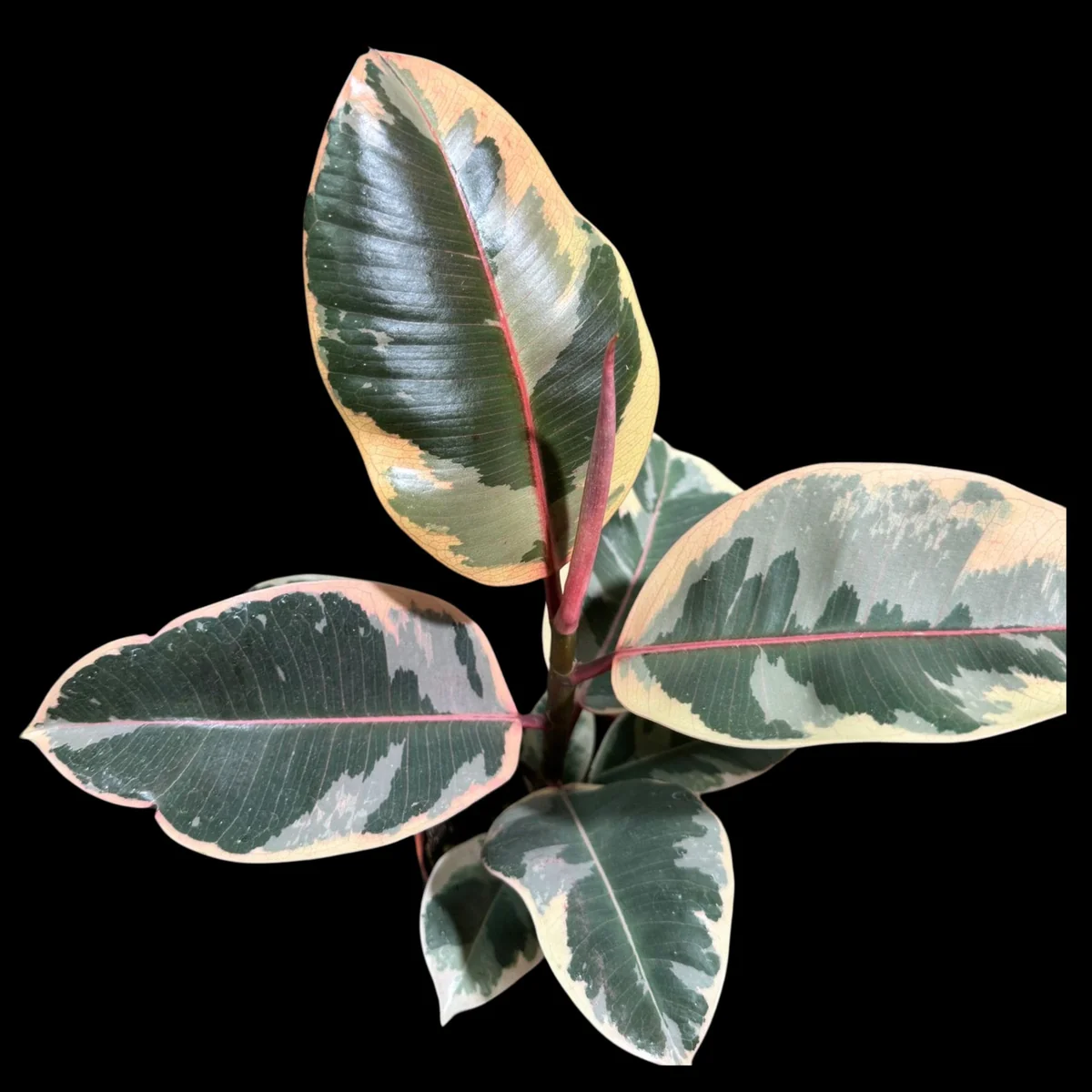
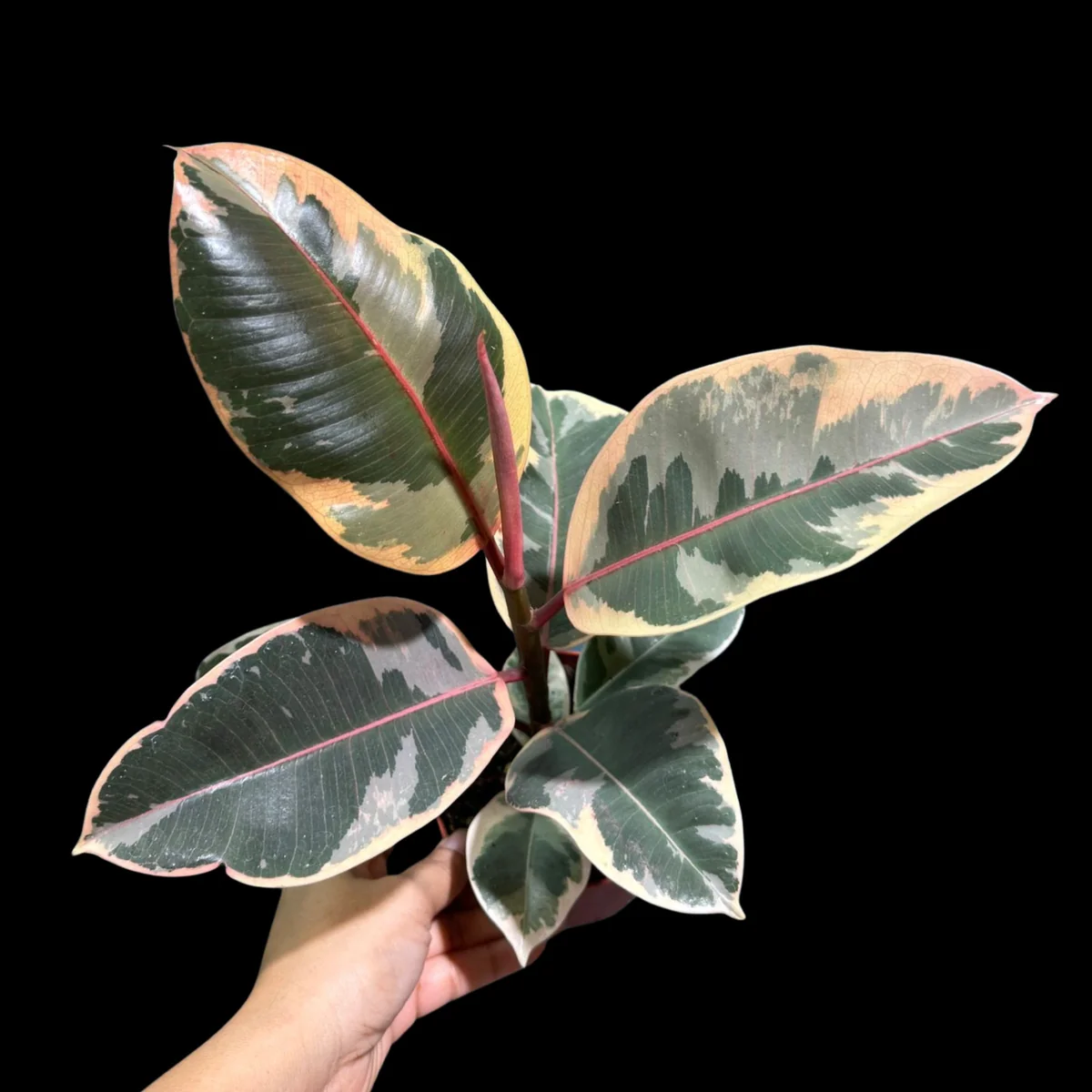
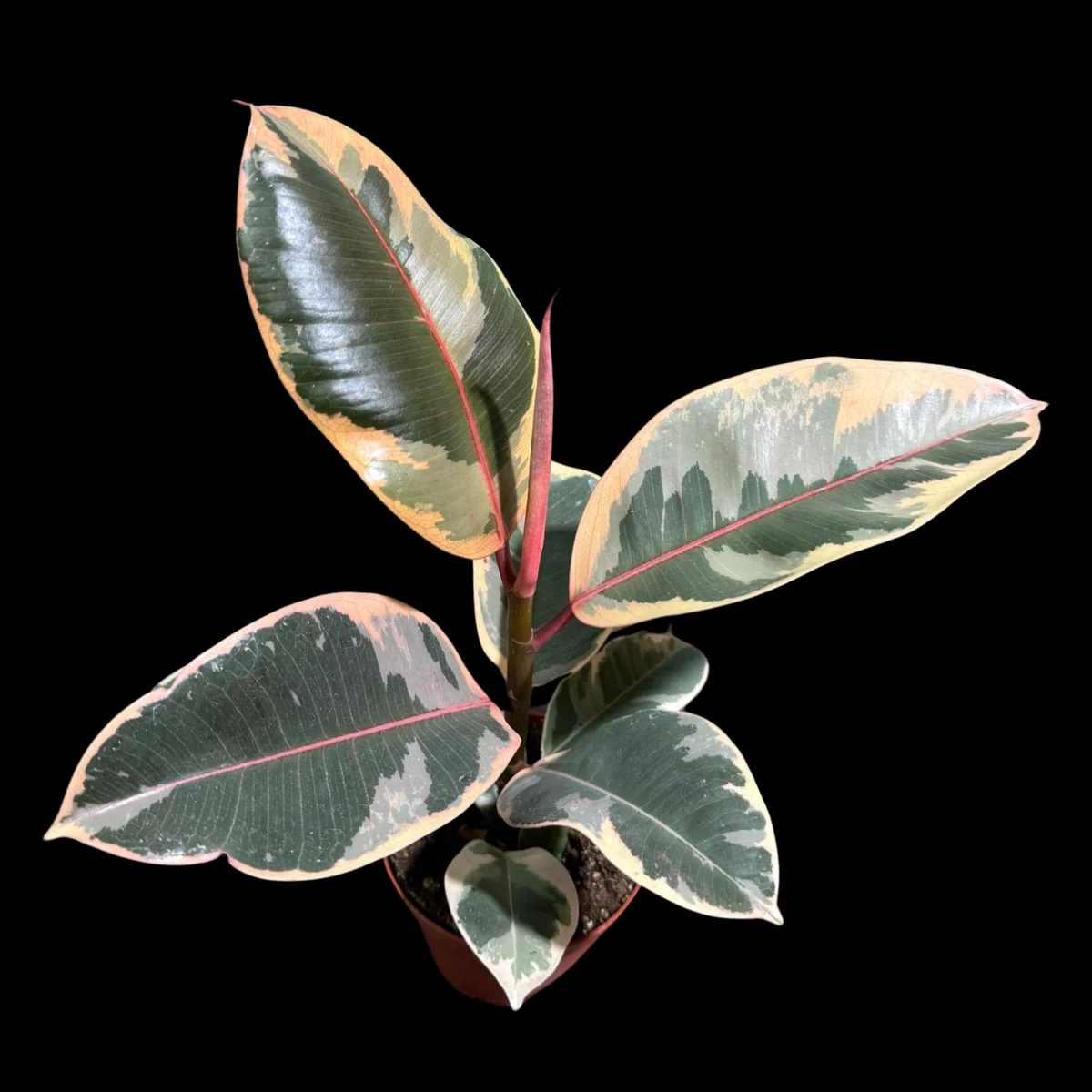
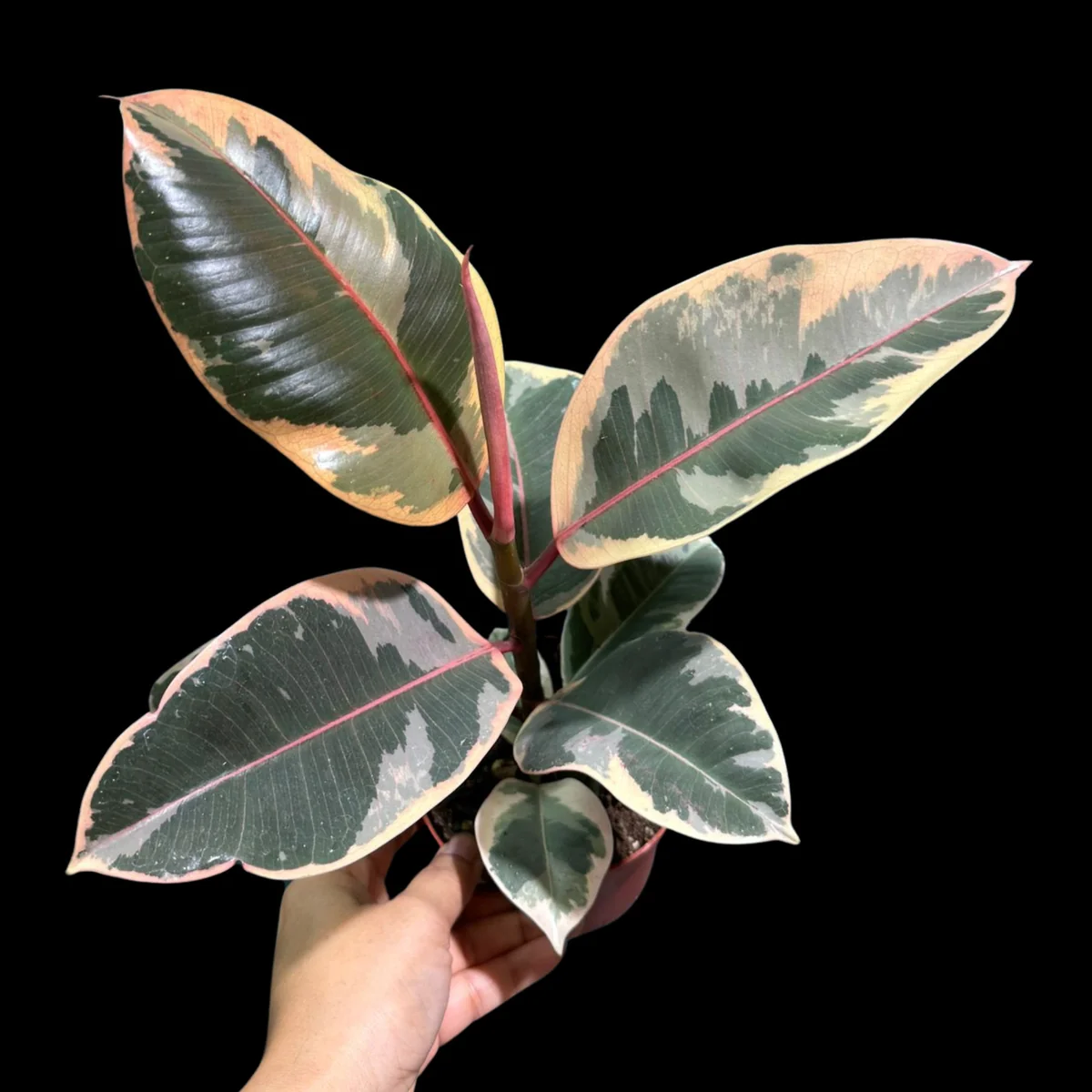
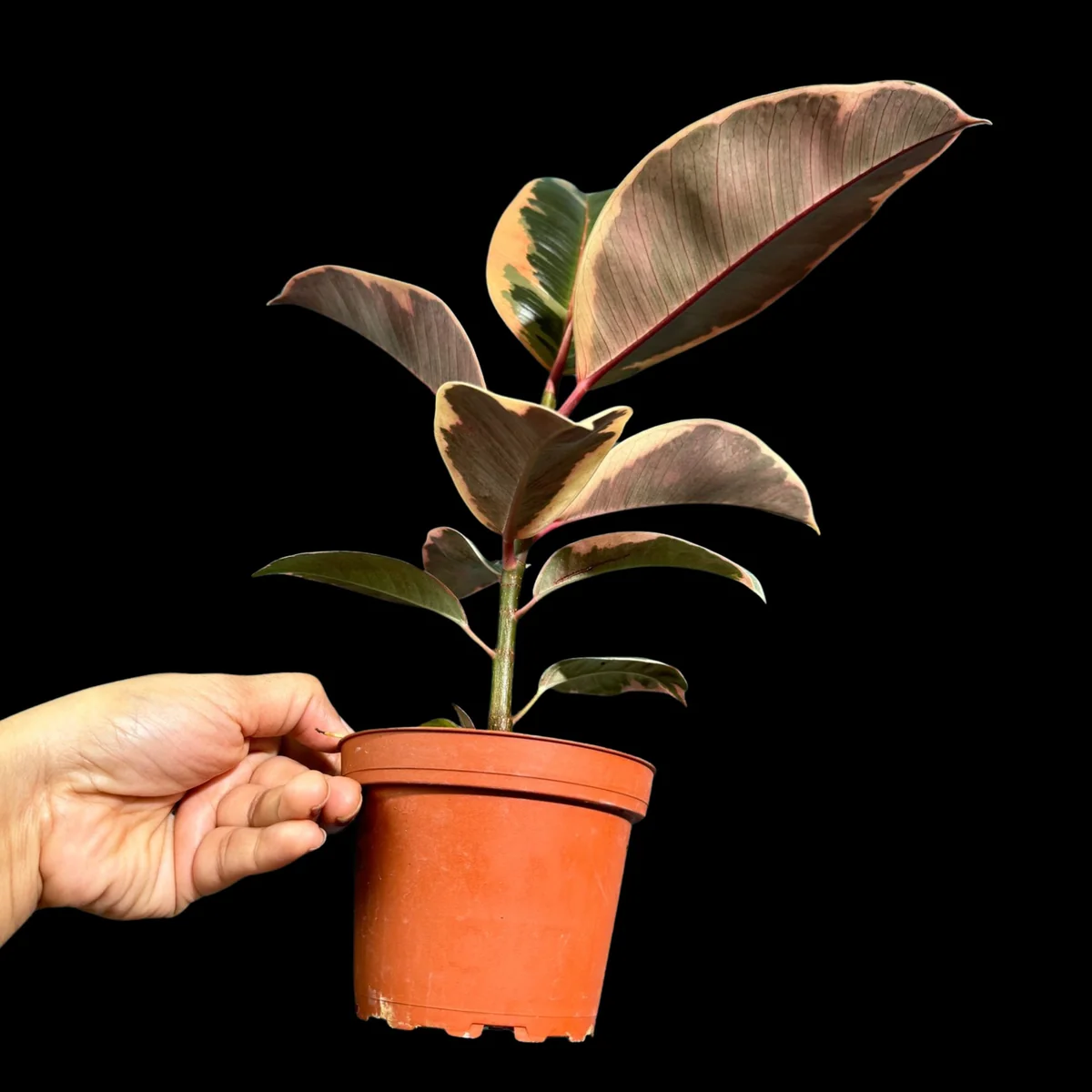
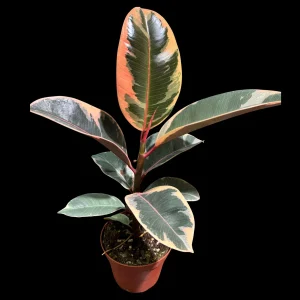
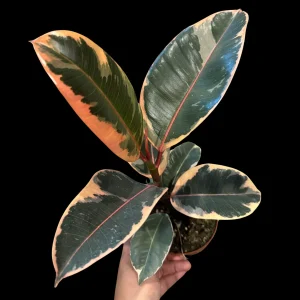
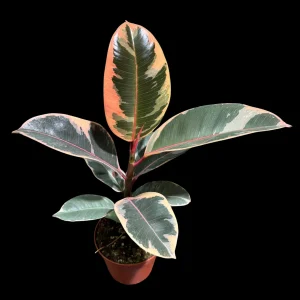
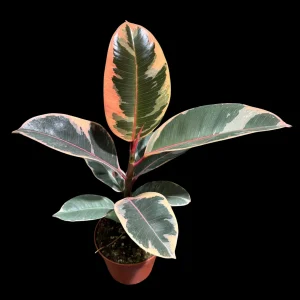
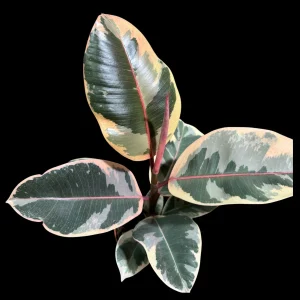
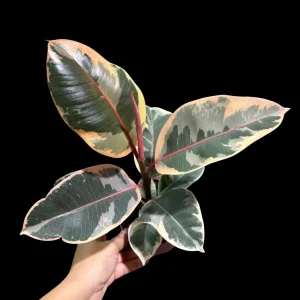
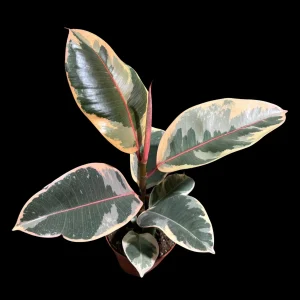
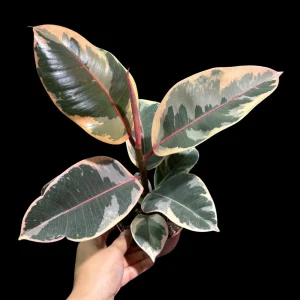
Introduce a touch of tropical elegance to your living space with the exquisite variegated ficus elastica, commonly known as the Tineke Rubber Plant. This live houseplant is renowned for its striking foliage, which boasts a beautiful blend of green, white, and often pink hues, creating a truly unique visual appeal. The Ficus elastica ‘Tineke’ is a popular choice among plant lovers due to its stunning appearance and relatively straightforward care requirements, making it an excellent addition to almost any indoor setting. Originating from tropical cloud forests, this particular variety of Ficus brings a piece of exotic nature into your home, transforming any room into a vibrant, serene sanctuary. Its robust nature and captivating colors make it a focal point in any decor.
The variegated ficus elastica is not just a plant; it’s a living art piece that continuously evolves with new leaves displaying mesmerizing patterns. Each leaf is a unique artwork, showcasing intricate variegation that adds depth and character to its overall appearance. This plant is a close cousin to the edible fig and is valued for its lush, broad leaves that exude a sophisticated charm. Whether you’re a seasoned plant parent or just starting your green journey, the Ficus Tineke offers immense satisfaction as it thrives and grows under your care, becoming a cherished part of your home environment. It’s a wonderful way to connect with nature indoors.
Key Benefits
The variegated ficus elastica offers numerous benefits, making it a highly desirable houseplant for any home. Its aesthetic appeal is just the beginning; this plant also contributes positively to your indoor environment and overall well-being. Here are some of the key advantages of owning a Ficus Tineke:
- Stunning Visual Appeal: The vibrant green, creamy white, and subtle pink variegation on its large, glossy leaves makes this plant an instant focal point. It adds a sophisticated and refreshing touch to any room, enhancing your home decor with natural beauty.
- Air Purification: Like many houseplants, the rubber plant indoor variety assists in purifying indoor air by absorbing toxins and releasing fresh oxygen. This contributes to a healthier and more pleasant living environment, improving air quality for you and your family.
- Relatively Easy Care: Despite its exotic appearance, the Ficus Tineke is considered an easy care houseplant. It’s forgiving of minor care mistakes and thrives with consistent, basic attention, making it suitable for both novice and experienced plant enthusiasts.
- Versatile Decor Piece: Its upright growth habit and striking foliage allow it to fit seamlessly into various interior design styles, from modern minimalist to bohemian. It can be placed on a floor, table, or plant stand, adapting to your space.
- Promotes Well-being: Studies suggest that having plants indoors can reduce stress, boost mood, and increase productivity. Caring for a beautiful tropical houseplant like the Ficus Tineke can be a calming and rewarding experience.
- Durable and Long-Lived: With proper care, the variegated ficus elastica can live for many years, growing into a substantial and impressive specimen. It’s a long-term investment in your home’s beauty and ambiance.
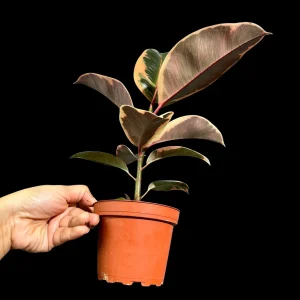
- Unique Leaf Texture: The leaves of the Tineke Rubber Plant develop deep red veins as they mature, adding another layer of visual interest and a slightly rubbery texture, which gives the plant its common name.
Plant Care & Growing Tips
Caring for your variegated ficus elastica involves understanding its needs for light, water, temperature, and feeding to ensure it thrives and maintains its vibrant variegation. This rubber plant indoor variety prefers bright, indirect light. Placing it near a window with filtered sunlight is ideal. Direct, harsh sunlight can scorch its delicate variegated leaves, leading to brown spots, so avoid south-facing windows without sheer curtains. Adequate light is crucial for maintaining the plant’s beautiful color patterns; insufficient light can cause the white and pink areas to fade.
When it comes to watering, the Ficus Tineke likes to be watered thoroughly when the top 2 inches of its soil are completely dry to the touch. It’s important to allow the soil to dry out between waterings to prevent root rot, which is a common issue for Ficus plants. Overwatering is more detrimental than underwatering. During the drier months or in arid climates, the plant also appreciates occasional misting, especially if the air around it is dry. The ideal temperature range for this tropical houseplant is between 60°F and 85°F. It’s sensitive to cold drafts and sudden temperature fluctuations, so keep it away from open windows during winter or air conditioning vents. For soil, a well-draining potting mix is essential. You can use a mix specifically formulated for houseplants or create your own by combining potting soil with perlite or orchid bark to improve drainage. This helps prevent waterlogging and ensures healthy root development for your ficus tineke care routine.
Fertilize your Ficus Tineke every month during its active growing season, which spans from spring through summer. Use a balanced, water-soluble fertilizer diluted to half strength. Reduce fertilization during fall and winter when the plant’s growth slows down. Repotting should be done when the plant outgrows its current container, usually every 1-2 years. Choose a pot that is one size larger and has drainage holes. Be gentle with the roots during repotting to minimize stress. Propagation can be achieved through stem cuttings, which should be rooted in water or a moist potting mix. With consistent attention to these care guidelines, your variegated ficus elastica will flourish, rewarding you with its stunning foliage and contributing to a serene indoor environment. Following these tips will make caring for your easy care houseplant a breeze.
Size & Details
The variegated ficus elastica typically grows into a medium to large indoor plant, varying in height based on maturity and growing conditions. While specific measurements depend on the individual plant, you can generally expect a young plant to be between 10-18 inches tall upon arrival, with the potential to grow several feet tall indoors with proper care. Its broad, elliptical leaves can reach lengths of 8-12 inches, creating a dense and lush appearance. This plant is typically shipped as a well-established live plant, either in a nursery pot (often 4-6 inches in diameter) or carefully prepared for bare-root shipping to ensure its health during transit.
Growth rate for the Ficus Tineke is moderate, adding several new leaves during the spring and summer growing seasons. It can be pruned to maintain a desired size and shape, encouraging bushier growth. While it doesn’t typically flower indoors, its striking foliage is its main ornamental feature. The mature size of a rubber plant indoor can be quite impressive, making it a statement piece in larger rooms or entryways. Expect it to fill out its space over time, creating a vibrant green and white accent in your home. The plant’s robust nature allows it to adapt well to various indoor environments, making it a rewarding plant to cultivate.
Frequently Asked Questions
- Q: How big does this variegated ficus elastica get? A: With proper care, a Ficus Tineke can grow several feet tall indoors, often reaching heights of 4-6 feet or more. Its size can be managed through pruning to fit your space.
- Q: Is this an indoor or outdoor plant? A: The variegated ficus elastica is primarily an indoor plant in most climates. It can be moved outdoors in warm, humid conditions during summer but must be brought inside before temperatures drop below 60°F.
- Q: How much sunlight does the rubber plant indoor need? A: It thrives in bright, indirect light. Avoid direct sunlight, especially during the hottest parts of the day, as it can scorch the leaves and cause the variegation to fade.
- Q: Is this plant easy to care for? A: Yes, the Ficus Tineke is considered an easy care houseplant, making it suitable for beginners. It requires consistent watering when the topsoil is dry and bright, indirect light.
- Q: What condition will my tropical houseplant arrive in? A: Your plant will arrive as a healthy, live specimen, carefully packaged to minimize stress during transit. It will be either in a nursery pot or securely wrapped for bare-root shipping, depending on the seller.
- Q: What is the best soil for ficus tineke care? A: A well-draining potting mix is crucial. You can use a standard houseplant mix amended with perlite or orchid bark to ensure good aeration and drainage, preventing root rot.
- Q: Is the variegated ficus elastica pet-safe? A: No, Ficus elastica plants are considered toxic to pets if ingested. The sap can cause irritation, so it’s best to keep them out of reach of curious animals.
- Q: How often should I fertilize my Ficus Tineke? A: During the growing season (spring and summer), fertilize monthly with a balanced, water-soluble fertilizer. Reduce or stop fertilizing in fall and winter.
- Q: How do I maintain the vibrant colors of my easy care houseplant? A: Providing adequate bright, indirect light is key to maintaining the strong variegation. Insufficient light can cause the white and pink areas to become dull or revert to green.


Reviews
There are no reviews yet.