Overview
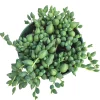
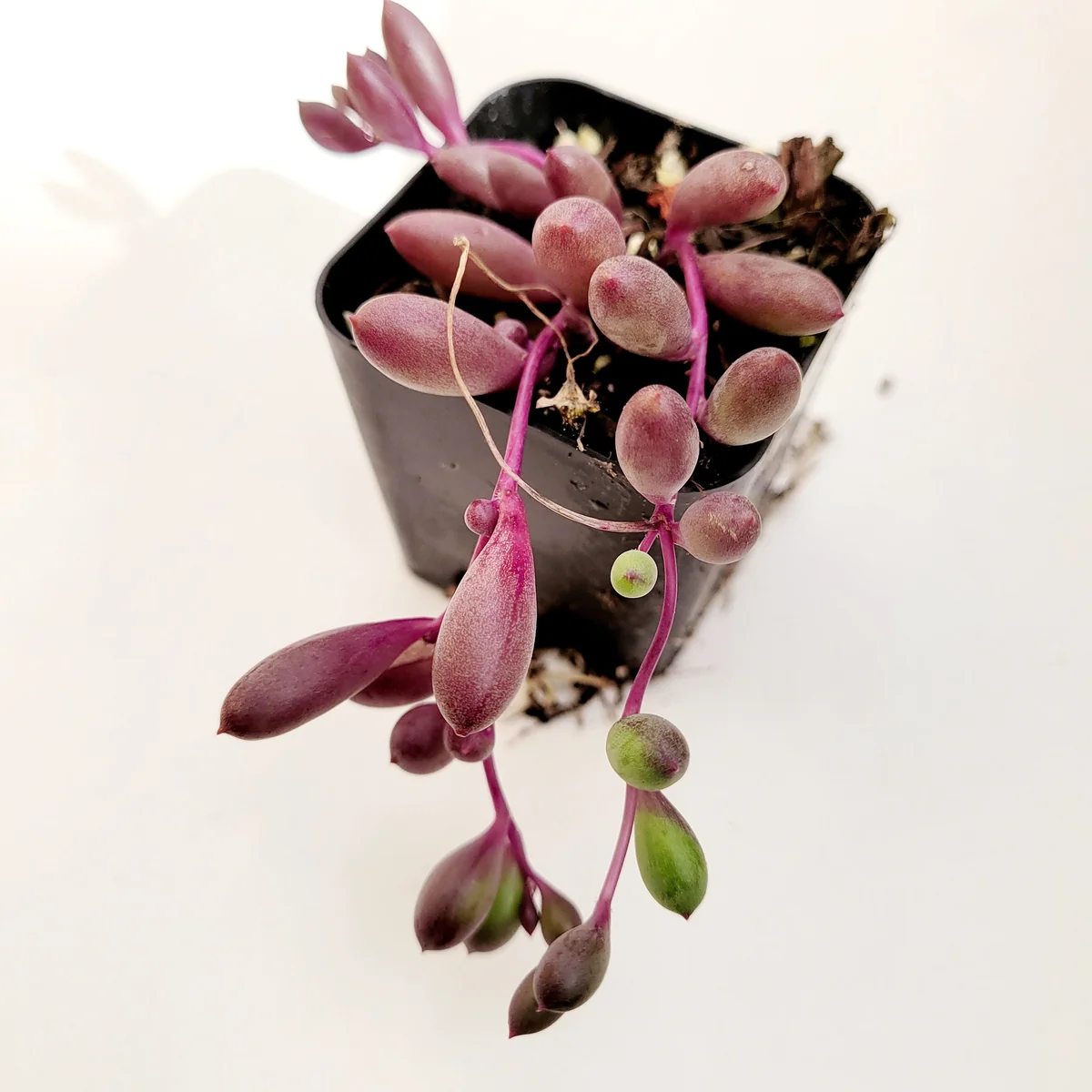
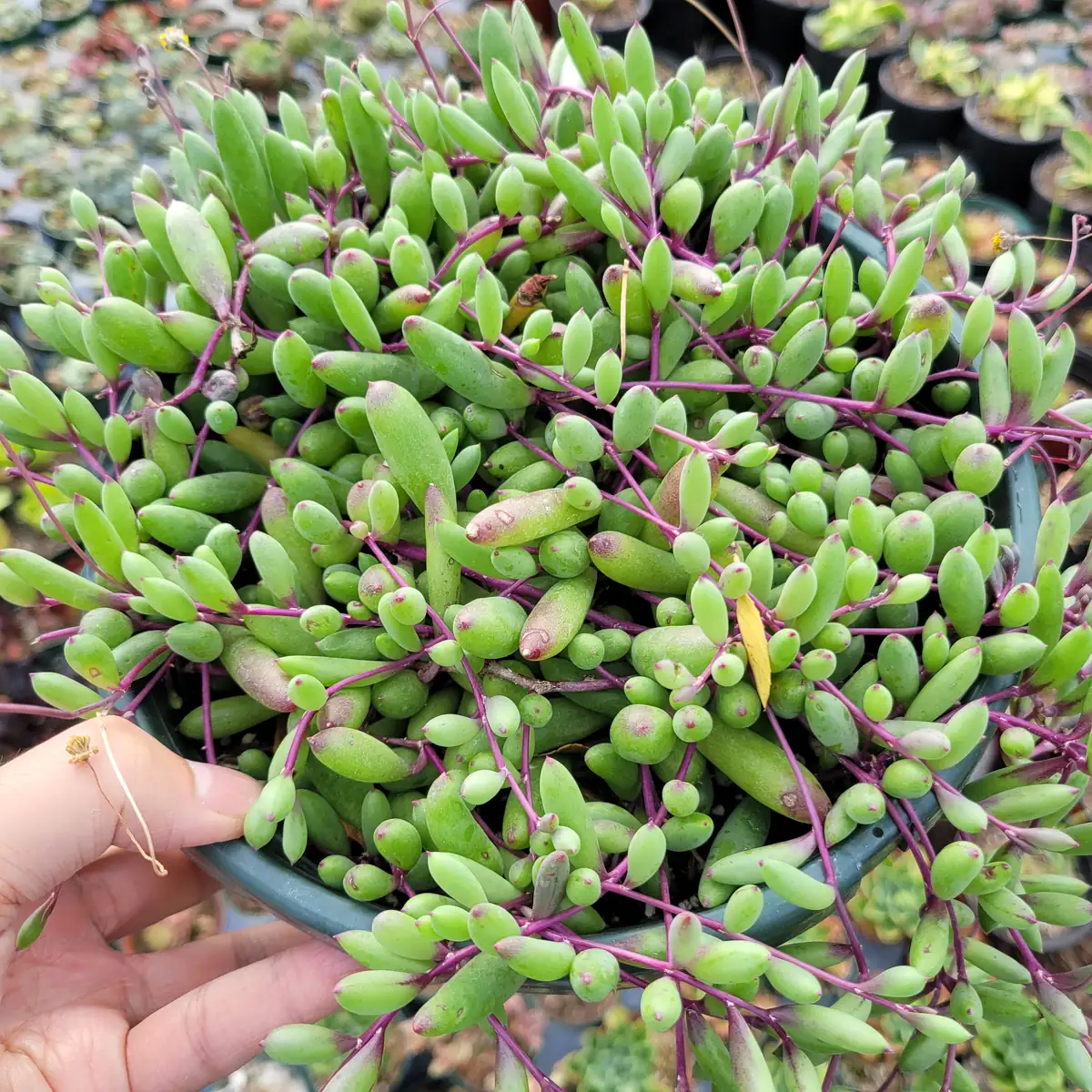
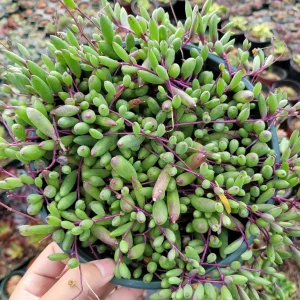
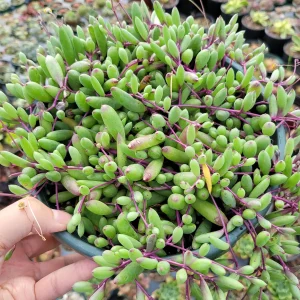
Introduce a splash of vibrant color and unique texture to your plant collection with the exquisite Othonna capensis Ruby Necklace. Also known simply as ‘Ruby Necklace’, this captivating succulent boasts a trailing growth habit and distinctive bean-shaped leaves. What truly sets this plant apart is its remarkable ability to transform; when exposed to bright light or mild stress, its green foliage develops a stunning ruby red hue, living up to its enchanting name. This fast-growing succulent is perfect for adding dynamic visual interest to hanging baskets, container arrangements, or even as a ground cover in suitable climates. Its slender, colorful stems and occasional small, yellow, daisy-like flowers make it a year-round delight for any plant enthusiast.
The Othonna capensis plant is a fascinating member of the succulent family, native to South Africa. Its unique coloration and easy-care nature have made it a popular choice for both seasoned collectors and beginner gardeners alike. Whether you’re looking to enhance your indoor jungle or add a touch of drought-tolerant beauty to your outdoor space, the ‘Ruby Necklace’ is an excellent option that promises visual appeal and minimal fuss. Its adaptable nature allows it to thrive in a variety of settings, bringing a cheerful and exotic touch wherever it grows. This trailing succulent live plant is sure to become a conversation starter.
Key Benefits
The Othonna capensis Ruby Necklace offers a multitude of benefits that make it a favorite among plant lovers. Its striking appearance and adaptable nature are just a few reasons to welcome this beautiful succulent into your home or garden.
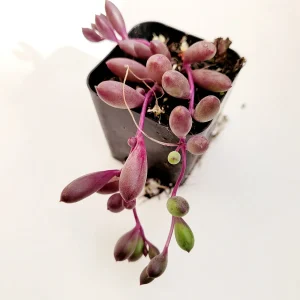
- Dynamic Color Transformation: Enjoy the ever-changing display of this succulent as its bean-shaped leaves shift from green to a brilliant ruby red under optimal light conditions. This natural transformation adds an exciting and unique visual element to your plant collection. The vibrant red leaf succulent is a true showstopper.
- Low Maintenance & Drought Tolerant: Like most succulents, the Othonna capensis Ruby Necklace is incredibly forgiving and requires minimal watering. It’s an ideal choice for busy individuals or those new to plant care, thriving on neglect rather than over-attention.
- Versatile Trailing Growth: Its cascading stems make it perfect for hanging baskets, allowing its ‘necklaces’ of colorful leaves to drape beautifully. It can also be used as a vibrant ground cover, in rock gardens, or integrated into mixed succulent arrangements.
- Year-Round Interest: Unlike many plants that have seasonal blooms, the ‘Ruby Necklace’ can produce small, cheerful yellow flowers throughout the year, adding continuous charm and appeal to its already attractive foliage.
- Compact & Attractive Form: With its narrow, brightly colored stems and distinctively shaped leaves, this plant maintains an attractive and tidy appearance, even as it trails. It’s a great choice for smaller spaces or adding detail to larger displays.
- Air Purification: While not as prominent as some other houseplants, succulents naturally contribute to improving indoor air quality by absorbing carbon dioxide and releasing oxygen, creating a fresher living environment.
- Unique Aesthetic Appeal: Its unusual leaf shape and dramatic color changes make it a truly unique specimen, standing out from more common succulents and adding an exotic touch to any plant display.
Plant Care & Growing Tips
Caring for your Othonna capensis Ruby Necklace is relatively straightforward, making it a rewarding plant for both beginners and experienced gardeners. Understanding its specific needs will ensure it thrives and displays its beautiful ruby coloration. This Ruby Necklace succulent care guide will help you keep your plant healthy and vibrant.
For optimal growth and color, provide plenty of bright light. While it enjoys ample sun, especially in cooler climates, direct scorching afternoon sun in very hot regions should be avoided, as it can burn the leaves. Ideally, position your Othonna capensis plant where it receives several hours of morning sun and bright indirect light in the afternoon. When grown indoors, a south or west-facing window is often best. Proper watering is crucial; like all succulents, it is susceptible to root rot if overwatered. Allow the soil to dry out completely between waterings, then water thoroughly until water drains from the bottom of the pot. Reduce watering significantly during cooler months.
The right soil mix is essential for a healthy ‘Ruby Necklace’. It requires a very well-draining, acidic soil with a pH between 6.0 and 6.5. Commercially available cactus and succulent soil mixes are excellent choices, often amended with perlite or pumice to enhance drainage. This plant thrives in warmer temperatures, ideally between 50°F and 80°F (10°C to 27°C). It is not cold-hardy, so protect it from temperatures below 50°F (10°C) for extended periods to prevent damage. During the growing season (spring and summer), you can fertilize lightly with a balanced liquid succulent fertilizer diluted to half strength. Repot only when the plant outgrows its container, typically every 1-2 years, ensuring you use fresh, well-draining soil. Pay attention to pest control, as mealybugs can sometimes be an issue; treat with insecticidal soap or neem oil if necessary. Understanding Ruby Necklace succulent care ensures a thriving plant.
Size & Details
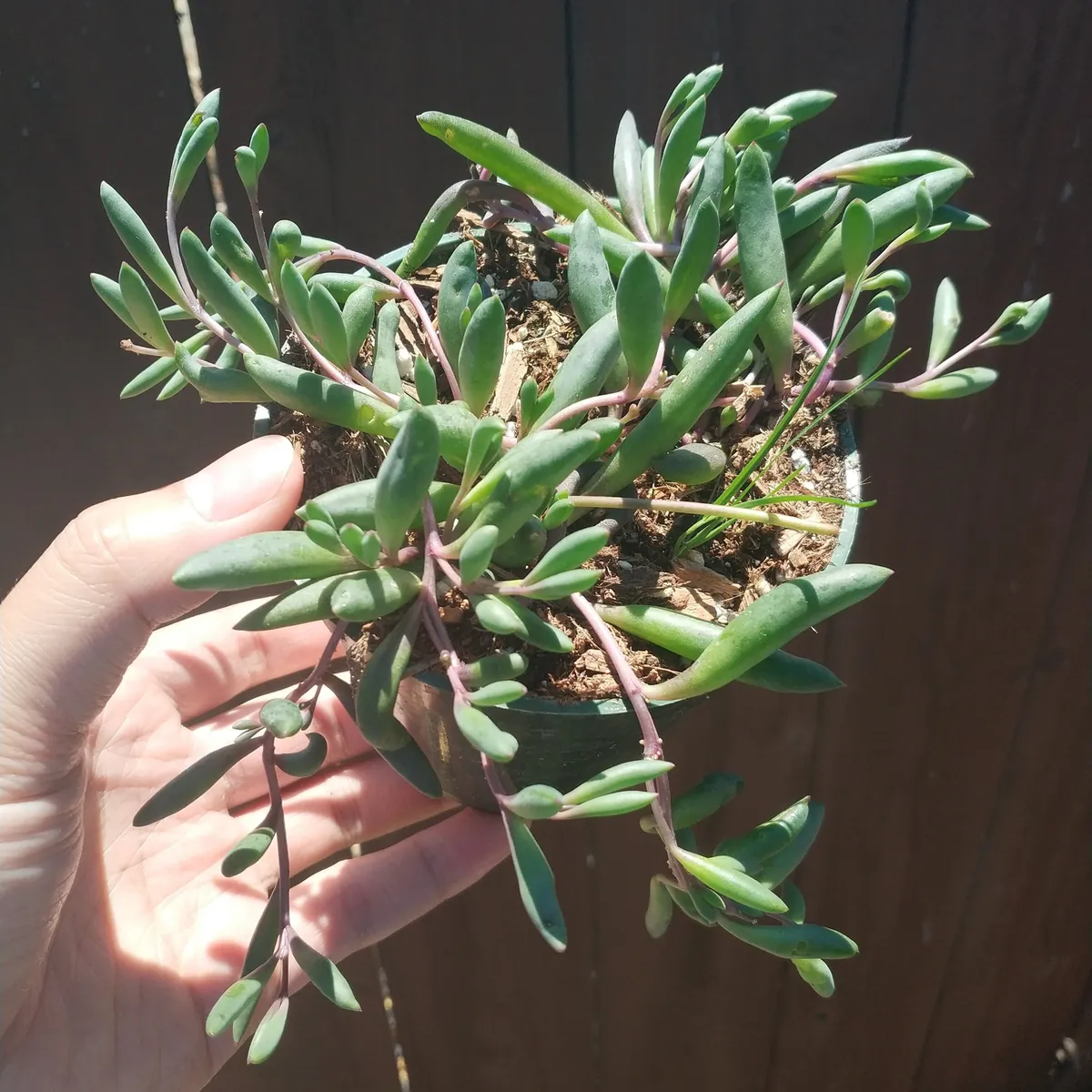
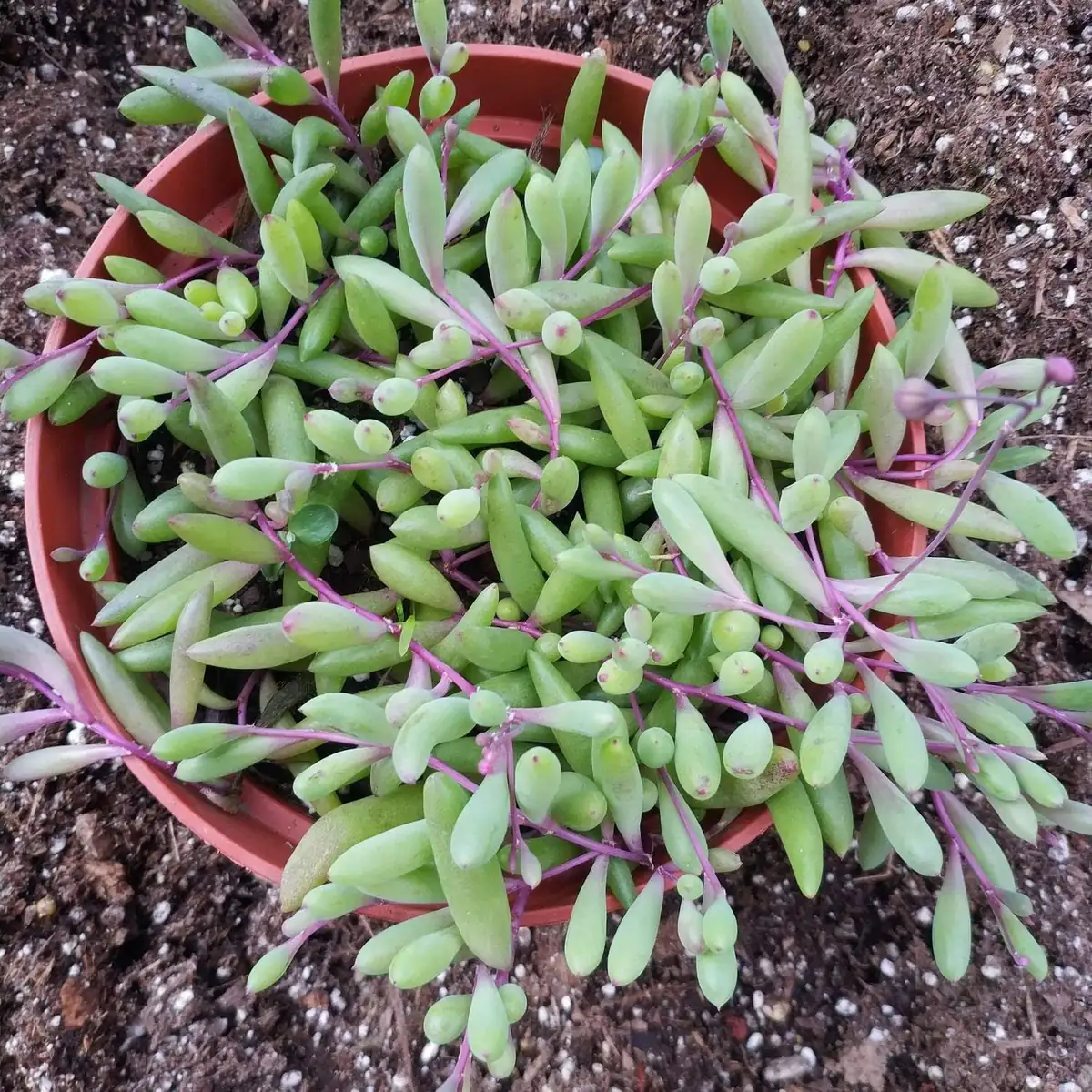
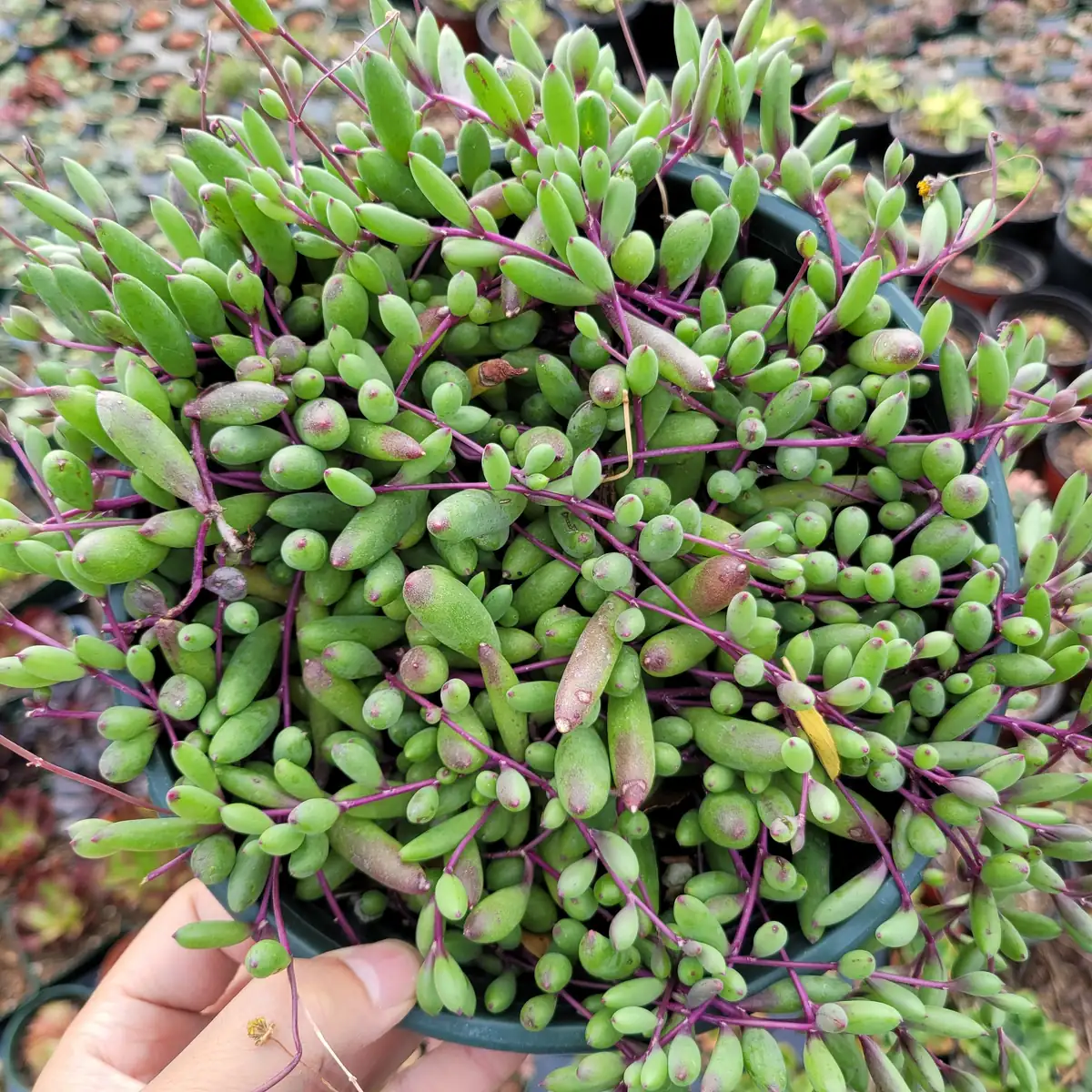
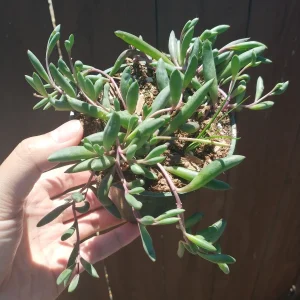
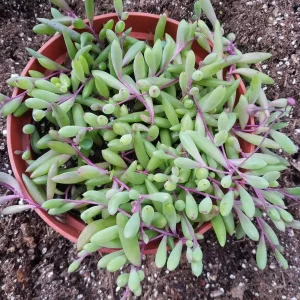
The Othonna capensis Ruby Necklace is a live trailing succulent plant known for its vigorous growth. Its slender stems can trail downwards, often reaching lengths of several feet when mature, creating a beautiful cascading effect. The bean-shaped leaves are typically about 1/2 to 1 inch long. This plant is often shipped either in a 2-inch pot with soil for smaller plants or as bare roots for larger specimens, ensuring a healthy start in your environment. It grows at a relatively fast rate, quickly filling out hanging baskets or containers. Expect it to establish quickly and begin its characteristic trailing habit within a few weeks of planting. While it can grow as a ground cover, it truly shines when its stems are allowed to hang freely.
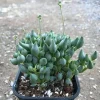
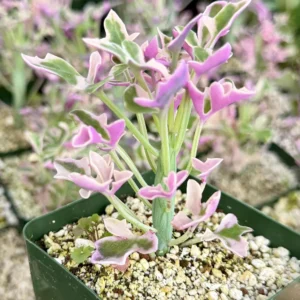
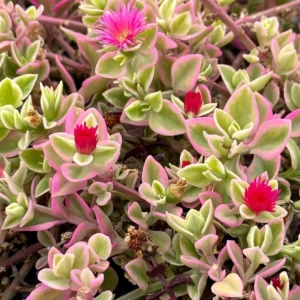
When you receive your red leaf succulent, you can expect a plant similar to those pictured, though natural variations in shape and color are common. The coloration, particularly the ruby red hues, will intensify with proper light exposure. This succulent is perfect for adding continuous vibrant color to your home or garden, thriving with minimal intervention once established. Its ability to bloom small yellow flowers throughout the year adds to its continuous appeal. The overall size and density of the plant will increase significantly over time, making it a long-lasting and rewarding addition to your collection.
Frequently Asked Questions
- Q: How big does the Othonna capensis Ruby Necklace get? A: The stems of this trailing succulent can reach several feet in length, especially when grown in hanging baskets, creating a beautiful cascading effect. Individual leaves are typically 0.5 to 1 inch long.
- Q: What size pot does the plant come in? A: Smaller Othonna capensis plant specimens (around 2 inches) are typically shipped in their pots with soil, while larger plants (4 inches and up) are often shipped bare-root to ensure their health during transit.
- Q: Is this an indoor or outdoor plant? A: The Othonna capensis Ruby Necklace can be grown both indoors and outdoors. It thrives outdoors in warmer climates (USDA Zones 9-11) and makes an excellent houseplant in cooler regions, provided it receives adequate light.
- Q: How much sunlight does it need? A: This red leaf succulent prefers bright light. Provide several hours of morning sun and bright indirect light in the afternoon for the best coloration. Direct scorching afternoon sun should be avoided.
- Q: Is Ruby Necklace succulent easy to care for? A: Yes, the ‘Ruby Necklace’ is considered relatively easy to care for. It’s a drought-tolerant succulent that thrives on minimal watering and bright light, making it suitable for beginners. Following good Ruby Necklace succulent care practices will ensure its success.
- Q: What condition will my trailing succulent live plant arrive in? A: Your plant will arrive healthy and ready to plant. Small plants may come potted, while larger ones might be bare-root to ensure safe shipping. Minor variations in shape and color are normal.
- Q: What’s the best soil for this plant? A: This succulent requires well-draining, acidic soil with a pH between 6.0 and 6.5. A commercial cactus and succulent mix, often amended with extra perlite or pumice, is ideal.
- Q: When is the best time to plant or repot an Othonna capensis plant? A: The best time to plant or repot is during the active growing season, typically spring or early summer, allowing the plant to establish itself quickly.
- Q: Will my Othonna capensis Ruby Necklace survive winter in my zone? A: This plant is not cold-hardy. If temperatures in your area drop below 50°F (10°C), it’s best to bring the plant indoors for the winter or protect it from frost.
- Q: How often should I water my ‘Ruby Necklace’ succulent? A: Water only when the soil has completely dried out. The frequency will depend on your climate and growing conditions, but it’s always better to underwater than overwater this red leaf succulent.


Reviews
There are no reviews yet.