Overview
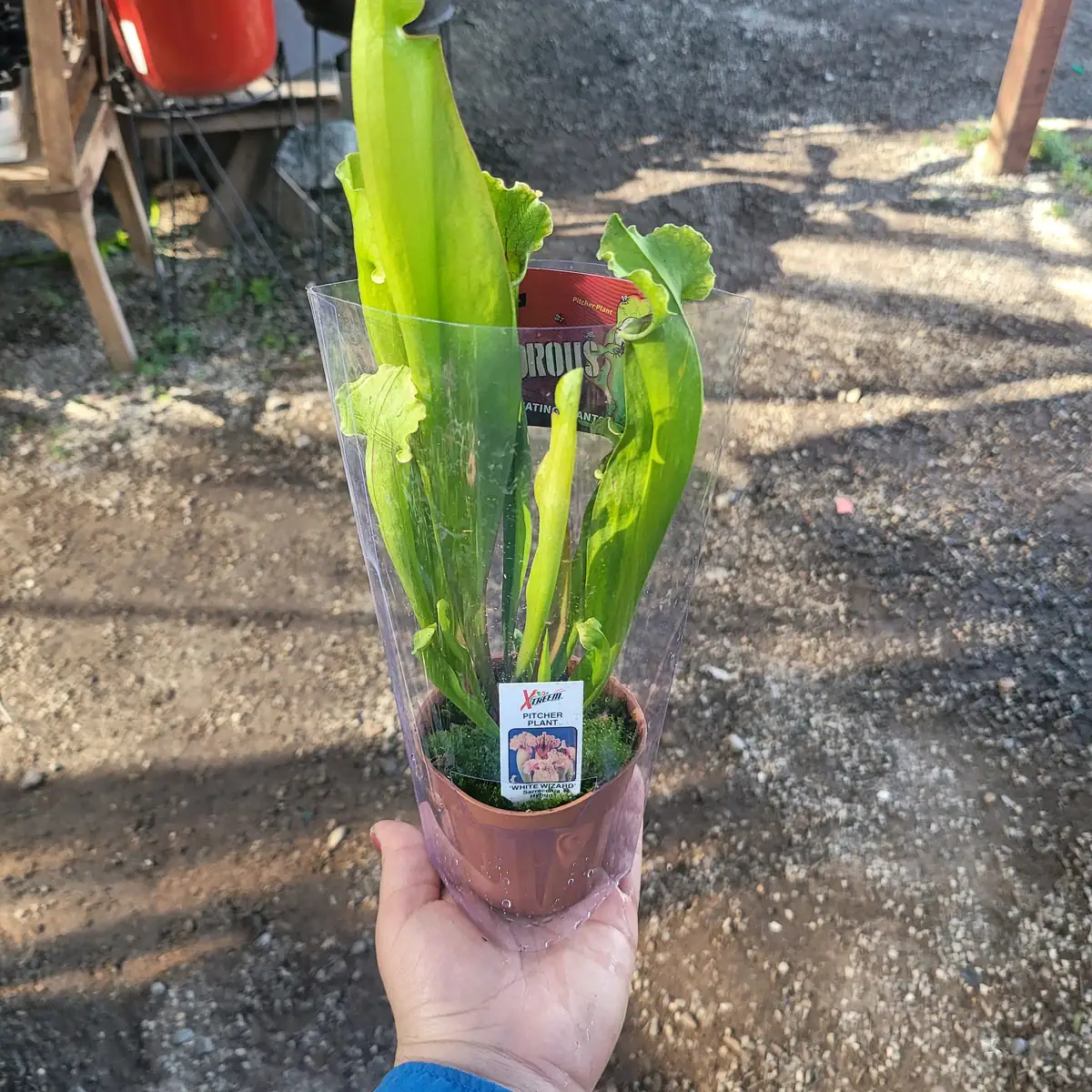
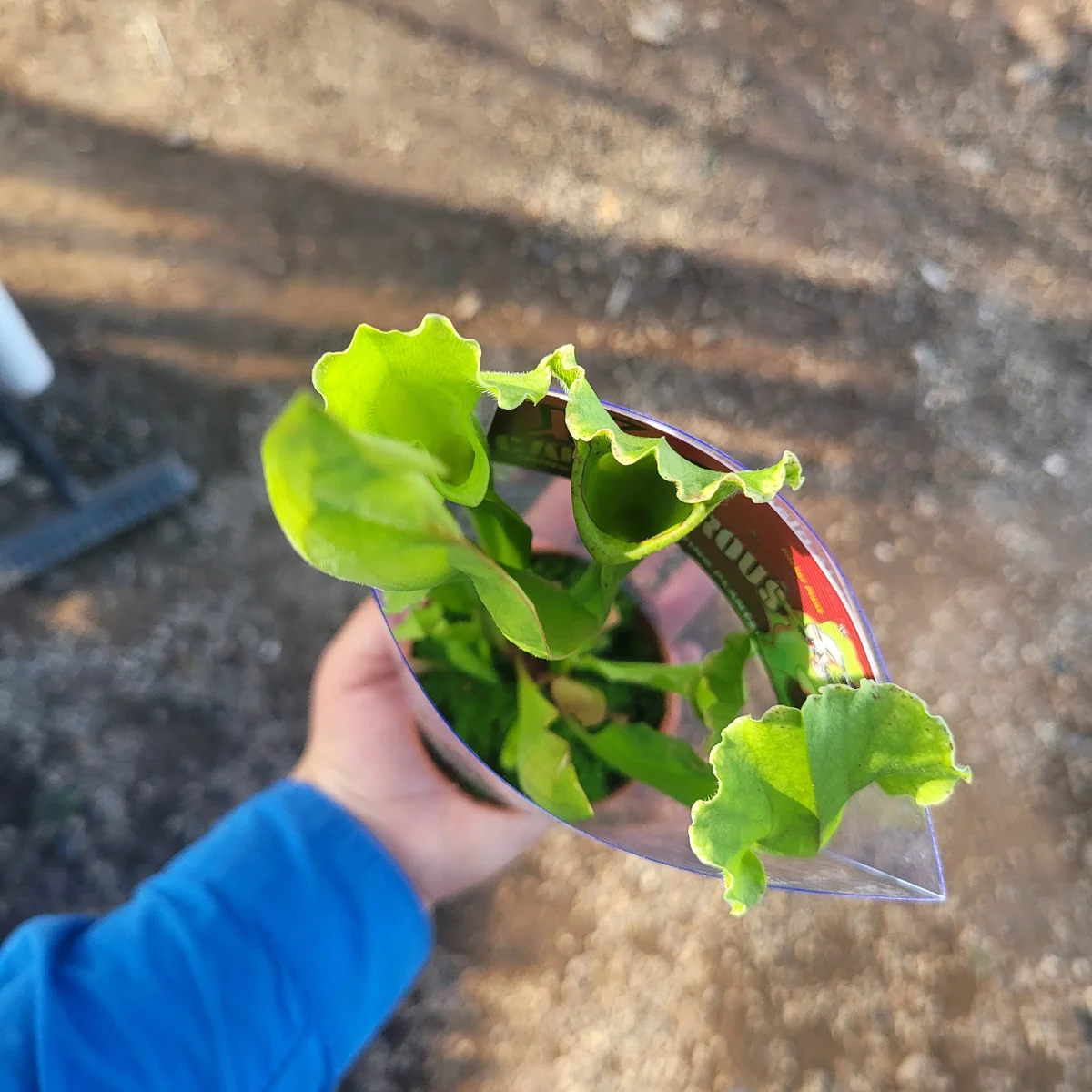
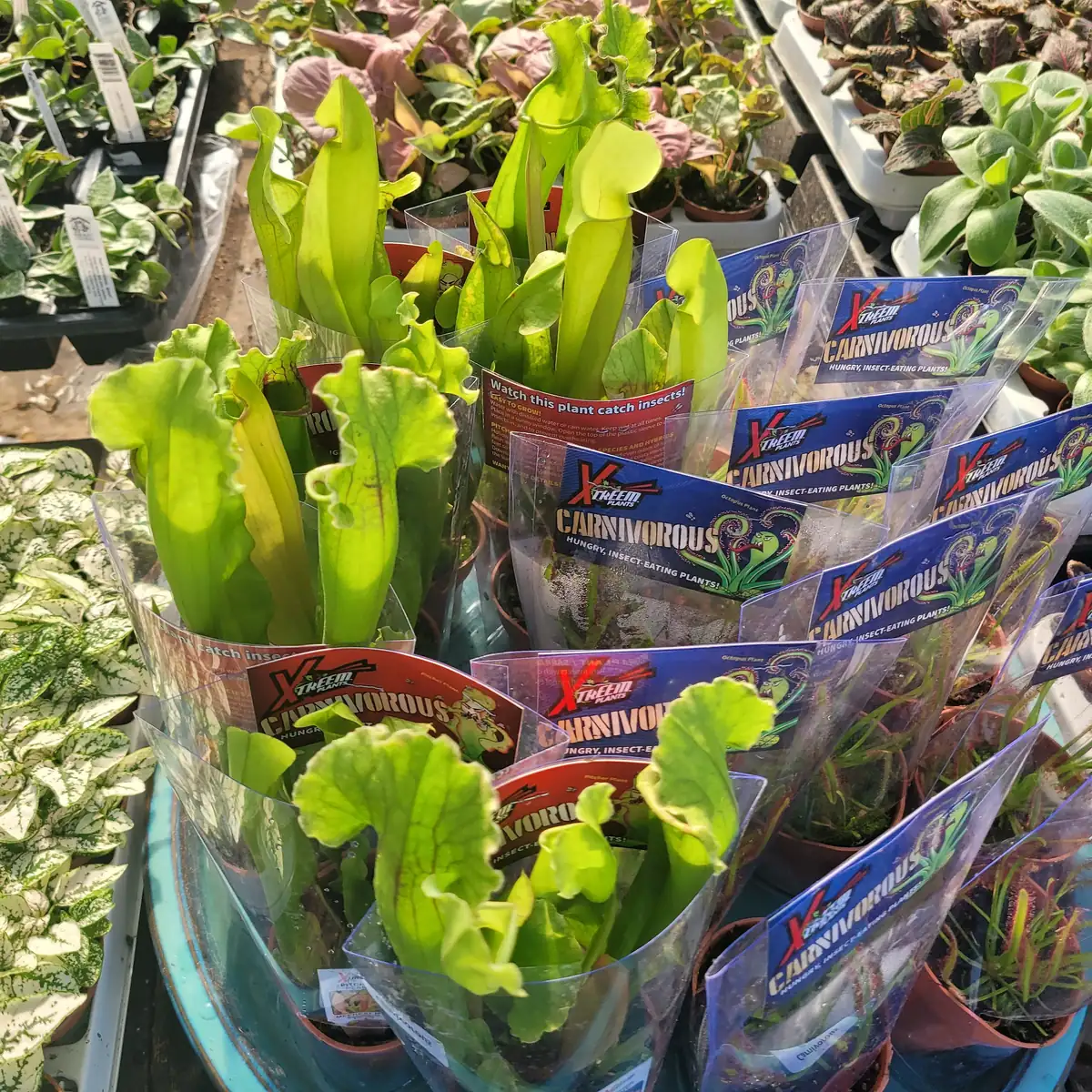
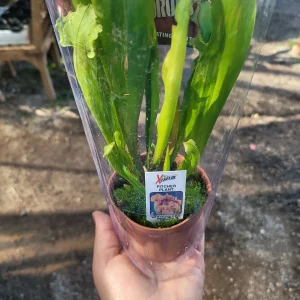
Introduce a truly unique specimen to your collection with the Sarracenia pitcher plant. This remarkable live carnivorous plant, also commonly known as the North American pitcher plant, is celebrated for its distinctive, pitcher-shaped leaves that act as natural insect traps. Each pitcher is a marvel of evolution, luring unsuspecting insects with nectar and vibrant colors, then trapping them within its slippery walls. Ideal for both seasoned carnivorous plant enthusiasts and curious beginners, the Sarracenia adds an exotic touch to any indoor space or outdoor bog garden. Its striking appearance and fascinating predatory nature make it a captivating conversation starter and a living piece of art.
Our Sarracenia is delivered as a healthy, established plant, ready to thrive in its new environment. These plants are native to wetlands and bogs, so replicating their natural habitat is key to their success. They are relatively low-maintenance once their specific environmental needs are met, offering a rewarding experience for any plant lover. Embrace the extraordinary with this incredible Sarracenia pitcher plant, and watch as it enchants with its beauty and efficiency.
Key Benefits
The Sarracenia pitcher plant offers a range of unique benefits that make it a desirable addition to any plant collection. Beyond its striking visual appeal, this plant contributes to a healthier environment in several ways, making it more than just a decorative item:
- Natural Insect Control: One of the primary benefits of the live carnivorous plant is its ability to naturally trap and digest insects. This provides an eco-friendly way to manage common household pests like flies and gnats without the need for chemical sprays.
- Exotic Aesthetic Appeal: With its unique pitcher-shaped leaves and often vibrant coloration, the Sarracenia offers an exotic and eye-catching focal point in any room or garden. Its unusual form creates a captivating display that draws attention.
- Educational Value: Observing the carnivorous nature of the Sarracenia can be a fascinating educational experience for all ages. It provides a real-world example of adaptation and ecological interaction, making it a great learning tool.
- Low Maintenance (once established): While they have specific environmental needs, once these are met, Sarracenia plants are surprisingly easy to care for. They require consistent moisture and specific light, but generally do not need frequent feeding or complex pruning.
- Conversation Starter: The unusual and captivating nature of a Sarracenia pitcher plant guarantees it will be a talking point for guests and visitors. Its predatory habits are always a source of intrigue and wonder.
- Unique Bog Garden Addition: For those with outdoor bog gardens or interested in creating one, the Sarracenia is an essential and stunning component, thriving alongside other moisture-loving plants.
Plant Care & Growing Tips
Caring for your Sarracenia pitcher plant involves understanding its specific needs to replicate its natural bog habitat. Proper care ensures vigorous growth and vibrant pitcher development. These plants thrive with plenty of sunlight. They prefer at least 6 hours of direct sunlight daily. Outdoors, a full sun location is ideal. Indoors, place them in your brightest window, such as a south-facing one, or supplement with a strong grow light. Insufficient light can lead to weak, pale pitchers and poor growth. Remember, the more light, the more vibrant the coloration of the pitchers, enhancing the beauty of your live carnivorous plant.
Watering is perhaps the most critical aspect of Sarracenia care. These plants are bog dwellers and require consistently moist, almost waterlogged, conditions. Always use distilled water, rainwater, or reverse osmosis water, as tap water often contains minerals that can harm carnivorous plants over time. Never let the soil dry out. The best method is to place the pot in a tray filled with about 1-2 inches of water, allowing the plant to absorb moisture from the bottom. Refill the tray as it empties. For soil, use a nutrient-poor, acidic mix. A common blend is a 1:1 ratio of peat moss (ensure it’s sphagnum peat moss, not coir) and perlite or horticultural sand. Avoid standard potting soil, which is too rich in nutrients and will kill the plant. Maintaining these conditions will help your Sarracenia care routine lead to a flourishing specimen.
Sarracenia plants are hardy in USDA zones 6-9, depending on the species, but many varieties can be grown indoors year-round. They appreciate a dormant period in winter, which can be achieved by placing them in a cooler spot (around 40-50°F) with reduced light and drier conditions for 3-4 months. During this time, they may lose their pitchers, but will regrow them in spring. Fertilization is generally not needed; the plants get their nutrients from the insects they catch. If grown indoors and not catching many insects, you can occasionally drop a small insect into a pitcher. Repotting is typically done every 1-2 years in early spring using fresh bog mix. Watch out for common pests like aphids or scale; treat with insecticidal soap if necessary, ensuring it’s safe for carnivorous plants. This comprehensive approach to Sarracenia care will help ensure a healthy and thriving plant.
Size & Details
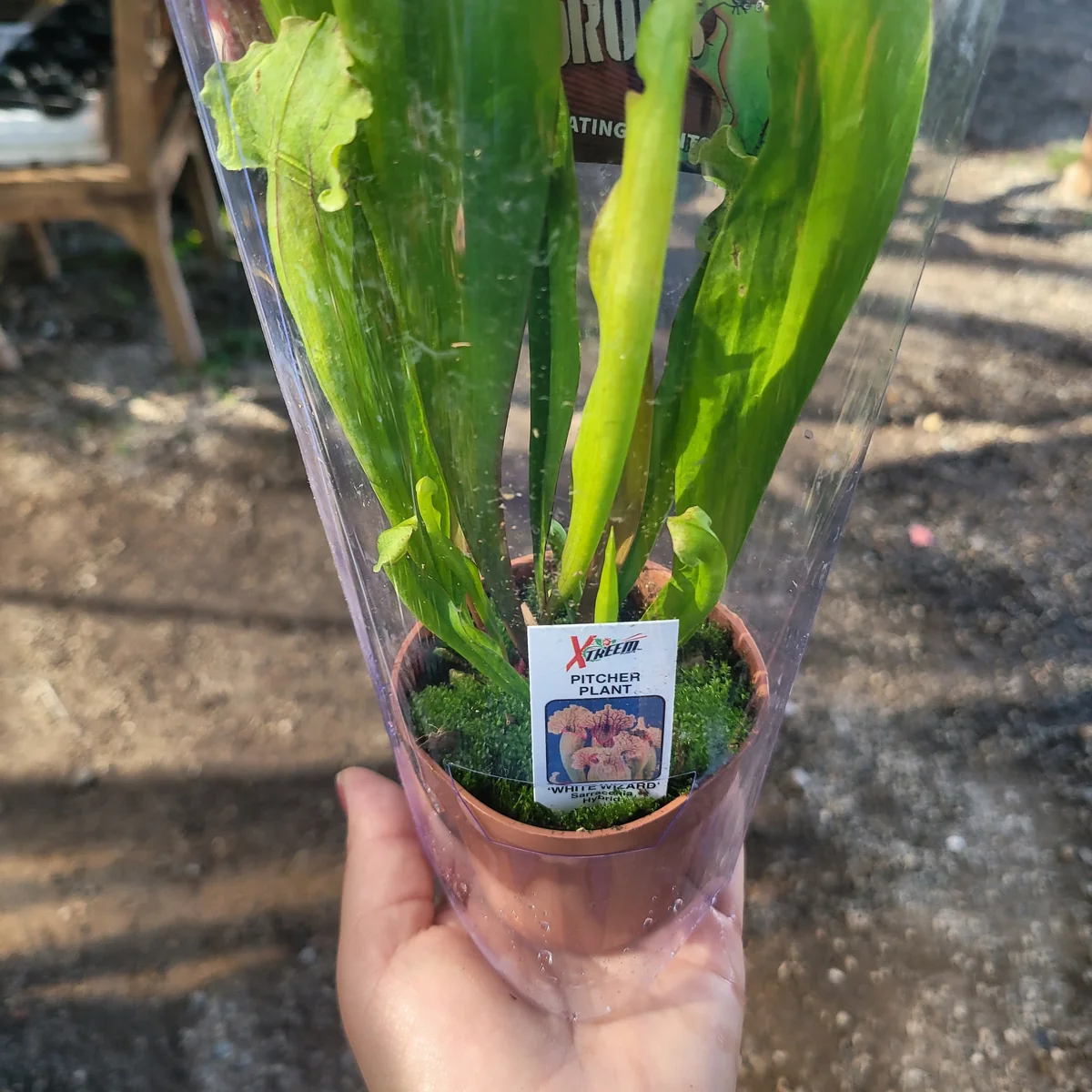
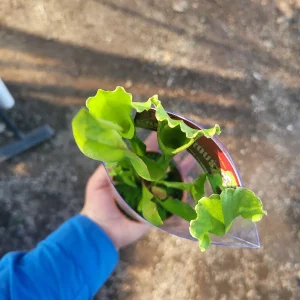
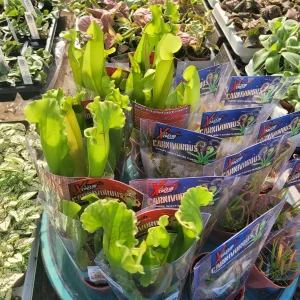
Your Sarracenia pitcher plant will arrive as a healthy, actively growing specimen in a 3-inch nursery pot. The exact height and fullness of the plant may vary slightly due to natural growth patterns and seasonal availability, but each plant is selected for its quality and vigor. These plants typically grow to an average height of 6 to 18 inches, depending on the specific species and growing conditions, with some larger varieties reaching up to 3 feet tall. The pitchers develop over time, showcasing their unique forms and colors.
The plant is shipped securely potted in its original nursery container with an appropriate bog-style growing medium, ensuring minimal transplant shock upon arrival. With proper care, you can expect your Sarracenia to continue growing and producing new pitchers throughout the warmer months. These plants are known for their relatively fast growth rate under optimal conditions, quickly becoming a prominent and fascinating feature in your collection. You’ll be delighted by the continuous development of new, vibrant traps, making this bog plant for sale a truly dynamic addition.
Frequently Asked Questions
- Q: How big does this Sarracenia pitcher plant get? A: The Sarracenia pitcher plant typically grows between 6 to 18 inches tall, though some varieties can reach up to 3 feet. Its mature size depends on the specific species and the care it receives.
- Q: What size pot does it come in? A: This Sarracenia pitcher plant is shipped in a standard 3-inch nursery pot, ready for you to place in a larger decorative planter or bog garden setup.
- Q: Is this an indoor or outdoor plant? A: Sarracenia can be grown both indoors and outdoors. They thrive outdoors in bog gardens in appropriate climates (USDA zones 6-9) and make excellent indoor specimens when given sufficient light and humidity.
- Q: How much sunlight does it need? A: This live carnivorous plant requires a minimum of 6 hours of direct sunlight daily to grow vigorously and develop vibrant pitchers. Indoors, place it in the sunniest window available, or use a grow light.
- Q: Is this plant easy to care for? A: Sarracenia care is considered moderately easy once you understand its specific needs, primarily consistent moisture with distilled water and ample sunlight. It’s a great choice for those looking to expand their plant care skills.
- Q: What condition will it arrive in? A: Your Sarracenia pitcher plant will arrive as a healthy, live plant, securely packaged in its nursery pot with soil to ensure it withstands transit and is ready to thrive upon arrival.
- Q: When is the best time to plant or repot Sarracenia? A: The best time to plant or repot your Sarracenia is in early spring, just as it’s emerging from dormancy and beginning its active growth cycle.
- Q: Will it survive winter in my zone? A: Many Sarracenia species are hardy in USDA zones 6-9 and can tolerate winter outdoors with proper protection. In colder zones, they should be brought indoors for a cool dormancy period.
- Q: What kind of water should I use for my Sarracenia? A: Always use distilled water, rainwater, or reverse osmosis water for your Sarracenia pitcher plant. Tap water typically contains minerals that can be harmful to carnivorous plants.
- Q: Is this insect eating plant pet-safe? A: While not typically considered toxic, it’s always best to keep carnivorous plants out of reach of curious pets to prevent any accidental ingestion or damage to the plant.


Reviews
There are no reviews yet.