




Blog Post
7 Reasons Why Every Gardener Should Grow Comfrey (Must-Read!)

Jan
Many gardeners are searching for a sustainable way to build soil health without relying on chemicals. If that sounds like you, then it is time to meet Comfrey.
Let me introduce you to comfrey (scientifically known as Symphytum officinale). This robust, herbaceous perennial is a true garden superhero. With its rosettes of large, hairy grey-green leaves and clusters of bell-like mauve flowers, it is as beautiful as it is functional. Whether you are gardening in the cool temperate zones of the North or the humid South, comfrey thrives.
But the real secret lies beneath the surface. Comfrey’s massive roots can tunnel down an astounding 2 meters (6.5 feet) into the subsoil. This allows it to access deep-seated nutrients that other shallow-rooted plants simply cannot reach. Especially if you live in a rainy area, comfrey acts as a safety net, trapping nutrients before they wash away and bringing them back to the surface where your garden needs them most.
Here are 7 reasons why you should grow comfrey – this historic, high-yielding plant belongs in your garden today.
1. A Powerhouse Dynamic Accumulator
One of the most impressive things about comfrey is its root system. Unlike your typical garden vegetables, comfrey sends a massive taproot deep into the subsoil, sometimes up to 10 feet deep.
In the world of organic gardening, we call this a dynamic accumulator. Think of it as a biological mining machine. While your shallow-rooted plants are struggling to find nutrients, comfrey is reaching down to pull up minerals like potassium, calcium, and magnesium that other plants cannot reach. It stores these nutrients in its large, fuzzy leaves. When you harvest those leaves, you are essentially bringing up “buried treasure” from the earth to feed your topsoil.
2. The Ultimate Chop and Drop Mulch
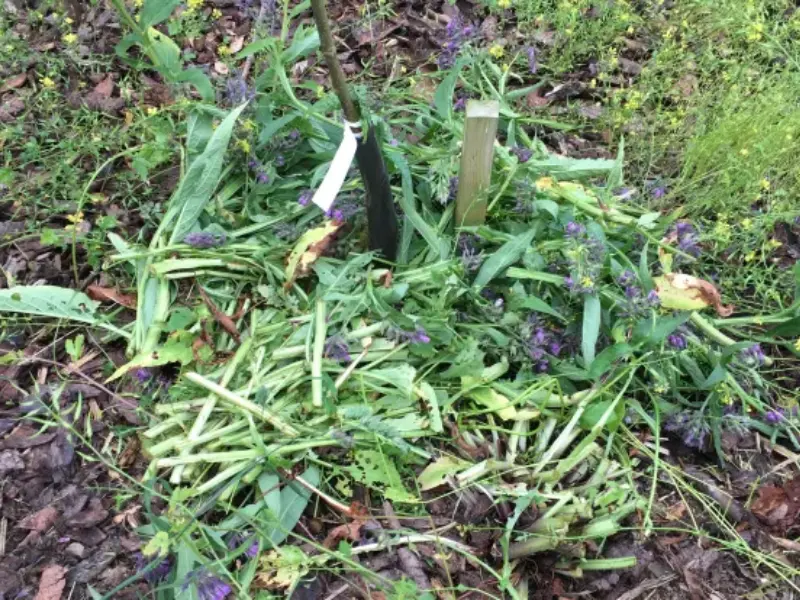
If you are a fan of sustainable gardening, you probably know that bare soil is a crime. But buying organic straw or wood chips every year gets expensive. Comfrey provides a solution known as “chop and drop.”
Because comfrey grows so fast, you can cut the entire plant down to about 2 inches from the ground multiple times a season. You simply drop those nutrient-dense leaves right at the base of your fruit trees or vegetable rows. They break down incredibly fast, releasing nitrogen and potash directly into the soil while keeping moisture in and weeds out. It is the most efficient, locally-sourced mulch you will ever find.
3. Making Black Gold Comfrey Tea
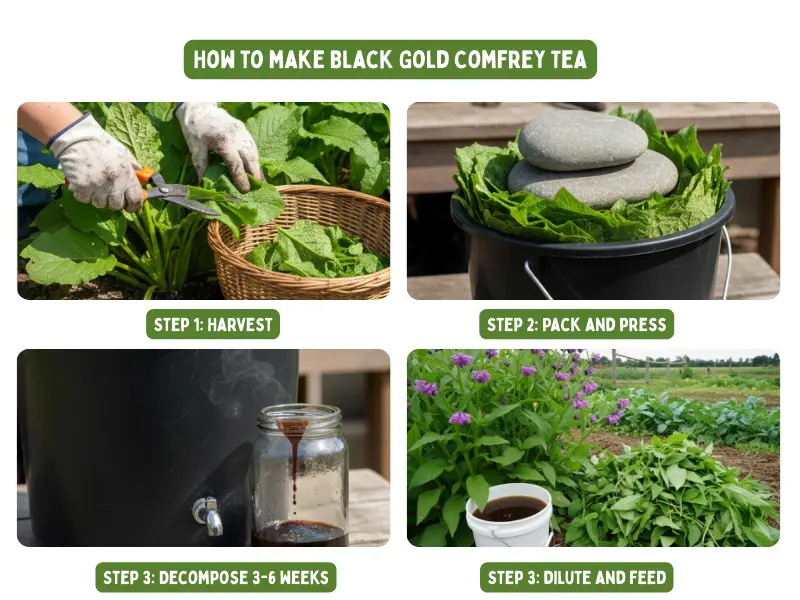
Forget the store-bought liquid fertilizers. You can make your own high-potency organic fertilizer for free.
To make what gardeners call “comfrey tea,” you just stuff a bucket with comfrey leaves, weigh them down with a brick, and add water (or let them rot without water for a concentrated “press”). After a few weeks, it turns into a dark, smelly liquid that is incredibly rich in nutrients.
A friend of mine in Oregon started using comfrey tea on her peppers last summer. She called me halfway through August, shocked that her plants were twice the size of her neighbor’s. It is particularly great for flowering and fruiting plants that need that extra boost of potassium to produce a heavy harvest.
4. A Magnet for Pollinators and Beneficial Insects
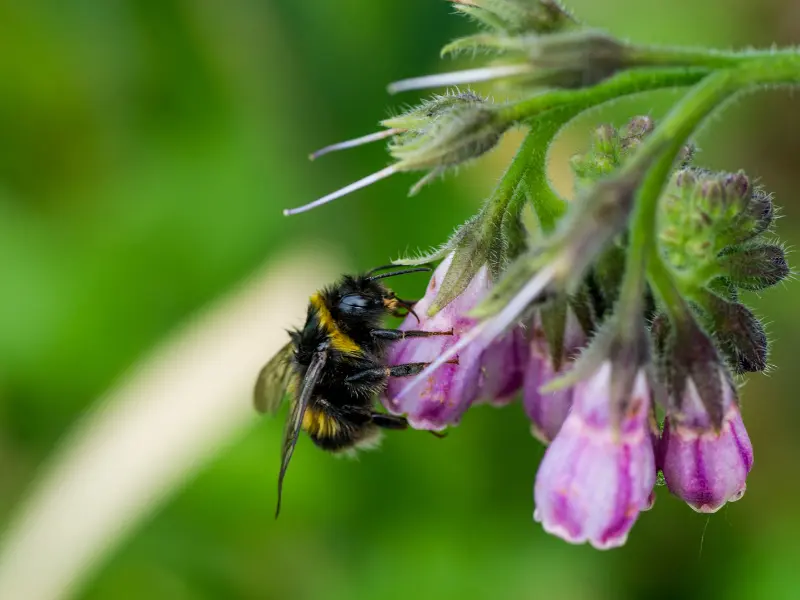
We are all worried about the bees, right? Comfrey is one of the best plants you can grow to support your local ecosystem.
Its bell-shaped flowers are a favorite for bumblebees and honeybees. Because comfrey has a long blooming season, it provides a reliable nectar source when other flowers might be fading. By planting comfrey near your orchard or vegetable patch, you are essentially inviting a flight crew of pollinators to come and work on your garden. Plus, the dense foliage provides a great habitat for spiders and predatory beetles that eat the pests you don’t want.
Read more:
5. Soil Aeration and Structure Improvement
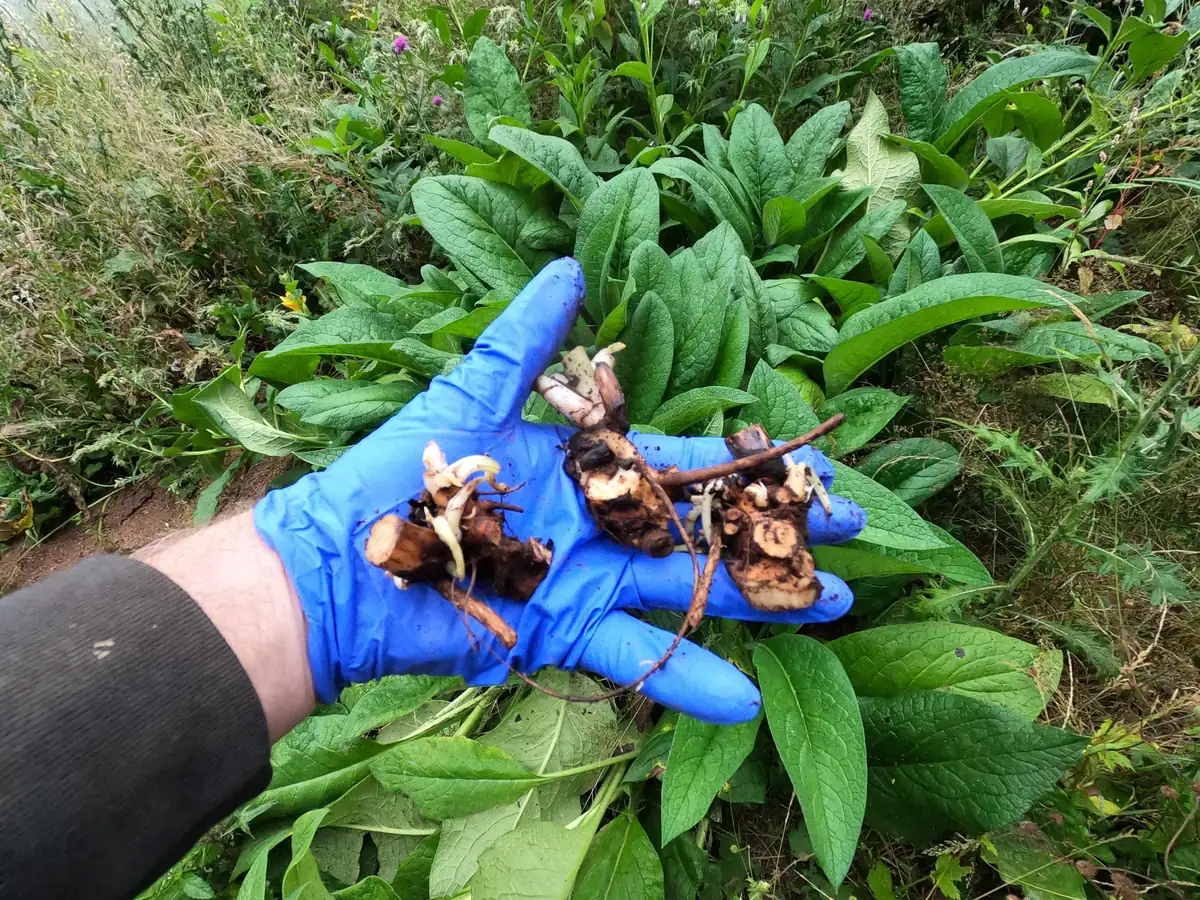
If you are dealing with heavy clay soil, comfrey is your best friend. Those deep taproots I mentioned earlier do more than just mine minerals; they act like biological drills.
As the roots push through compacted layers of earth, they create channels for water and air to penetrate deeper into the ground. When old roots die back, they leave behind organic matter deep in the soil profile. Over a few years, a comfrey patch can turn hard, lifeless dirt into a crumbly, rich environment where earthworms thrive.
6. A Sustainable Feed for Livestock
For those of you raising a few backyard chickens or even some goats, comfrey is a fantastic supplemental feed. It is high in protein and contains many essential vitamins.
Many homesteaders in the US use comfrey as a “green feed” to reduce their grain bills. While you should always introduce new foods to your animals slowly, comfrey has been used for centuries as a hardy fodder crop. My chickens absolutely love it when I toss a few wilted leaves into their run; it keeps them occupied and adds a nutritional punch to their diet.
7. Nature’s First Aid: The Traditional Knitbone
Historically, comfrey was known by the name “Knitbone.” This is due to a substance called allantoin found in the plant, which promotes cell regrowth.
While you should never eat comfrey (it contains alkaloids that can be tough on the liver) and should always consult a doctor, many gardeners use it externally. Infusing comfrey leaves into a salve or using them as a poultice for minor bruises or sprains is a staple of traditional herbalism. Having a living pharmacy in your backyard is a great feeling, even if you just use it for the occasional sore muscle after a long day of digging.
How to Choose the Right Variety: Bocking 14 vs. Common Comfrey
Before you run out and buy seeds, here is a pro-tip. Common comfrey (Symphytum officinale) can spread like wildfire because it drops seeds everywhere.
For most home gardeners, I highly recommend finding Bocking 14 Russian Comfrey. This is a sterile hybrid, meaning it won’t take over your entire yard via seeds. You plant it once via a root cutting, and it stays in that one spot forever. It is much easier to manage and is specifically bred for the highest nutrient content.
Frequently Asked Questions (FAQs)
Is comfrey invasive?
Common comfrey can be invasive because of its seeds. However, if you plant the Bocking 14 variety, it is not invasive. Just be sure where you want to plant it, because once those deep roots are established, it is very hard to move!
Can I grow comfrey in pots?
Yes, but you need a very deep pot to accommodate the taproot. A 5-gallon bucket with drainage holes is the minimum size. Keep in mind it will need more frequent watering than if it were in the ground.
How many times a year can I harvest comfrey?
In most parts of the US, you can get 3 to 5 good harvests per year. Simply cut it back when it reaches about 2 feet tall. It will grow back incredibly fast.
Is it safe to use comfrey around edible vegetables?
Absolutely. Using comfrey as mulch or tea is a safe and organic way to feed your vegetables. The plant’s nutrients are absorbed by your crops, making them healthier and more productive.
Conclusion
Comfrey is truly one of the most generous plants you can put in the ground. It asks for very little, just a bit of sun and some water, and gives back in the form of fertilizer, mulch, pollinator support, and soil health.
If you want to move away from expensive chemicals and toward a self-sustaining garden, comfrey is the best place to start. Whether you have a massive farm or a small suburban plot, this plant will pay for itself a hundred times over.
