Overview
Introduce a robust and versatile addition to your landscape with the hackberry tree bare-root. Known scientifically as Celtis occidentalis, this impressive native tree is celebrated for its rapid growth, exceptional hardiness, and striking appearance. Often found thriving in river terraces and floodplains, the Hackberry has become a popular choice for replacing American Elms due to its similar majestic presence and superior disease resistance. It’s an ideal solution for those seeking a reliable and attractive shade tree that establishes easily and flourishes in a wide range of environments. Whether you’re enhancing a residential garden or a public park, this deciduous tree offers significant ecological benefits and aesthetic appeal.
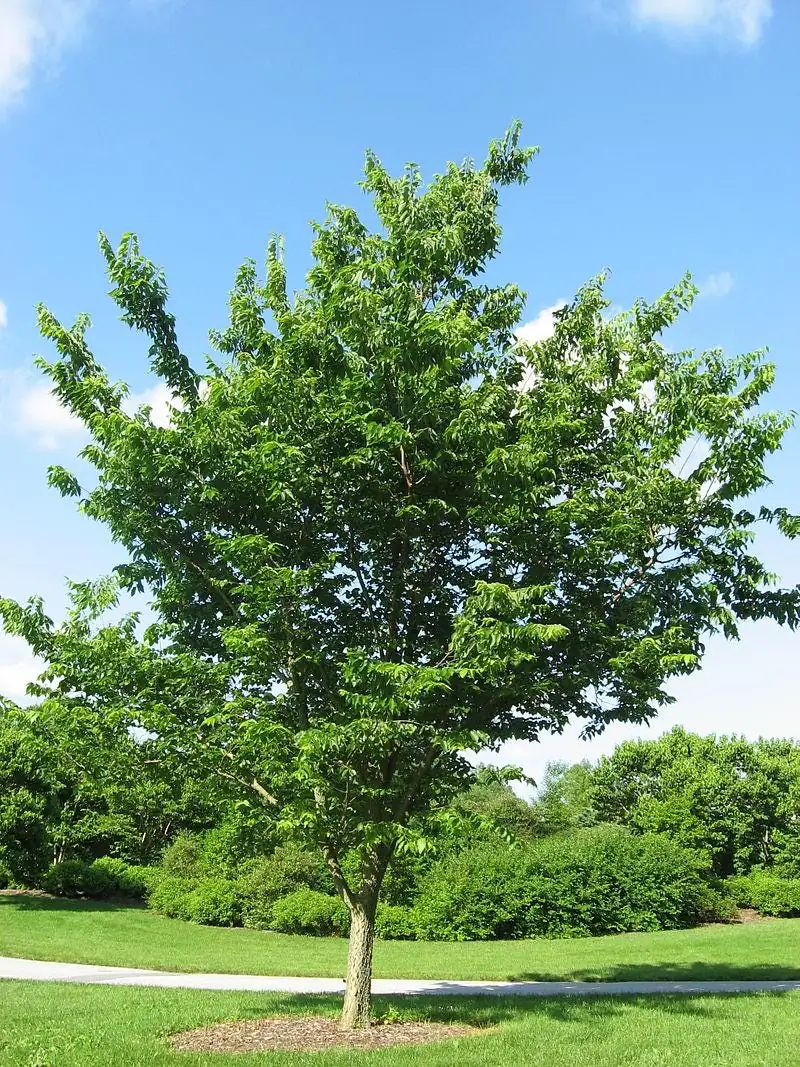
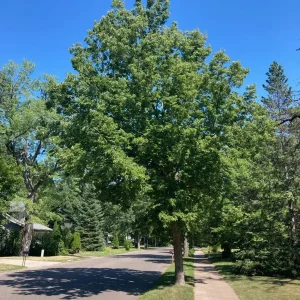
The celtis occidentalis tree is distinguished by its unique bark, which transitions from warty textures in youth to cork-like ridges in maturity, providing captivating visual interest throughout the seasons. Its dense canopy offers excellent shade, making it a perfect choice for cooling your home or creating comfortable outdoor living spaces. Beyond its beauty, the Hackberry plays a vital role in local ecosystems, providing food and shelter for various birds and small wildlife with its berry-like drupes. This low-maintenance tree is a smart and sustainable investment for any landscape, promising decades of natural beauty and environmental contribution.
Key Benefits
The hackberry shade tree offers a multitude of advantages for both homeowners and the environment, making it an excellent choice for diverse planting needs. Its resilience and adaptability truly set it apart.
- Exceptional Hardiness: The Hackberry tree is incredibly tough, tolerating heat, drought, salt spray, wind, ice, and even short-term flooding. This makes it an ideal choice for challenging urban environments.
- Fast Growth Rate: Enjoy a mature landscape sooner with its medium to fast growth, quickly providing significant shade and visual impact.
- Unique Bark Texture: The distinctive bark, evolving from bumpy warts to cork-like ridges, offers year-round aesthetic appeal, especially in winter.
- Wildlife Support: Its small, berry-like fruits (drupes) are a popular food source for birds and small mammals, contributing to local biodiversity.
- Wide Soil Adaptability: Thrives in a broad range of soil conditions, from wet to dry, making it suitable for various planting sites.
- Excellent Shade Provider: Grows into a large, spreading tree, offering a dense canopy perfect for cooling outdoor spaces and reducing energy costs.
- Low Maintenance: Once established, this drought tolerant tree requires minimal care, making it a hassle-free addition to any garden.
Plant Care & Growing Tips
Caring for your hackberry tree bare-root is relatively straightforward, thanks to its inherent hardiness and adaptability. When planting, choose a location that receives full sun to partial shade; at least six hours of direct sunlight per day is ideal for optimal growth. Ensure the tree has ample space to grow, as it can reach heights of 50 to 70 feet with a spread of up to 50 feet at maturity. Dig a hole that is wider than the root spread and just deep enough so that the root collar is level with the soil surface. Spread the roots out in the hole, backfill with native soil, and water thoroughly to settle the soil around the roots.
Watering is crucial during the establishment period, typically the first year or two after planting. Provide deep and regular watering, especially during dry spells, to encourage a strong root system. Once established, the celtis occidentalis tree is remarkably drought-tolerant and requires less frequent watering. It adapts well to various soil types, including clay, sand, and loam, as long as there is decent drainage. Fertilization is generally not necessary for established trees in healthy soil, but a balanced slow-release fertilizer can be applied in spring if growth seems slow. This fast growing hackberry is known for its resilience and generally faces few serious pest or disease issues, making it a robust choice for any garden. Pruning should focus on removing dead, damaged, or crossing branches to maintain a strong structure.
Size & Details
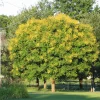
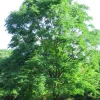
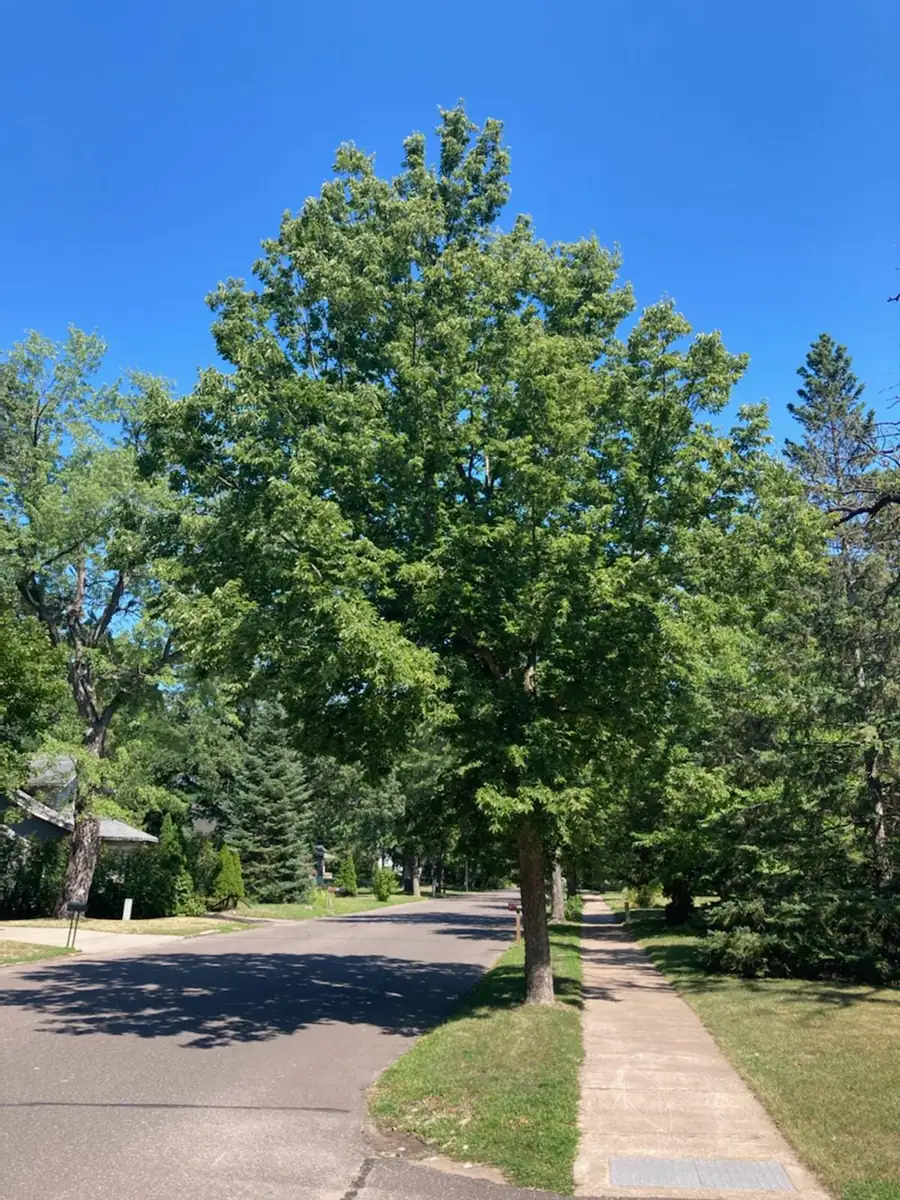
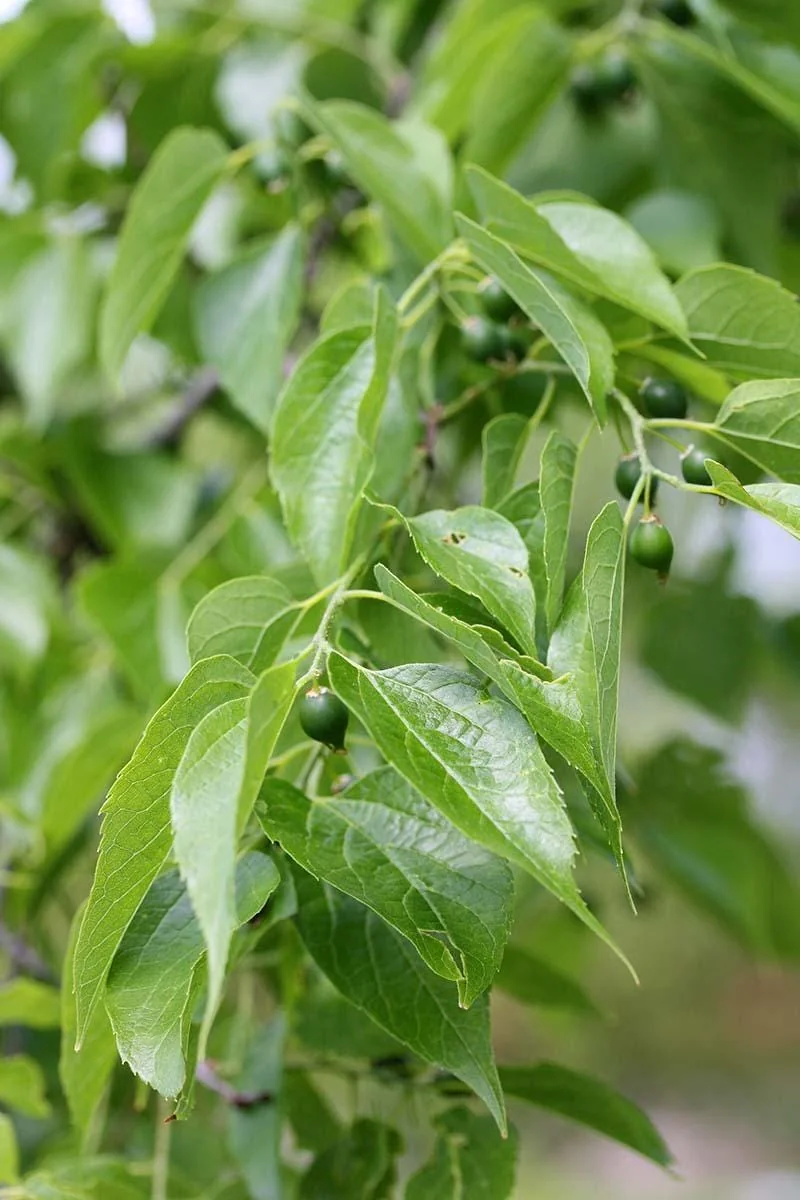
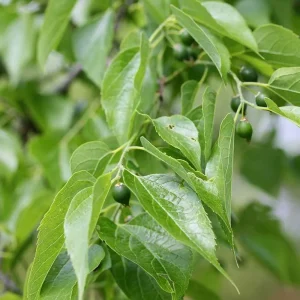
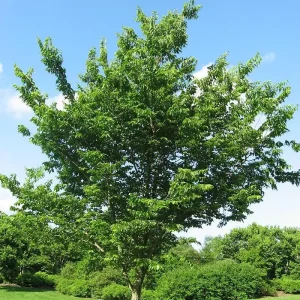
This offering includes 3 Hackberry Tree bare-root specimens, ready for planting to establish a strong foundation. These trees are known for their impressive mature dimensions, reaching an average height of 50 to 70 feet and a width of up to 50 feet, creating a substantial shade canopy. In its youth, the tree exhibits a pyramidal shape, gradually transitioning to a broad, rounded form as it matures. The distinctive bark of young trees features bumpy warts, which develop into unique cork-like ridges over time, providing continuous visual interest. The dark green leaves are 2 1/2 to 4 inches long, turning a vibrant yellow in autumn, adding seasonal color to your landscape.
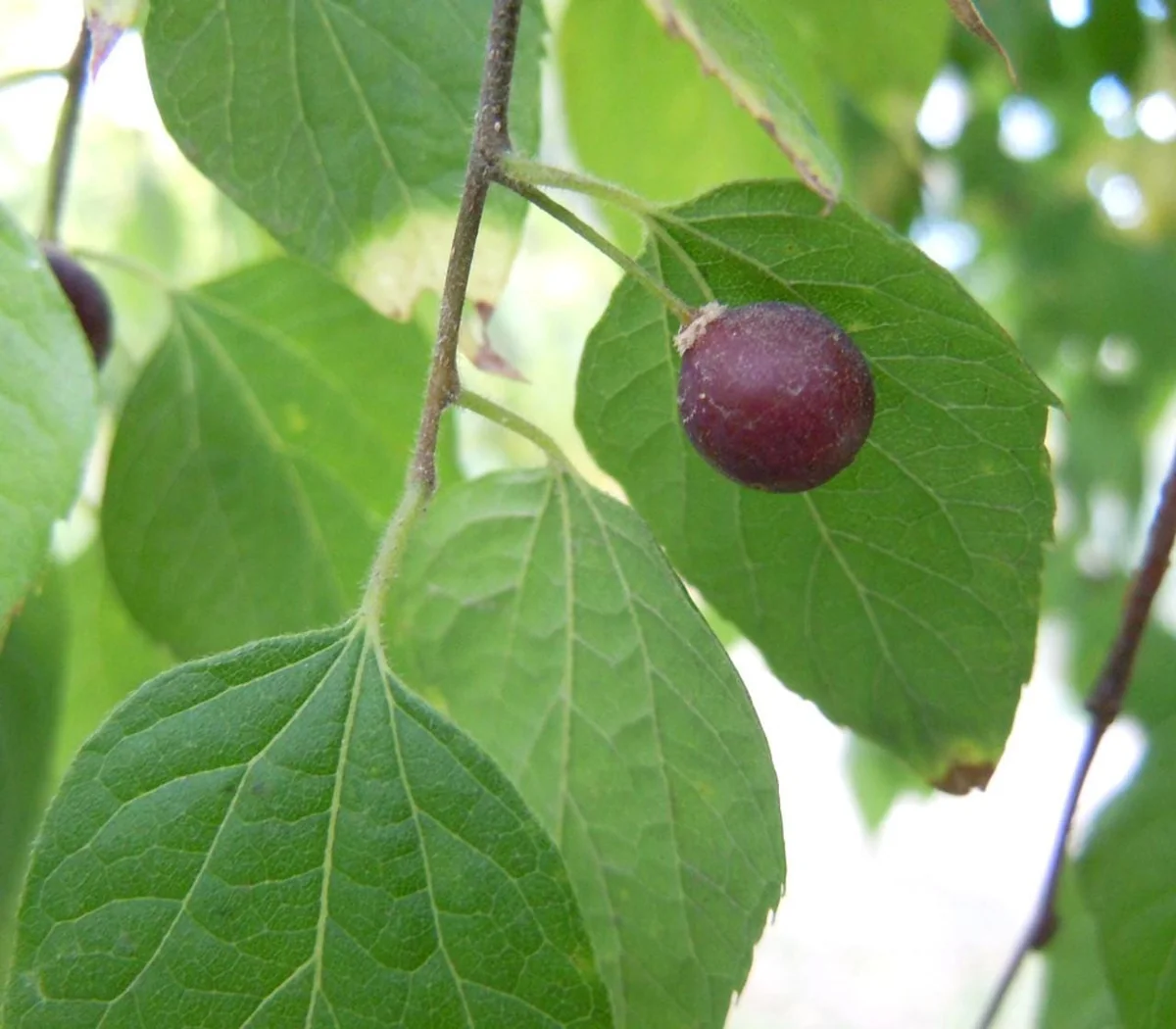
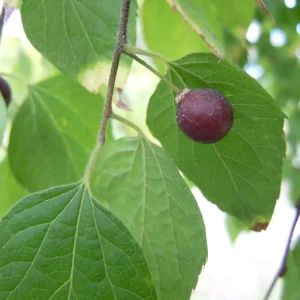
The Hackberry produces small, berry-like fruits, known as drupes, measuring 1/3 to 1/2 inch. These fruits ripen from green to purple or reddish-brown in autumn and are a valuable food source for local wildlife. Being a deciduous tree, it sheds its leaves in the fall. These bare-root trees are shipped without soil or leaves, which promotes easier transplanting and establishment. With a medium to fast growth rate, you can expect these trees to quickly develop into magnificent specimens, providing shade and ecological benefits for many years to come. This hackberry shade tree is a durable and beautiful choice for long-term landscape planning.
Frequently Asked Questions
- Q: How big does this plant get? A: The hackberry tree bare-root typically grows to an impressive height of 50 to 70 feet with a spread of up to 50 feet at maturity, providing substantial shade.
- Q: Is this an indoor or outdoor plant? A: The Hackberry tree is an outdoor plant, best suited for large landscapes where it has room to grow to its full potential. It is not suitable for indoor cultivation.
- Q: How much sunlight does it need? A: This tree thrives in full sun to partial shade, ideally receiving at least six hours of direct sunlight per day for optimal growth and health.
- Q: Is this plant easy to care for? A: Yes, the Hackberry tree is known for being very easy to care for once established, making it an excellent choice for both experienced and novice gardeners. It’s a very resilient and drought tolerant tree.
- Q: What condition will it arrive in? A: Your Hackberry trees will arrive as bare-root specimens, meaning they are shipped without soil or foliage, which is the ideal state for successful transplanting and establishment.
- Q: When is the best time to plant a bare-root Hackberry tree? A: The best time to plant bare-root trees like the celtis occidentalis tree is in early spring, before the tree breaks dormancy, or in late fall after the leaves have dropped.
- Q: Will it survive winter in my zone? A: The Hackberry tree is highly adaptable and cold-hardy, thriving across a wide range of USDA hardiness zones. It is well-suited for temperate climates.
- Q: What kind of soil does the Hackberry tree prefer? A: This tree is highly adaptable and can grow in a wide range of soil types, including clay, sand, and loam, as long as the soil is well-draining.
- Q: Does the Hackberry tree attract wildlife? A: Yes, its small, berry-like fruits are a favored food source for various bird species and small mammalian wildlife, adding ecological value to your garden.
- Q: What is the fall color of the Hackberry tree? A: In autumn, the Hackberry tree’s dark green leaves transform into a beautiful, clear yellow, providing a lovely seasonal display.


Reviews
There are no reviews yet.