Overview
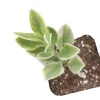
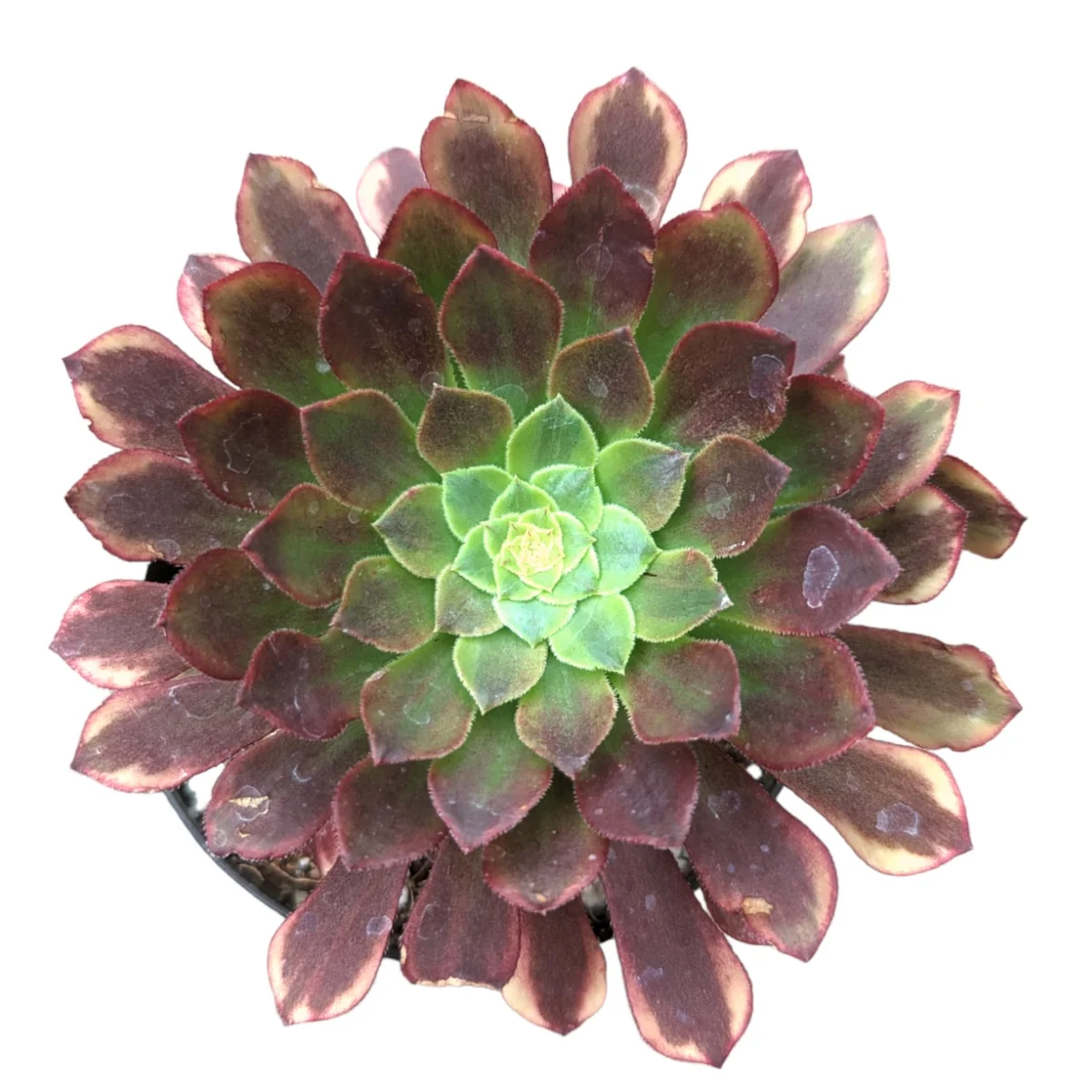
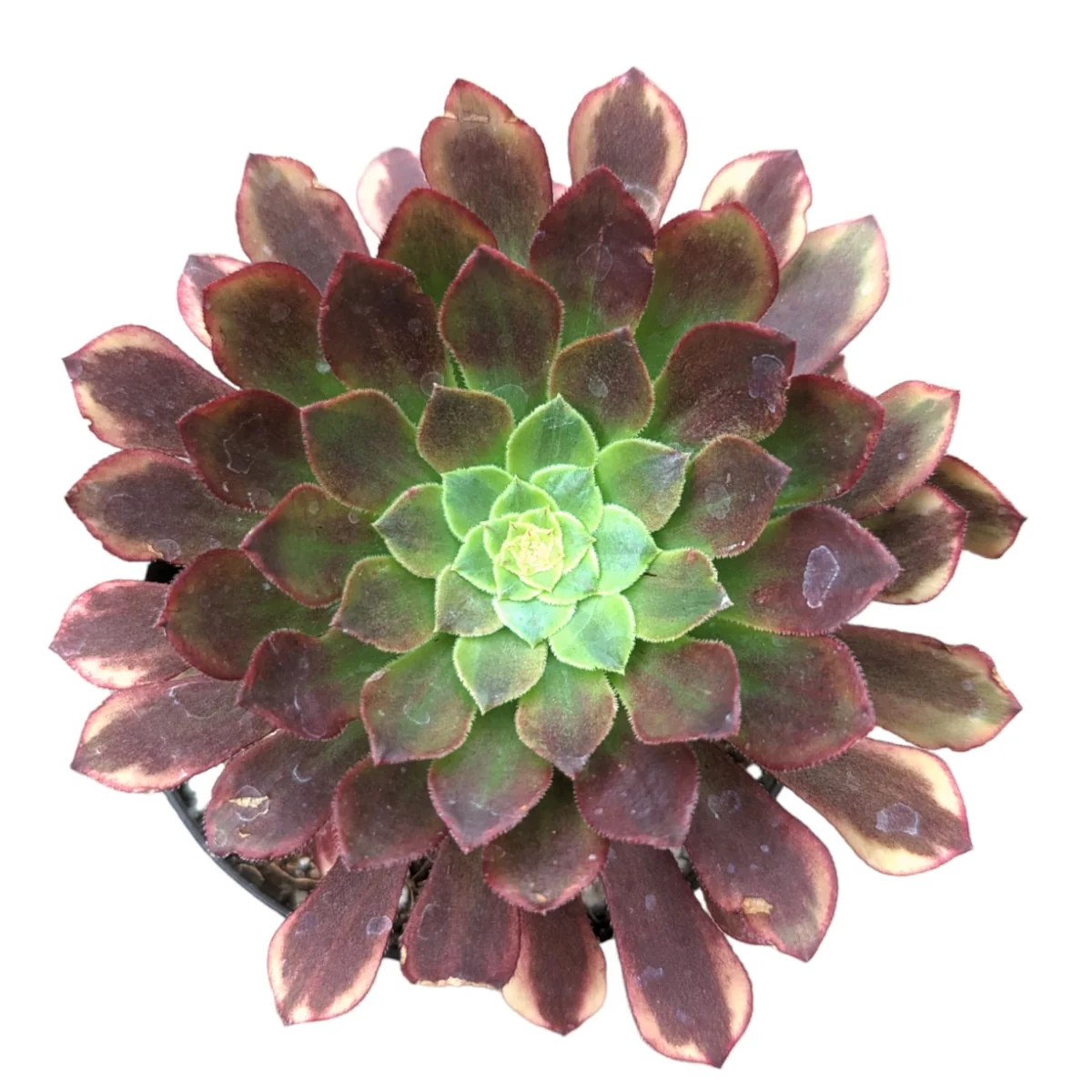
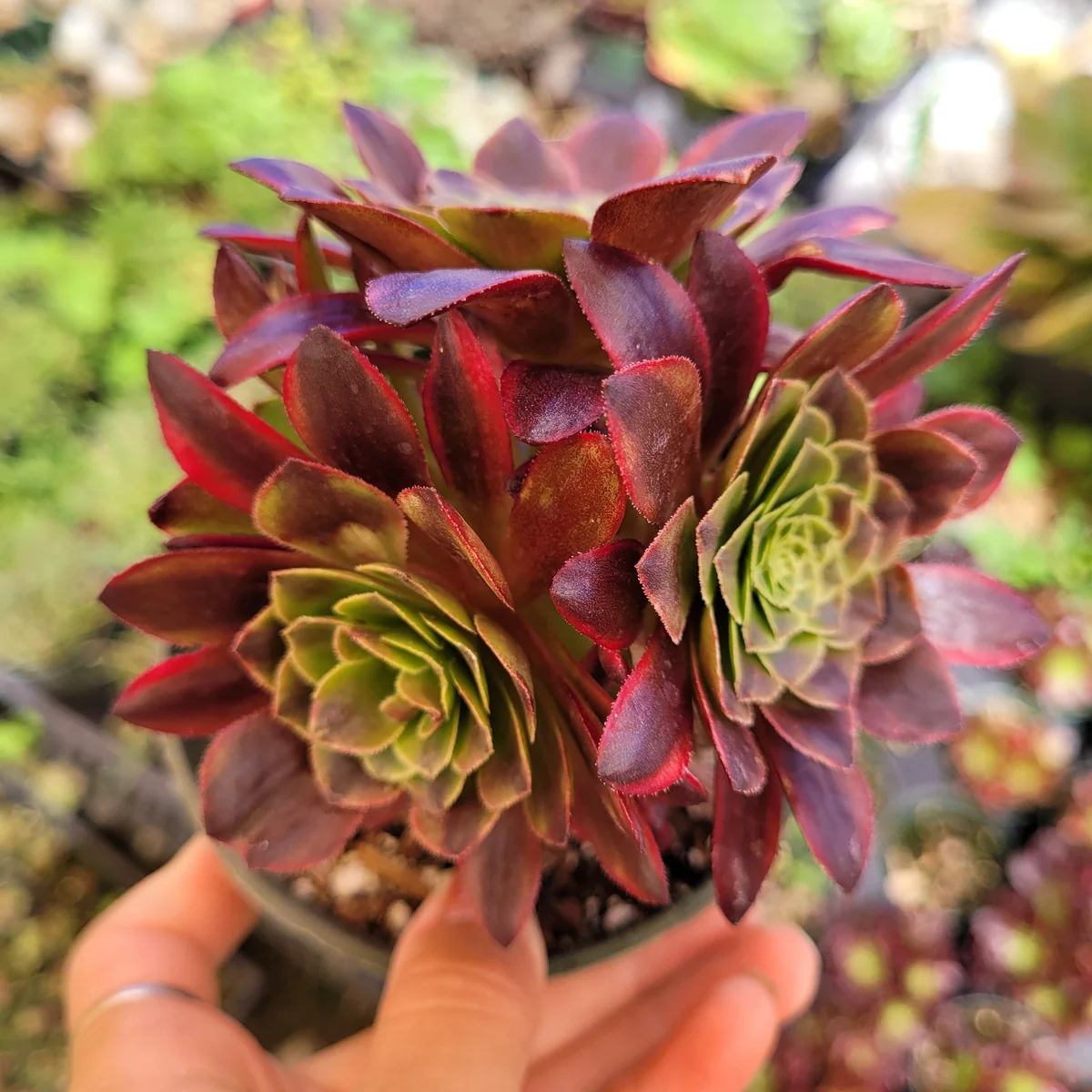
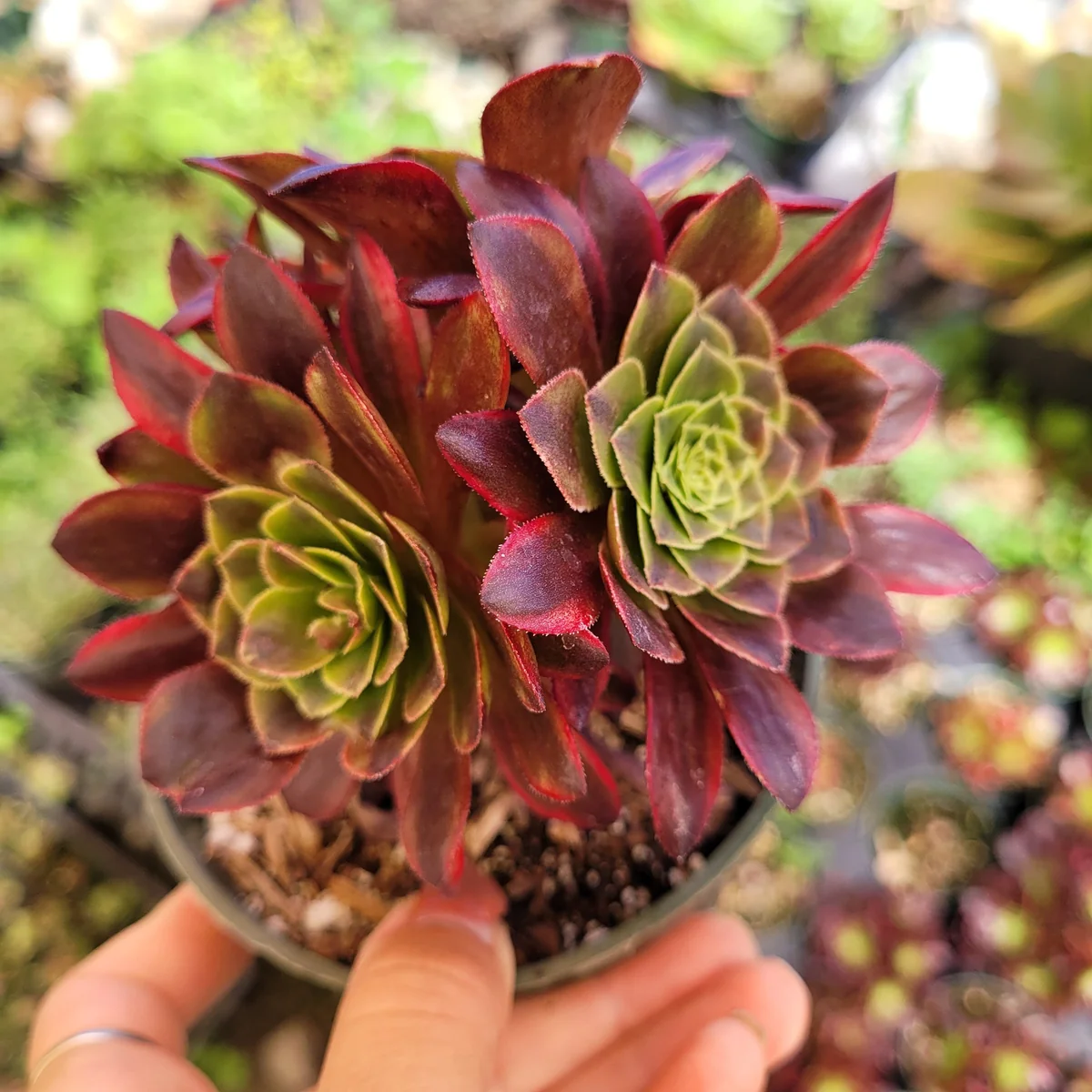
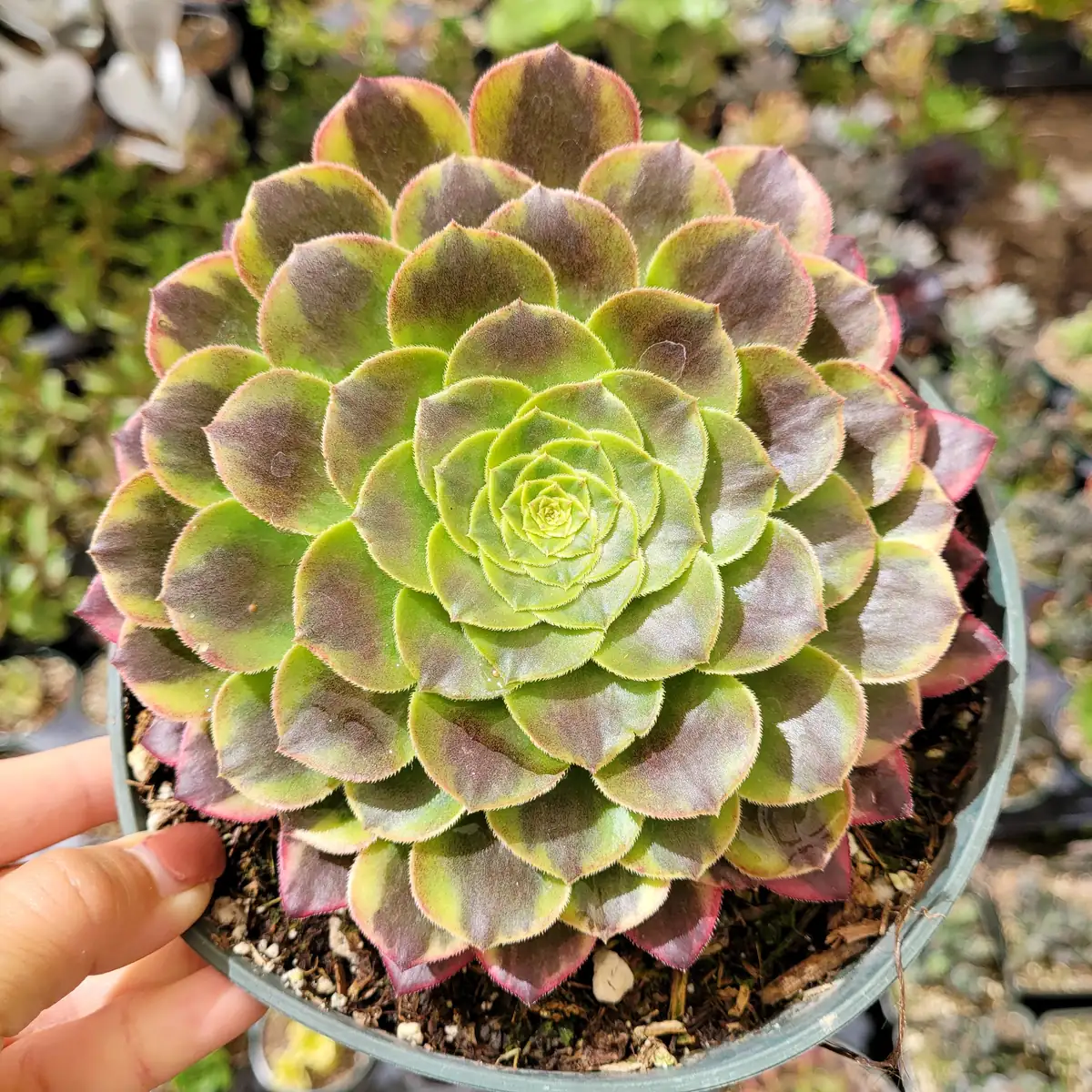
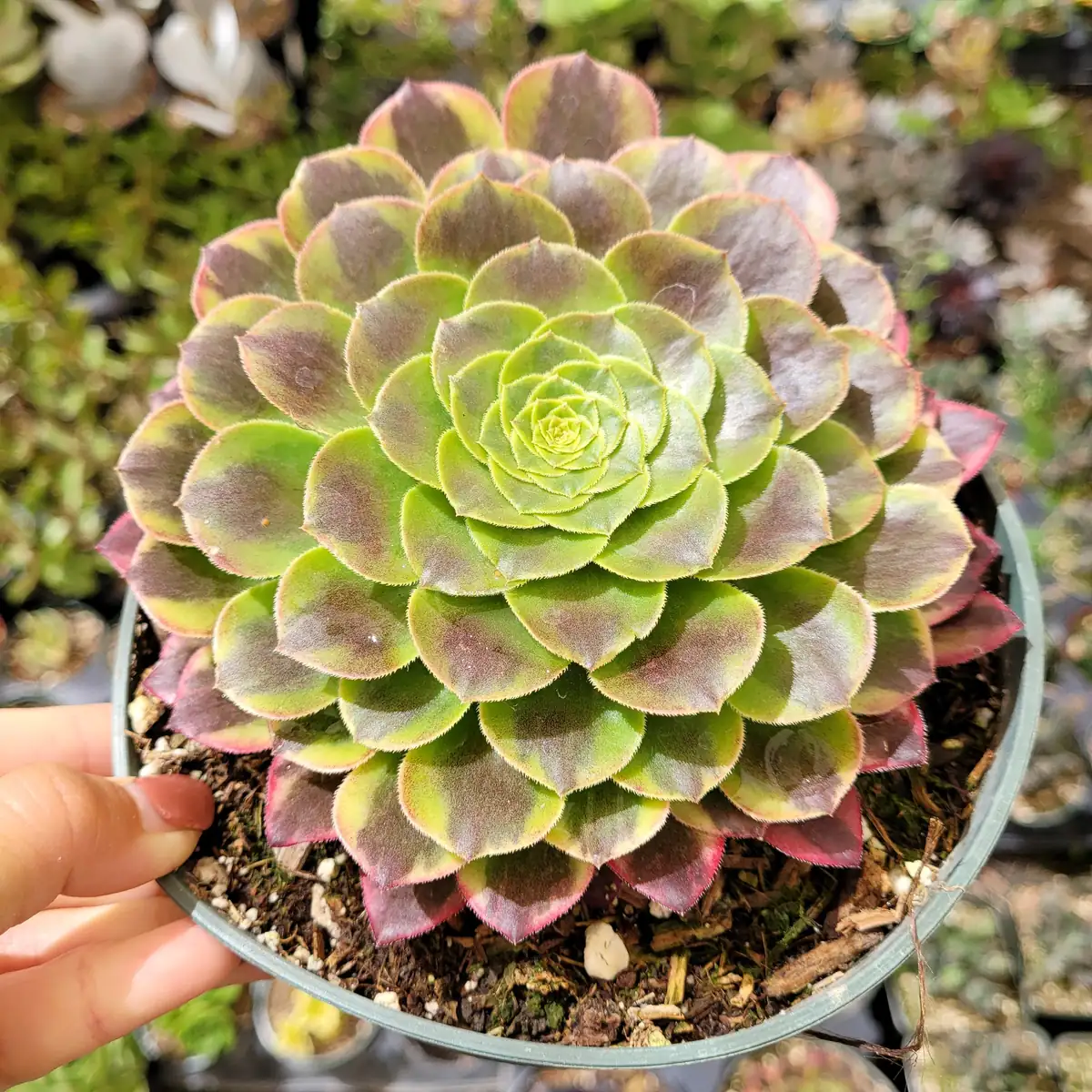
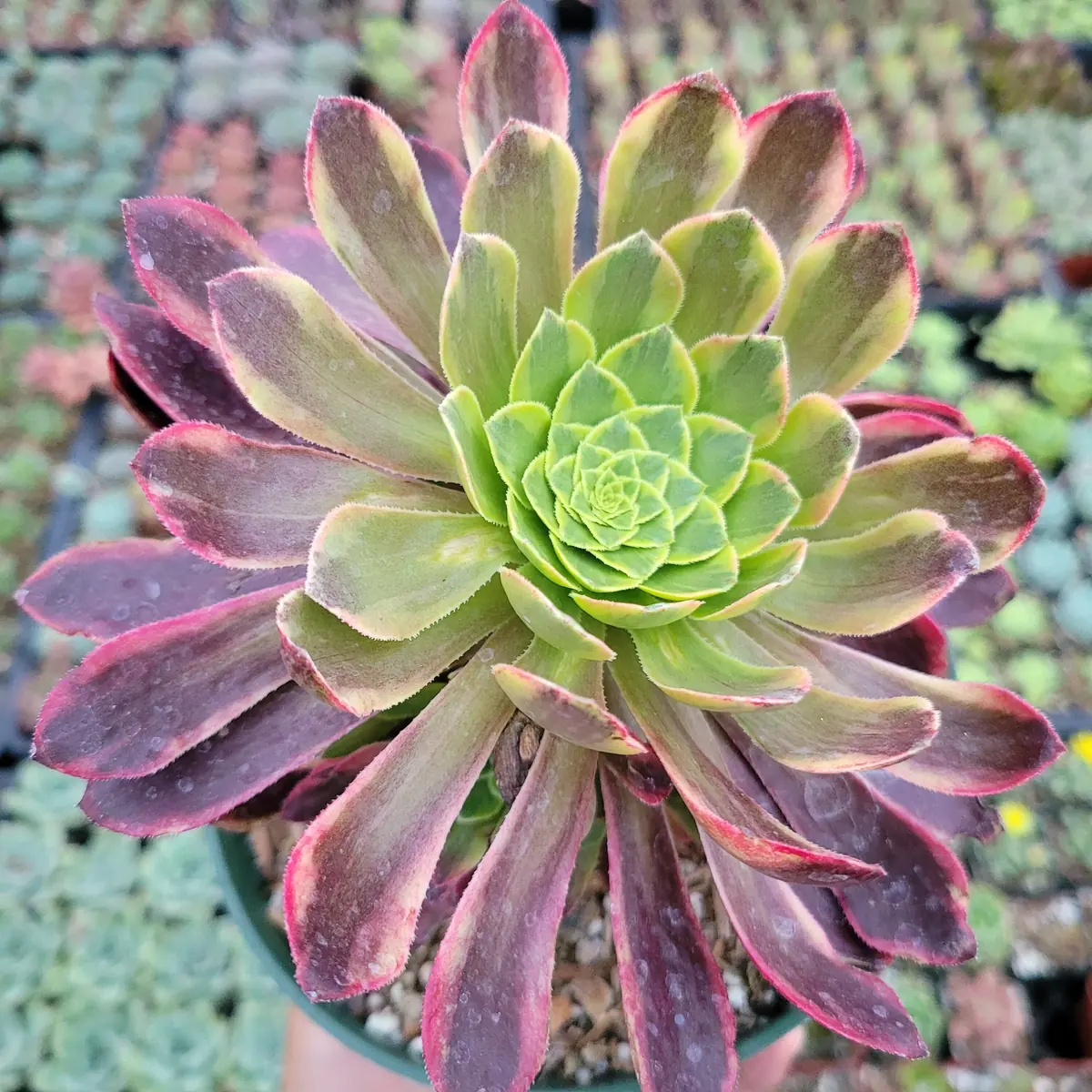
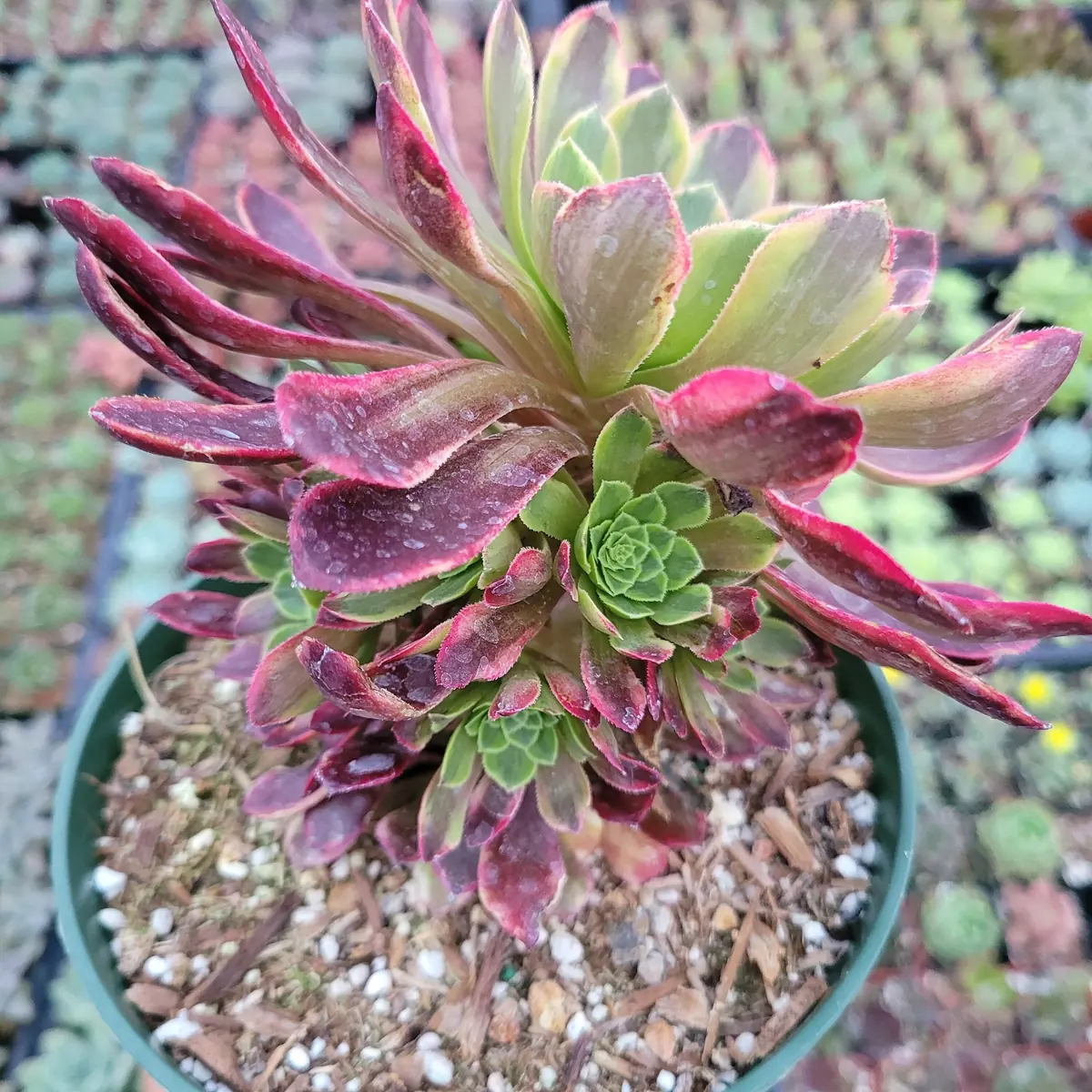
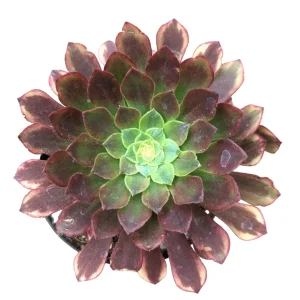
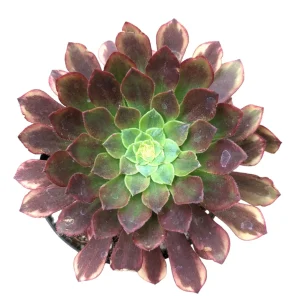
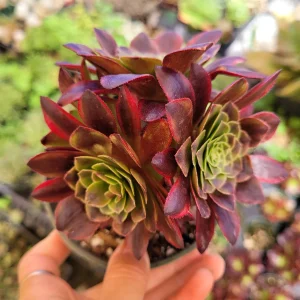
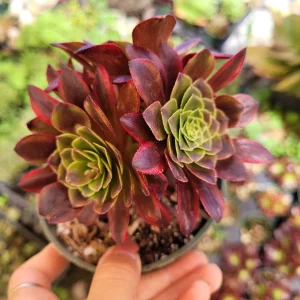
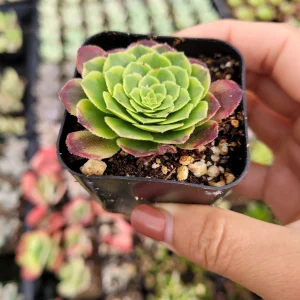
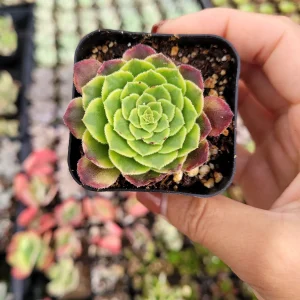
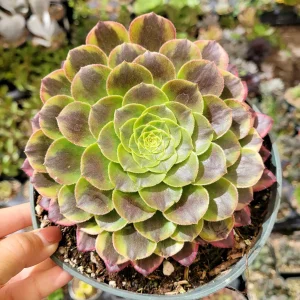
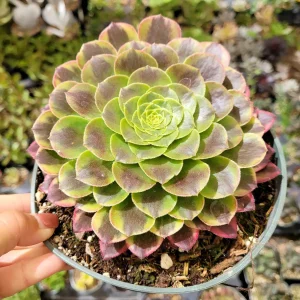
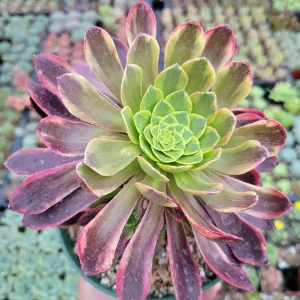
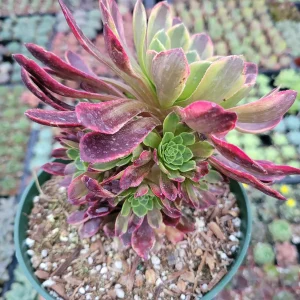
Introducing the captivating Aeonium Fiesta succulent plant, a magnificent member of the Crassulaceae family, native to the sun-drenched Canary Islands. This live plant is renowned for its strikingly colorful rosettes, which can reach an impressive diameter of up to 21 cm. The ‘Fiesta’ cultivar boasts unique spoon-shaped leaves that display a beautiful gradient of green, red, and burgundy, creating a dynamic visual appeal. Whether you’re a seasoned succulent enthusiast or a novice gardener, the Aeonium Fiesta succulent plant offers a blend of exotic beauty and relative ease of care, making it an excellent choice for enhancing any garden space or indoor plant collection. Its vibrant hues provide year-round interest, transforming dull corners into lively botanical displays.
These beautiful plants are not just visually appealing; they are also remarkably adaptable, thriving in conditions that mimic their natural arid habitat. Their distinctive rosette form and rich coloration make them a focal point in rock gardens, succulent arrangements, or as standalone potted specimens. The Aeonium Fiesta succulent plant is a testament to nature’s artistry, offering a low-maintenance yet high-impact decorative solution for homes and landscapes.
Key Benefits
The Aeonium Fiesta succulent plant offers numerous advantages for any plant lover, combining aesthetic appeal with practical benefits:
- Vibrant Coloration: The leaves feature a stunning mix of green, red, and burgundy, providing continuous visual interest throughout the year. This natural artistry makes it a standout piece in any collection, bringing warmth and character.
- Low Maintenance: As a succulent, the Aeonium Fiesta succulent plant is inherently drought-tolerant and requires minimal watering once established. This makes it an ideal choice for busy individuals or those new to plant care, reducing the need for constant attention.
- Drought Tolerance: Originating from the Canary Islands, this plant is perfectly adapted to dry conditions, requiring infrequent watering. This resilience makes it an excellent option for water-wise gardening and arid climates, contributing to sustainable landscaping.
- Architectural Form: Its large, symmetrical rosettes create a dramatic and architectural presence. The unique growth habit adds structural beauty to gardens, containers, and indoor displays, serving as a living sculpture.
- Versatile Placement: Suitable for both indoor and outdoor environments, provided the climate is appropriate. It thrives in pots on patios, as part of a succulent garden, or as an eye-catching houseplant, offering flexibility in design.
- Air Purification: Like many plants, succulents contribute to better indoor air quality by absorbing toxins and releasing oxygen. While not as potent as some leafy greens, it still helps create a healthier living space.
- Easy Propagation: Can often be propagated from cuttings, allowing you to expand your collection or share with friends. This aspect adds to the plant’s value, offering a rewarding experience for enthusiasts.
Plant Care & Growing Tips
Caring for your Aeonium Fiesta succulent plant is straightforward, ensuring it thrives with the right conditions. These plants require a lot of light to maintain their vibrant colors and compact form. For optimal growth, provide full to partial sun exposure. If grown indoors, a south-facing window or supplemental grow lights will be beneficial. Insufficient light can lead to etiolation, where the plant stretches and loses its characteristic shape.
When it comes to watering, the ‘soak and dry’ method is best for this Crassulaceae family plant. Water thoroughly until water drains from the bottom of the pot, then allow the soil to dry out completely before watering again. Overwatering is the most common cause of succulent demise, so err on the side of underwatering. During its dormant period in summer, reduce watering significantly. The ideal soil for the Aeonium Fiesta succulent plant is a porous mix with excellent drainage. A specialized succulent or cactus mix, often amended with pumice, perlite, or grit, will prevent waterlogging and promote healthy root development. Ensure the pot has a drainage hole to allow excess water to escape.
Temperature-wise, these succulents prefer warmer conditions, ideally between 60°F and 75°F (15.6-23.9°C). They are not frost-tolerant, so if you live in an area with cold winters, it’s best to bring them indoors or provide protection. Humidity levels around 40-60% are generally suitable. Fertilization is not strictly necessary but can be done sparingly during the growing season (spring and fall) with a diluted, balanced succulent fertilizer. Watch out for common pests like mealybugs and aphids, and address them promptly with appropriate organic pesticides or rubbing alcohol. Understanding these succulent care tips will help your plant flourish.
Size & Details
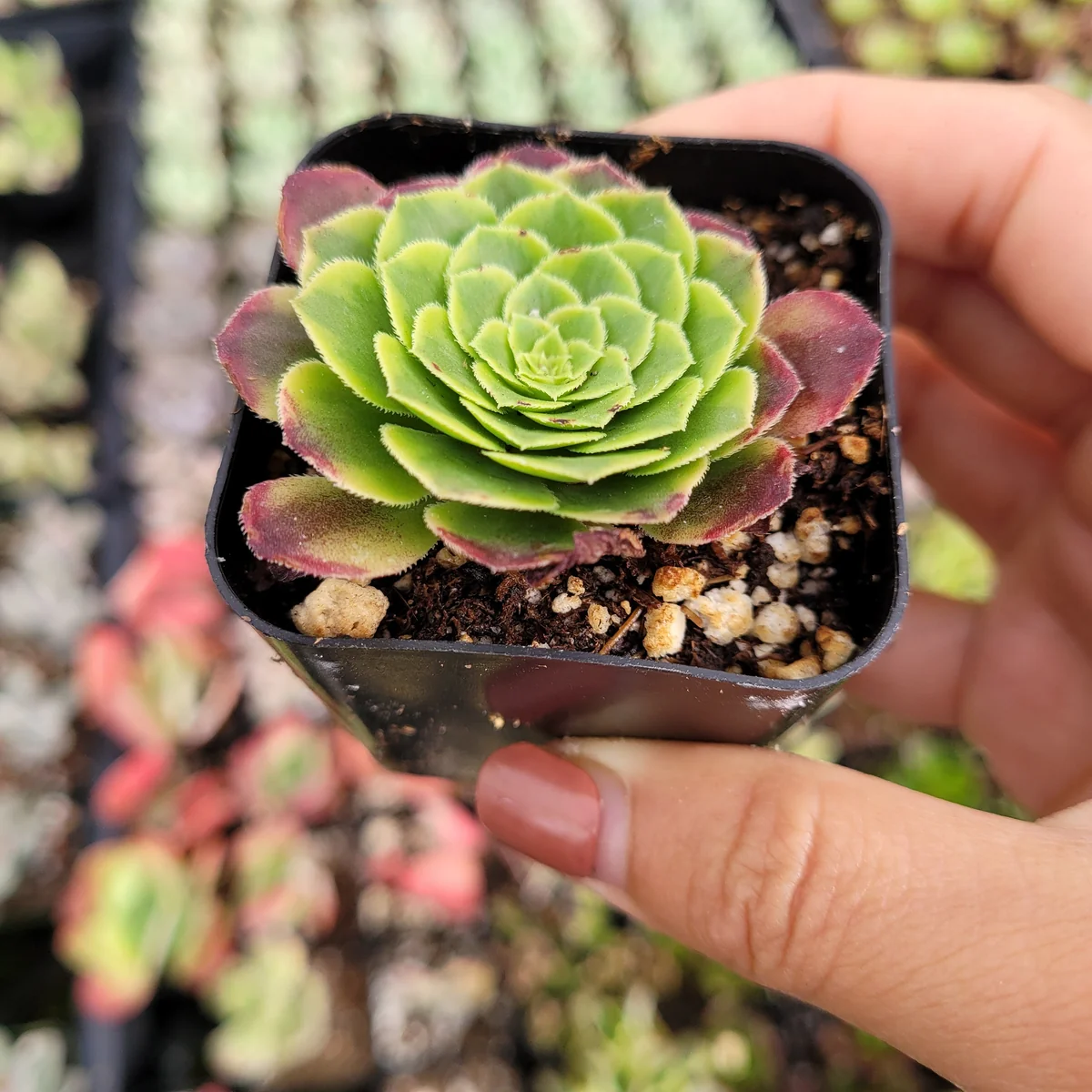
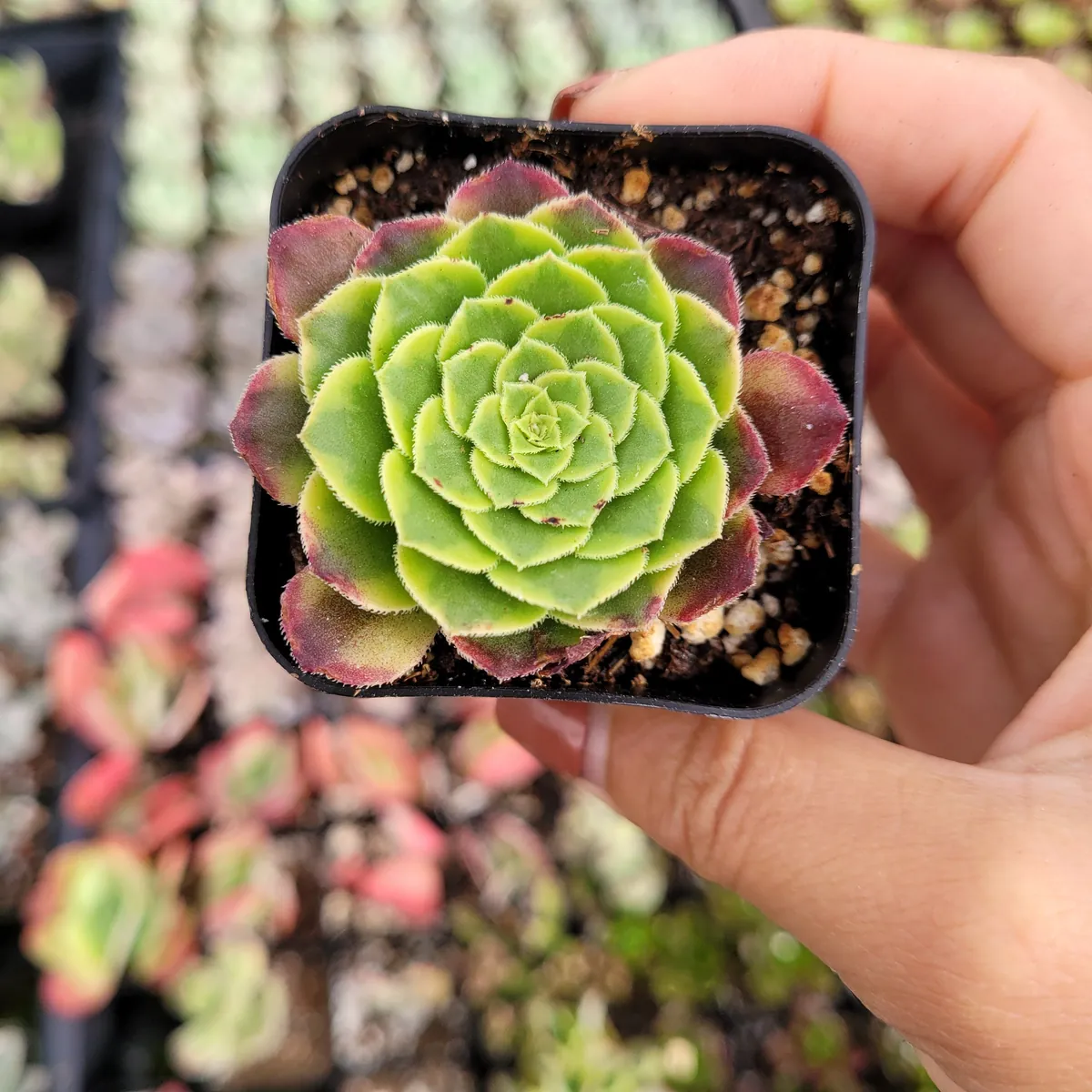
The Aeonium Fiesta succulent plant typically forms rosettes that can grow up to 21 cm (approximately 8 inches) in diameter when mature. The overall height of the plant can vary depending on its age and growing conditions, usually ranging from 6 to 12 inches. These plants exhibit a moderate growth rate, gradually expanding their rosettes and sometimes forming offsets. When shipped, smaller plants (around 2 inches) may arrive in their pot with soil, while larger specimens (4 inches and above) are often shipped bare root to ensure their health during transit and reduce shipping stress. The exact size and color intensity may vary slightly from the product images as each live plant is unique and responds to its specific growing environment. Expect your plant to establish itself and begin actively growing within a few weeks of planting, especially with proper care and adequate light exposure.
Frequently Asked Questions
- Q: How big does the Aeonium Fiesta succulent plant get? A: The rosettes of this beautiful succulent can reach up to 21 cm (about 8 inches) in diameter. The overall plant height typically ranges from 6 to 12 inches, depending on maturity and growing conditions.
- Q: Is this an indoor or outdoor plant? A: The Aeonium Fiesta succulent plant can be grown both indoors and outdoors. Outdoors, it thrives in warm, frost-free climates. Indoors, it requires a bright location, such as a south-facing window, to ensure optimal growth and color.
- Q: How much sunlight does the colorful succulent need? A: This succulent requires a lot of light, ideally full to partial sun. If grown indoors, ensure it receives several hours of bright, direct sunlight daily to maintain its vibrant green, red, and burgundy coloration.
- Q: Is this plant easy to care for? A: Yes, the Aeonium Fiesta succulent plant is considered relatively easy to care for, making it suitable for both beginners and experienced plant enthusiasts. Its main requirements are ample sunlight and infrequent watering using the ‘soak and dry’ method.
- Q: What condition will my plant arrive in? A: Smaller Aeonium Fiesta succulent plant specimens (around 2 inches) are usually shipped with their pot and soil, while larger plants (4 inches and above) are typically shipped bare root without soil or pot to ensure safe transit and reduce stress. You will receive a healthy plant ready for planting.
- Q: What kind of soil is best for this drought-tolerant plant? A: A well-draining, porous soil mix is essential. A specialized succulent or cactus potting mix, often amended with perlite, pumice, or grit, is highly recommended to prevent waterlogging and promote healthy root growth.
- Q: How often should I water my Aeonium Fiesta succulent plant? A: Water thoroughly when the soil is completely dry to the touch, then allow it to dry out again before the next watering. Overwatering can lead to root rot, so it’s better to underwater than overwater.
- Q: Is the Aeonium Fiesta succulent plant cold hardy? A: No, these plants are not cold hardy and cannot tolerate frost. If you live in an area where temperatures drop below 40°F (4°C), it’s best to bring your plant indoors for the winter or provide adequate protection.
- Q: Can I propagate this succulent? A: Yes, Aeoniums can often be propagated from stem cuttings. Allow the cut end to callus for a few days before planting it in well-draining soil.
- Q: What makes this plant a ‘Fiesta’? A: The ‘Fiesta’ cultivar name refers to the celebratory and vibrant mix of colors found in its leaves, which display shades of green, red, and burgundy, creating a festive appearance.


Reviews
There are no reviews yet.