Overview
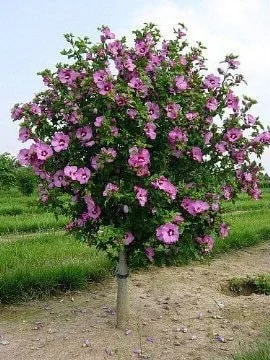
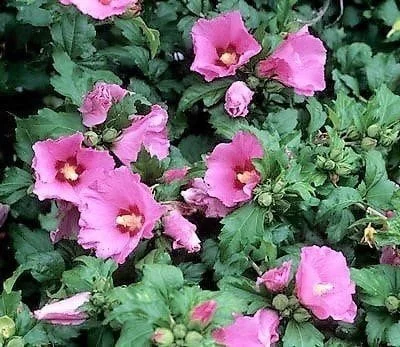
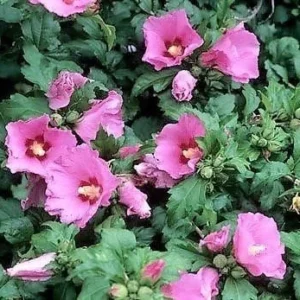
Transform your garden with the exquisite beauty of the Aphrodite Rose of Sharon bare root plant. Each purchase includes two 1-2’ tall rooted cuttings, ready to establish and flourish in your landscape. Known botanically as Hibiscus syriacus Aphrodite, this deciduous shrub is celebrated for its large, showy, deep pink flowers with a striking red eye that bloom profusely from summer through fall. The Rose of Sharon, also commonly called Syrian ketmia or shrub althea, adds a touch of elegance and continuous color to any outdoor space. These resilient plants are native to south-central and southeast China and have been widely introduced globally for their ornamental value. This variety is particularly prized for its robust growth and abundant flowering, making it a favorite among gardeners seeking reliable and vibrant perennial flowering shrubs.
The Aphrodite Rose of Sharon bare root offers a fantastic opportunity to cultivate a beautiful and low-maintenance shrub. Its upright growth habit and dense foliage provide excellent visual interest, whether planted as a specimen, in groups, or as an informal hedge. These young plants are ideal for quick establishment, ensuring a rewarding gardening experience. With proper care, these shrubs will develop into magnificent flowering plants, attracting pollinators and delighting observers with their stunning blossoms.
Key Benefits
Choosing the Aphrodite Rose of Sharon bare root for your garden brings a multitude of advantages, enhancing both aesthetics and ecological value:
- Spectacular Blooms: Enjoy a prolonged display of large, vibrant deep pink flowers, each featuring a prominent red center, that bloom from mid-summer into fall, providing continuous color when many other plants have faded. This makes it a standout flowering shrub for garden.
- Attracts Pollinators: The showy flowers are a magnet for butterflies, bees, and hummingbirds, contributing to the biodiversity and health of your garden ecosystem.
- Durable and Resilient: This robust shrub is known for its hardiness and ability to tolerate a wide range of conditions, making it an excellent choice for various climates and soil types.
- Low Maintenance: Once established, the Aphrodite Rose of Sharon bare root requires minimal care, thriving with basic watering and occasional pruning, ideal for busy gardeners.
- Versatile Landscaping: Perfect for use as a specimen plant, in mixed borders, as a flowering shrub for garden, or even in large containers, offering flexibility in garden design.
- Deer Resistant: Generally unappealing to deer, providing a beautiful flowering option in areas where deer browse is a concern, making it a great deer resistant shrub.
- Rapid Growth: These bare root plants establish quickly and grow at a moderate to fast rate, allowing you to enjoy their full beauty sooner.
Plant Care & Growing Tips
Caring for your Aphrodite Rose of Sharon bare root plants is straightforward, ensuring they grow into healthy, floriferous shrubs. These plants thrive in full sun to partial shade, ideally receiving at least 6 hours of direct sunlight daily for optimal flowering. While they can tolerate some shade, fewer blooms may result. When planting, ensure the site has good air circulation to prevent fungal issues. Dig a hole wide enough to accommodate the roots without bending them, and deep enough so the crown of the plant is at soil level. Understanding Rose of Sharon plant care ensures vibrant blooms.
Hibiscus syriacus Aphrodite prefers well-draining soil, thriving in a variety of soil types from sandy to clay, as long as it doesn’t remain waterlogged. Incorporating organic matter into the planting hole can improve soil structure and fertility. Water thoroughly after planting and keep the soil consistently moist during the first growing season to encourage strong root development. Once established, the Rose of Sharon is fairly drought-tolerant but will perform best with regular watering during dry spells. These shrubs are hardy in USDA Zones 6-9, tolerating both heat and cold within this range, which is key for successful Rose of Sharon plant care.
Fertilize in early spring with a balanced slow-release fertilizer designed for flowering shrubs to promote vigorous growth and abundant blooms. Pruning is best done in late winter or early spring before new growth begins. You can prune to maintain shape, control size, or remove dead or crossing branches. Rose of Sharon blooms on new wood, so pruning in early spring will not hinder flowering. Watch out for common pests like aphids, which can be managed with insecticidal soap. With these simple care tips, your Aphrodite Rose of Sharon bare root will provide years of beautiful blooms.
Size & Details
Each purchase includes two Aphrodite Rose of Sharon bare root rooted cuttings, each measuring 1-2 feet (approx. 30-60 cm) in height upon arrival. These bare root plants are dormant and ready for immediate planting, allowing for quick establishment in your garden. The mature size of this flowering shrub for garden typically reaches 8-12 feet (2.4-3.6 meters) tall and 6-10 feet (1.8-3 meters) wide, forming an upright, vase-shaped shrub. It exhibits a moderate to fast growth rate, quickly filling out to create a significant presence in your landscape. Expect the first blooms in the summer following planting, with increasingly abundant flowers in subsequent years as the plant matures. These perennial flowering shrub specimens are shipped without soil or a pot, ensuring lightweight transport and readiness for direct planting.
Frequently Asked Questions
- Q: How big does this plant get? A: The Aphrodite Rose of Sharon bare root typically grows to a mature height of 8-12 feet and a width of 6-10 feet, creating a substantial and beautiful flowering shrub in your garden.
- Q: Is this an indoor or outdoor plant? A: The Aphrodite Rose of Sharon bare root is an outdoor plant, perfectly suited for garden beds, hedges, or as a specimen plant in USDA Zones 6-9. It is not suitable for indoor cultivation.
- Q: How much sunlight does it need? A: For the best flowering performance, this shrub requires full sun, meaning at least 6 hours of direct sunlight per day. It can tolerate partial shade, but blooming may be less prolific.
- Q: Is this plant easy to care for? A: Yes, the Aphrodite Rose of Sharon bare root is considered very easy to care for. Once established, it is drought-tolerant and requires minimal maintenance, making it suitable for beginners looking for a flowering shrub for garden.
- Q: What condition will it arrive in? A: You will receive two dormant, 1-2 foot tall Aphrodite Rose of Sharon bare root rooted cuttings, carefully packaged without soil or a pot, ready for planting.
- Q: When is the best time to plant? A: Bare root plants are best planted in early spring as soon as the ground can be worked, giving them ample time to establish before the summer heat. This is an important aspect of Rose of Sharon plant care.
- Q: Will it survive winter in my zone? A: The Aphrodite Rose of Sharon bare root is hardy in USDA Zones 6-9. It is quite tolerant of cold temperatures within this range and will go dormant in winter, returning with new growth in spring.
- Q: What type of soil does it prefer? A: It prefers well-draining soil but is adaptable to various soil types, including clay, loam, or sandy soil, as long as it is not waterlogged.
- Q: How long until it blooms? A: You can expect the first blooms from your Aphrodite Rose of Sharon bare root in the first summer after planting, with more abundant flowering in subsequent years as the plant matures.
- Q: Is this a deer resistant shrub? A: Yes, the Aphrodite Rose of Sharon is generally considered deer resistant, making it a good choice for gardens where deer browsing is a concern.
- Q: What are some common names for this plant? A: Besides Hibiscus syriacus Aphrodite, it is commonly known as Rose of Sharon, Shrub Althea, Syrian Ketmia, or Korean Rose.


Reviews
There are no reviews yet.