Overview
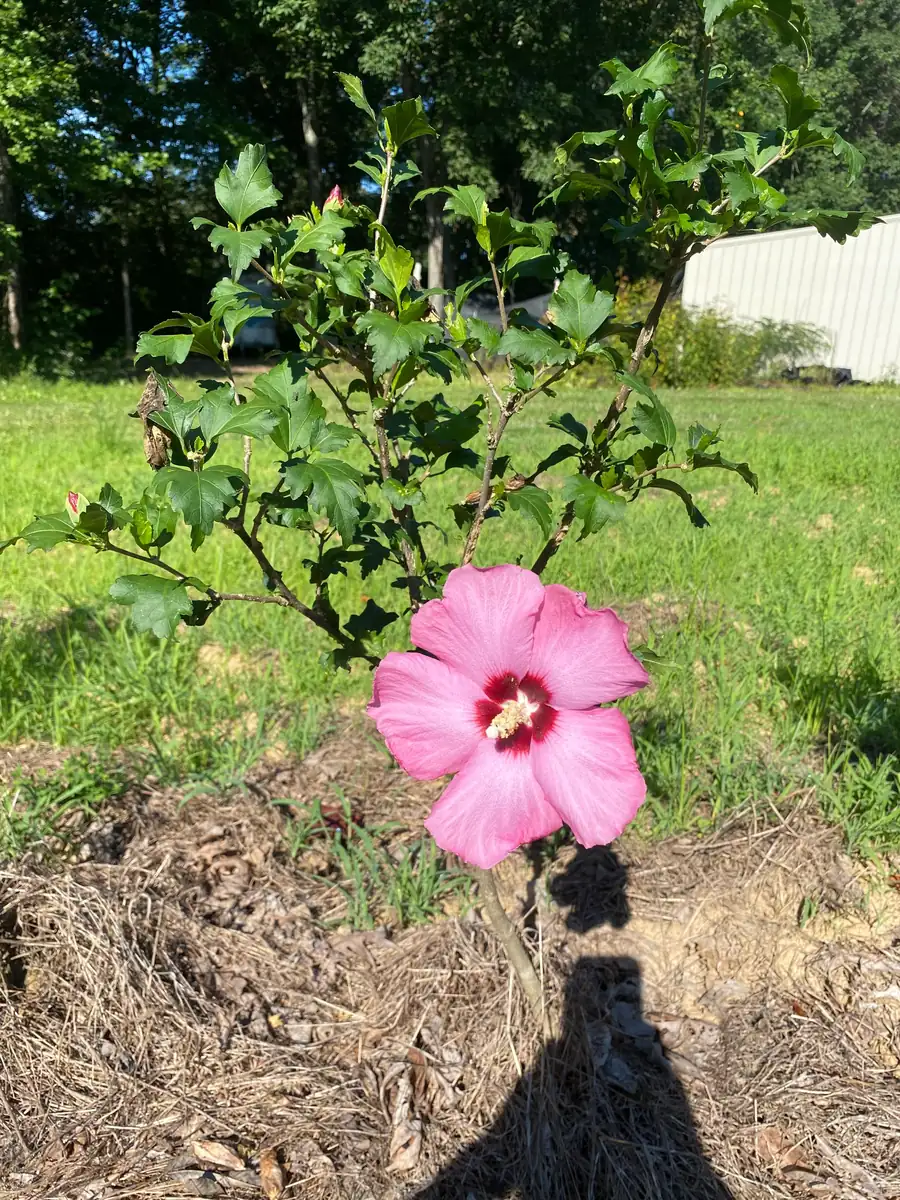
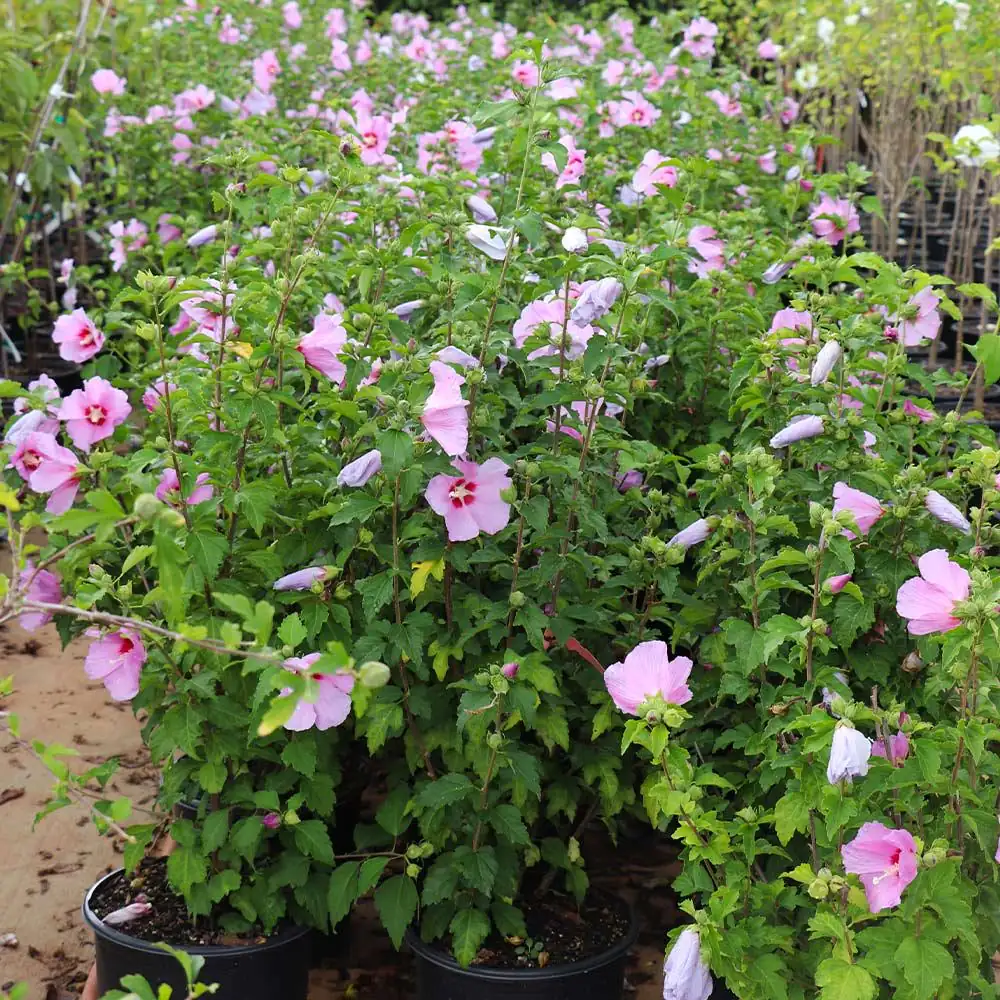
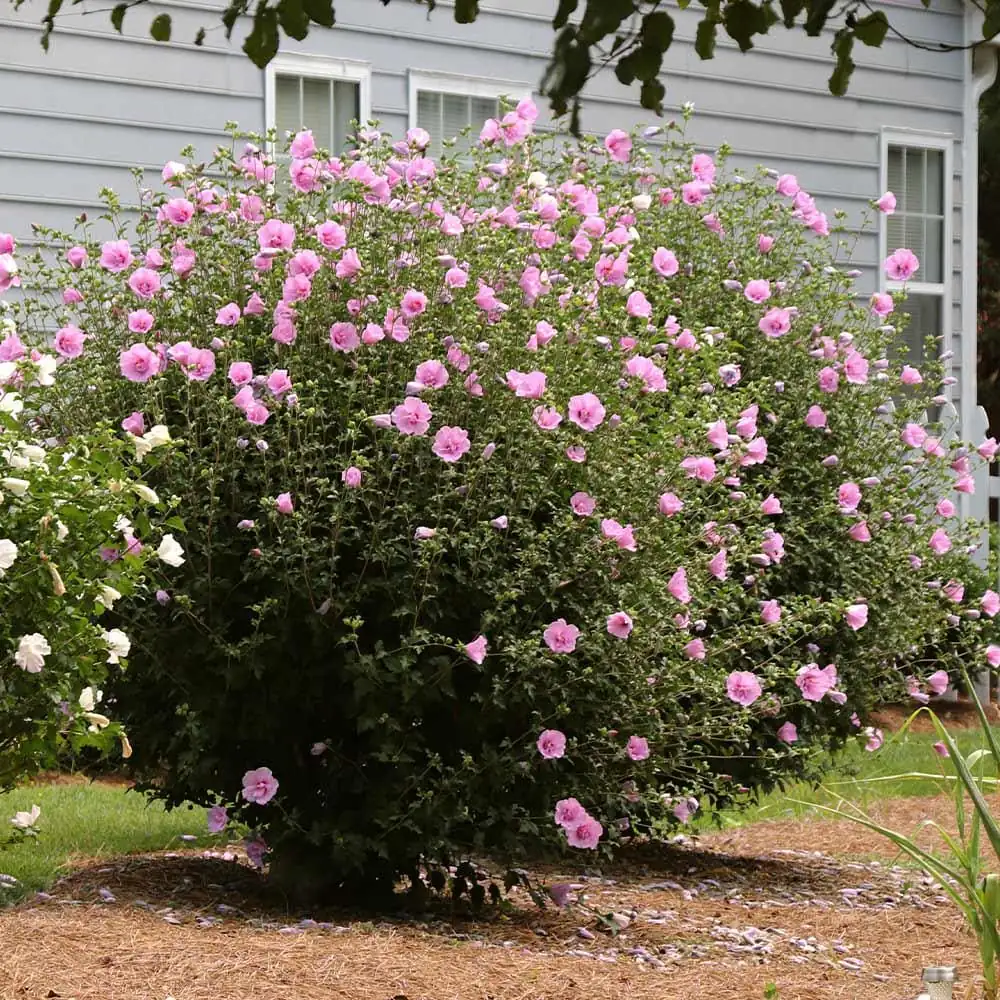
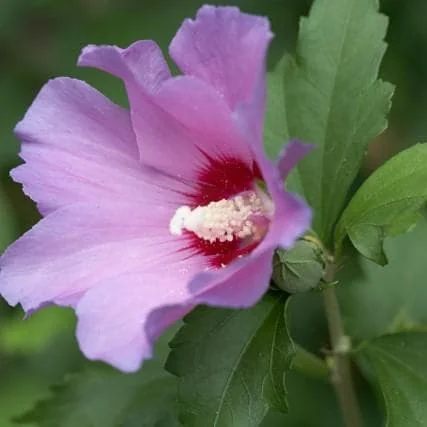
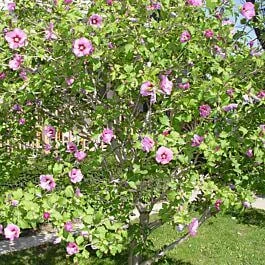
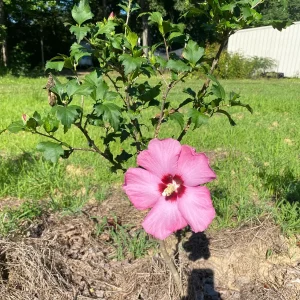
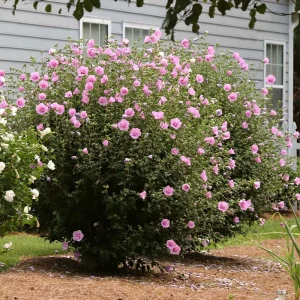
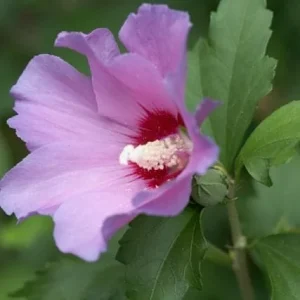
Introduce a touch of elegance and vibrant color to your landscape with the Aphrodite Rose of Sharon live plant. Also known by its botanical name, Hibiscus syriacus, this exceptional shrub is celebrated for its large, single, dark pink flowers, each adorned with a distinctive dark red eye. These showy blooms emerge in mid to late summer, a time when many other flowering shrubs have finished their display, ensuring continuous visual interest in your garden. The Aphrodite Rose of Sharon live plant is a vigorous, upright, vase-shaped, multi-stemmed deciduous shrub that can reach heights of 8-12 feet, offering a substantial and beautiful presence. Its adaptability to various soil types and light conditions makes it a favorite among gardeners seeking both beauty and ease of care. This hardy hibiscus variety is a perfect choice for creating stunning focal points or vibrant borders in your outdoor space.
The Hibiscus Syriacus care is relatively straightforward, making it suitable for both novice and experienced gardeners. It’s known for its robust nature and ability to thrive in a range of environments. With its impressive blooming period and attractive foliage, the Aphrodite Rose of Sharon is a truly rewarding plant that brings a long season of beauty. Often referred to as shrub althea, swamp mallow, or rose mallow, this plant is a versatile addition to almost any garden design, providing structure and a burst of color.
Key Benefits
The Aphrodite Rose of Sharon live plant offers numerous benefits, making it an excellent addition to any garden or landscape. Its striking appearance and resilient nature ensure a beautiful and low-maintenance experience:
- Extended Bloom Season: Enjoy large, single, dark pink flowers with a dark red eye from mid-to-late summer, providing vibrant color when many other plants are fading. This ensures your garden remains lively and attractive for a longer period.
- Hardy and Adaptable: The hardy hibiscus plant is highly adaptable to most soil types and can thrive in full sun to partial shade, making it a versatile choice for various garden settings. Its resilience means less worry about specific growing conditions.
- Low Maintenance: Once established, this deciduous shrub requires minimal care, making it an ideal option for busy gardeners. Pruning in late winter or early spring is generally sufficient to maintain its shape and encourage blooming.
- Attractive Foliage: Beyond its stunning flowers, the Aphrodite Rose of Sharon features attractive palmately-veined, coarsely-toothed, three-lobed, medium green leaves that provide a lush backdrop throughout the growing season.
- Versatile Landscaping: Its upright, vase-shaped growth habit allows it to be used as a specimen plant, in mixed borders, or even trained as a small tree or espalier, adding architectural interest to your landscape.
- Attracts Pollinators: The abundant and showy flowers are a magnet for bees, butterflies, and other beneficial pollinators, contributing to the health and biodiversity of your garden ecosystem.
- Easy to Transplant: With a slow to moderate growth rate, this shrub is relatively easy to transplant, allowing for flexible garden design adjustments.
Plant Care & Growing Tips
Caring for your Aphrodite Rose of Sharon live plant is straightforward, ensuring a beautiful and thriving addition to your garden for years to come. This robust shrub is known for its resilience and adaptability, but a few key practices will help it flourish. For optimal growth, plant your Rose of Sharon in a location that receives full sun to partial shade. Full sun (at least 6 hours of direct sunlight daily) will encourage the most abundant blooms, but it can tolerate some afternoon shade, especially in hotter climates. It is adaptable to most any soil type, but prefers well-draining soil. Avoid areas where water tends to stand, as consistently wet roots can lead to issues. Incorporating organic matter into the soil during planting can improve drainage and nutrient availability.
Watering should be consistent, especially during dry spells and in its first year of establishment. Once mature, the pink Rose of Sharon shrub is quite drought-tolerant, but regular watering during extended dry periods will promote better flowering. Aim to keep the soil consistently moist but not waterlogged. Fertilize in early spring with a balanced, slow-release granular fertilizer formulated for flowering shrubs. Over-fertilization can lead to excessive foliage growth at the expense of flowers, so follow package instructions carefully. Pruning is best done in late winter or early spring while the plant is dormant. Frequent severe pruning will result in fewer but larger flowers, while little or no pruning will yield many small flowers. Remove any dead, damaged, or crossing branches to maintain a healthy structure. This deciduous shrub for gardens is hardy in USDA zones 5-9.
While generally resistant to pests and diseases, keep an eye out for common issues like aphids or Japanese beetles, which can be managed with appropriate organic or chemical controls. Ensuring good air circulation around the plant can help prevent fungal diseases. With proper Hibiscus Syriacus care, your Aphrodite Rose of Sharon will provide a stunning display of color and beauty throughout the summer months, becoming a cherished part of your landscape.
Size & Details
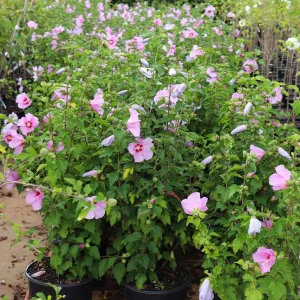
This Aphrodite Rose of Sharon live plant is supplied in a 2.5-inch pot, with an initial height ranging from 10 to 18 inches. This size makes it ideal for immediate planting into your garden or a larger container, allowing it to establish quickly. The plant is a vigorous, upright, vase-shaped, multi-stemmed deciduous shrub, meaning it will lose its leaves in the fall and regrow them in the spring. Its mature size typically reaches 8-12 feet tall with a spread of 6-10 feet, creating a substantial and impactful presence in the landscape. The growth rate is generally slow to moderate, making it manageable for various garden sizes and designs.
The showy, hollyhock-like, 5-petaled flowers, measuring up to 3 inches in diameter, will appear over a long early-summer to fall bloom period, with peak blooming around August. Each flower features a prominent and showy center staminal column, adding to its unique appeal. The plant is shipped as a young, actively growing specimen, ready to thrive in its new environment. Its adaptability and robust nature ensure it will develop into a magnificent pink Rose of Sharon shrub, providing years of beautiful blooms and lush foliage.
Frequently Asked Questions
- Q: How big does this plant get? A: The Aphrodite Rose of Sharon live plant typically grows to a mature height of 8-12 feet tall with a spread of 6-10 feet, forming an upright, vase-shaped shrub. Its growth rate is slow to moderate.
- Q: What size pot does it come in? A: This plant is supplied in a 2.5-inch pot, with an initial height of 10-18 inches, making it a good size for transplanting into your garden or a larger container.
- Q: Is this an indoor or outdoor plant? A: The Aphrodite Rose of Sharon is an outdoor plant, a deciduous shrub that thrives in garden settings. It is not generally suitable for long-term indoor cultivation.
- Q: How much sunlight does it need? A: This hardy hibiscus plant performs best in full sun (at least 6 hours of direct sunlight daily) but can tolerate partial shade, especially in warmer climates. More sun generally leads to more abundant blooms.
- Q: Is this plant easy to care for? A: Yes, the Aphrodite Rose of Sharon live plant is considered low-maintenance once established. It’s adaptable to various soil types and light conditions, making it a great choice for both beginner and experienced gardeners.
- Q: What condition will it arrive in? A: The plant will arrive as a young, actively growing specimen in a 2.5-inch pot. Please note that during dormant seasons, deciduous plants may arrive without leaves.
- Q: When is the best time to plant? A: The best time to plant the pink Rose of Sharon shrub is in spring or early summer, allowing it ample time to establish its root system before winter. However, it can also be planted in early fall in milder climates.
- Q: Will it survive winter in my zone? A: The Aphrodite Rose of Sharon is hardy in USDA Zones 5-9, meaning it can tolerate winter temperatures in these regions. It is a deciduous shrub and will lose its leaves in colder months.
- Q: Do I need to prune it? A: Pruning is not strictly necessary for survival but is recommended in late winter or early spring to shape the plant and encourage more vigorous blooming. You can choose between more frequent severe pruning for fewer, larger flowers, or less pruning for many smaller flowers.
- Q: What are other common names for this plant? A: Besides Aphrodite Rose of Sharon live plant, it is also commonly known as Hibiscus syriacus, shrub althea, swamp mallow, and rose mallow.


Reviews
There are no reviews yet.