Overview
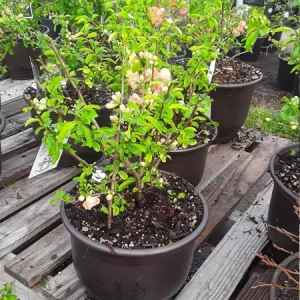
Introduce a touch of early spring elegance to your garden or bonsai collection with the exquisite flowering quince live plant (Chaenomeles Speciosa). This deciduous shrub is celebrated for its stunning, often vibrant red, pink, or white flowers that emerge before its leaves, providing a much-needed splash of color when most other plants are still dormant. The Chaenomeles Speciosa is a versatile and hardy plant, making it a popular choice for various landscaping applications, from hedges and borders to specimen plantings. Its thorny branches and dense growth habit also make it an effective barrier plant. Beyond its ornamental appeal, the flowering quince also produces small, fragrant, apple-like fruits that can be used to make jellies and preserves, adding a functional aspect to its beauty.
This particular flowering quince live plant is ideal for those looking to add a resilient and visually striking shrub to their outdoor space. It’s also highly regarded by bonsai practitioners due to its natural inclination to form interesting shapes, its hardiness, and its beautiful spring blossoms, making it an excellent candidate for creating a unique quince bonsai tree. Our plants are carefully nurtured and shipped in a 1 gallon pot, ensuring they arrive healthy and ready to thrive in their new home. Whether you’re an experienced gardener or just starting, the flowering quince offers a rewarding growing experience with spectacular results.
Key Benefits
The flowering quince live plant offers a multitude of benefits that make it a standout choice for any garden or landscape. Its robust nature and captivating appearance contribute to its widespread appeal, providing both aesthetic and practical advantages.
- Spectacular Early Spring Blooms: One of the most significant advantages of the flowering quince is its ability to produce abundant and vibrant flowers in late winter or early spring, often before other plants have even begun to show signs of life. These showy blossoms, typically in shades of red, orange, pink, or white, provide a crucial burst of color that brightens the landscape during colder months.
- Excellent for Bonsai Training: The natural growth habit, small leaves, and beautiful flowers of Chaenomeles Speciosa make it an exceptional candidate for bonsai. Its adaptability to pruning and wiring allows for the creation of intricate and artistic bonsai forms, offering a rewarding project for enthusiasts interested in a quince bonsai tree.
- Hardy and Low Maintenance: This is a remarkably tough and adaptable shrub, tolerant of a wide range of soil conditions and climates. Once established, it requires minimal care, making it an ideal choice for gardeners seeking a beautiful yet undemanding plant. It can withstand periods of drought and is generally pest and disease resistant.
- Wildlife Attraction: The early blooms provide an important nectar source for early emerging pollinators like bees, contributing to the biodiversity of your garden. The thorny branches also offer shelter for small birds.
- Edible Fruit Production: While primarily grown for its ornamental flowers, the flowering quince live plant produces small, hard, aromatic fruits reminiscent of apples. These fruits, though tart when raw, are excellent for making delicious jellies, preserves, and pies, adding a culinary bonus to your garden.
- Versatile Landscape Use: Its dense, thorny growth makes it an excellent choice for creating impenetrable hedges or barriers. It can also be used as a striking specimen plant, in mixed borders, or for erosion control on slopes.
Plant Care & Growing Tips
Caring for your flowering quince live plant is relatively straightforward, thanks to its robust and adaptable nature. To ensure optimal growth and abundant blooms, understanding its basic needs is key. This hardy shrub thrives in a variety of conditions, making it suitable for many garden types, especially when considering growing flowering quince successfully.
Sunlight and Soil: The flowering quince prefers full sun to partial shade. For the best floral display and fruit production, aim for at least 6 hours of direct sunlight per day. While it can tolerate some shade, too much will reduce flowering. It is adaptable to most soil types but performs best in well-draining, moderately fertile soil. It can tolerate clay soils as long as they don’t remain waterlogged. Amend heavy clay or sandy soils with organic matter to improve drainage and fertility before planting.
Watering and Fertilization: Once established, the flowering quince live plant is quite drought-tolerant and requires minimal watering, especially in cooler climates. During dry spells, especially in its first year, water deeply once a week. Avoid overwatering, as this can lead to root rot. Fertilization is generally not heavily required. A balanced, slow-release fertilizer applied in early spring can encourage vigorous growth and flowering, but often, just amending the soil with compost is sufficient. Pruning should be done after flowering to maintain shape and encourage new growth. Remove dead, damaged, or crossing branches, and thin out overcrowded areas to improve air circulation. This is especially important if you are training it as a quince bonsai tree.
Pests and Diseases & USDA Zones: Chaenomeles Speciosa is generally a tough plant, but it can occasionally be susceptible to common issues like aphids, scale, or fungal spots. Good air circulation and proper plant spacing can help prevent fungal problems. It is typically hardy in USDA Zones 4-9, making it a reliable outdoor flowering shrub in many regions. Protect young plants from severe winter winds in the colder parts of its range.
Size & Details
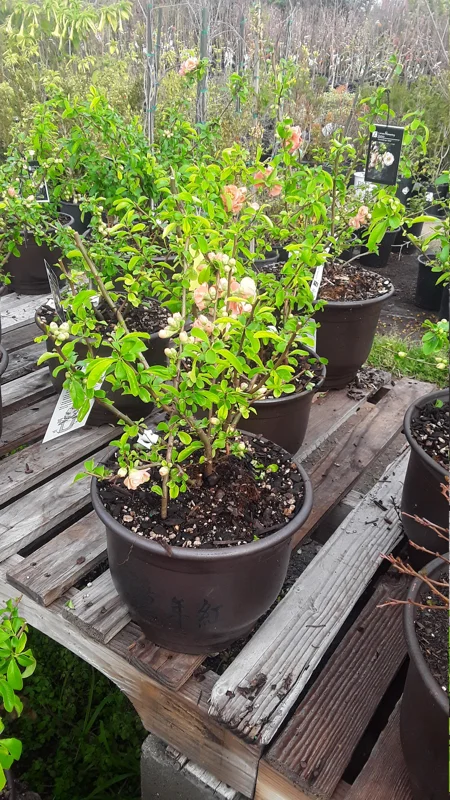
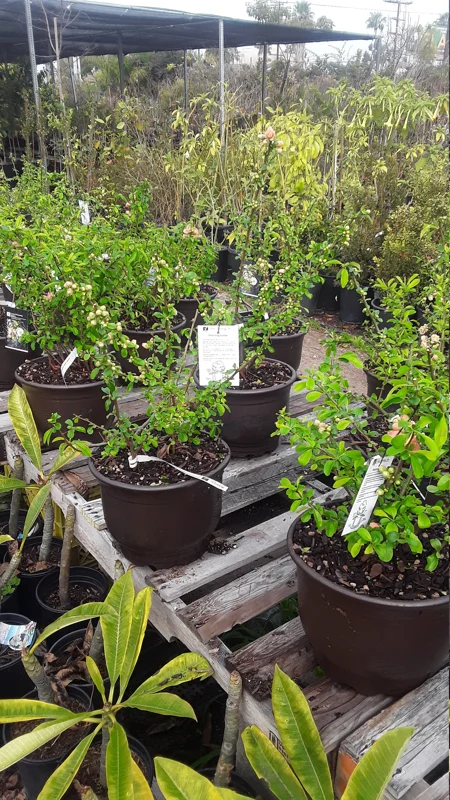
This flowering quince live plant (Chaenomeles Speciosa) is shipped in a sturdy 1 gallon nursery pot, ensuring a healthy root system and a strong start in your garden. At the time of shipment, the plant will have established foliage and be ready for transplanting. While exact dimensions can vary, a young plant in a 1 gallon pot typically stands approximately 8-16 inches tall from the top of the soil, with a similar spread. The growth rate of the flowering quince is moderate, generally adding 1-2 feet per year under ideal conditions. Mature plants can reach heights and widths of 6 to 10 feet, depending on the cultivar and whether it is pruned. If trained as a quince bonsai tree, its size will be meticulously controlled through regular pruning and shaping. Expect vibrant, often red or orange, flowers to appear in late winter to early spring, followed by small, fragrant fruits in late summer to fall. This plant is a fantastic addition for those looking for a resilient and beautiful outdoor flowering shrub.
Frequently Asked Questions
- Q: How big does this plant get? A: A mature flowering quince live plant can typically reach a height and spread of 6 to 10 feet if left unpruned. However, its size can be easily managed through regular pruning, especially if you’re aiming for a smaller garden shrub or a quince bonsai tree.
- Q: Is this an indoor or outdoor plant? A: The flowering quince live plant is an outdoor shrub. It requires a period of cold dormancy to flower properly and thrives in garden settings, making it an excellent outdoor flowering shrub.
- Q: How much sunlight does it need? A: For the best flowering and overall health, your flowering quince live plant should receive at least 6 hours of direct sunlight per day. It can tolerate partial shade, but flowering may be less prolific.
- Q: Is this plant easy to care for? A: Yes, the flowering quince is known for being very hardy and relatively low-maintenance. Once established, it is drought-tolerant and generally resistant to pests and diseases, making it a good choice for both experienced and novice gardeners interested in growing flowering quince.
- Q: What condition will it arrive in? A: Your flowering quince live plant will arrive well-packaged in a 1 gallon nursery pot, with its root ball intact and carefully protected, ensuring it is healthy and ready for planting in your garden.
- Q: When is the best time to plant? A: The best time to plant your flowering quince live plant is in the spring or fall. This allows the plant to establish its root system before the extreme temperatures of summer or winter.
- Q: What’s the minimum temperature it can survive? A: The flowering quince live plant is quite cold hardy, typically thriving in USDA Zones 4-9. This means it can withstand winter temperatures as low as -30°F (-34°C) once established.
- Q: Can I use the fruit from this plant? A: Yes, the small, hard fruits produced by the flowering quince live plant are edible, though quite tart raw. They are excellent for making jellies, jams, and preserves due to their high pectin content.
- Q: How often should I water my flowering quince? A: After planting, water regularly until established. Once established, the flowering quince live plant is quite drought-tolerant and will only need supplemental watering during extended dry periods.
- Q: Is the flowering quince deer resistant? A: While no plant is entirely deer-proof, the thorny branches of the flowering quince live plant often deter deer, making it a relatively good choice for areas where deer browse is a concern.


Reviews
There are no reviews yet.