Overview
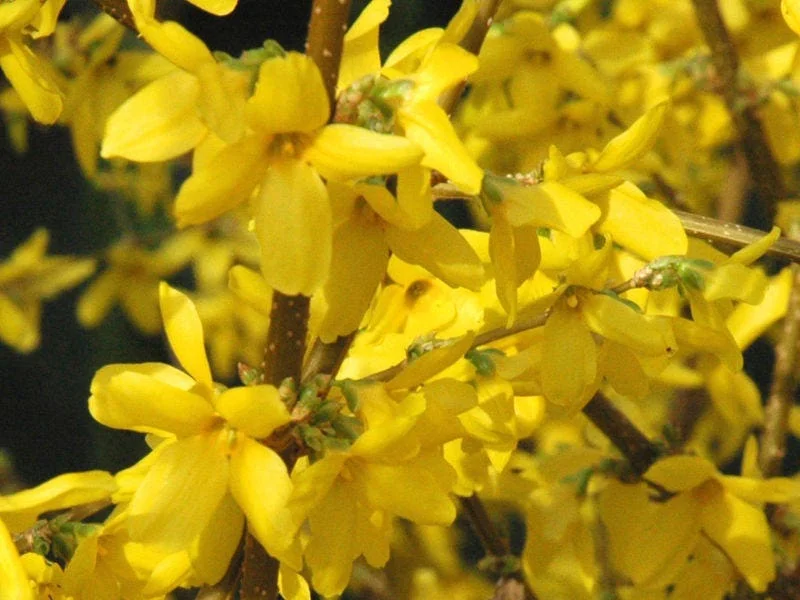
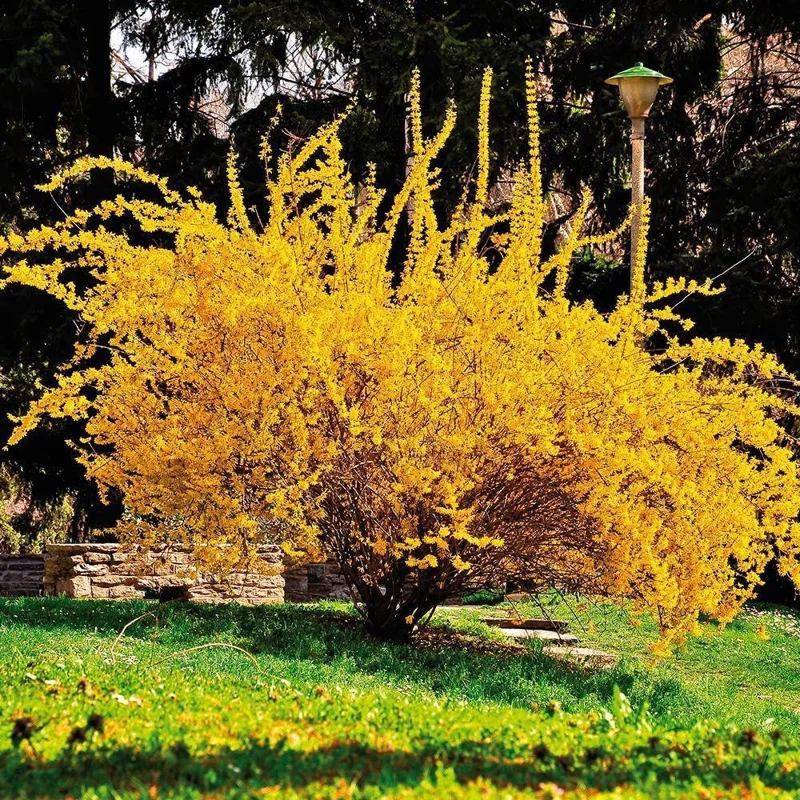
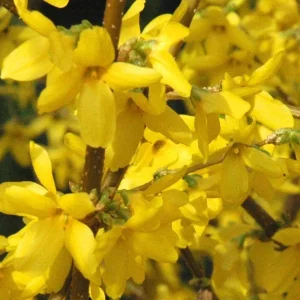
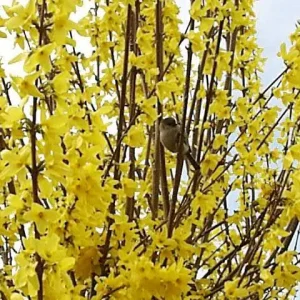
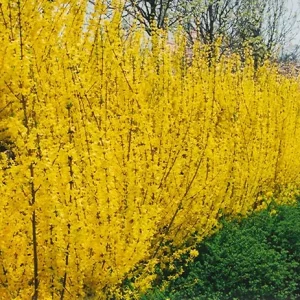
Welcome the spring season with the vibrant beauty of the Forsythia Lynwood Gold live plant, commonly known as ‘Golden Bells’. This stunning deciduous shrub is celebrated for being one of the first plants to burst into bloom, often before its leaves even emerge. Its stems become entirely covered in bright, cheerful lemon-yellow flowers, creating an unforgettable display that truly announces the end of winter. The ‘Lynwood Gold’ cultivar is highly prized for its vigorous growth and prolific flowering, making it a garden favorite. This particular offering provides you with a healthy, young Golden Bells Forsythia in a 4 inch pot, ready to establish itself and bring joy to your outdoor space for years to come.
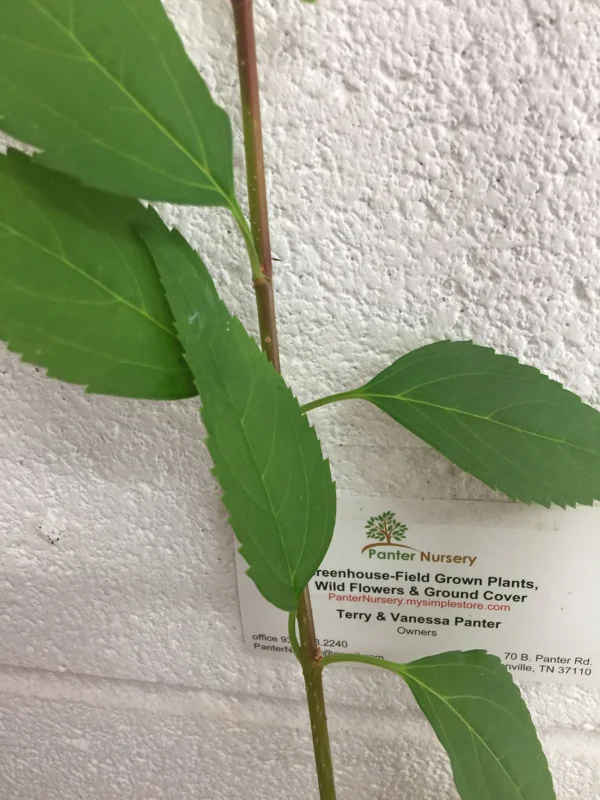
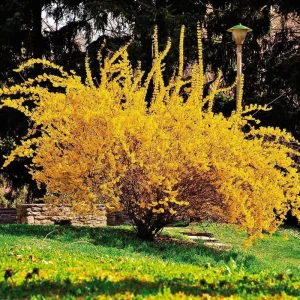
The Forsythia x intermedia ‘Lynwood Gold’ is a hybrid cultivar known for its upright, arching branches that become a cascade of yellow in early spring. Beyond its spectacular floral show, this shrub offers attractive bright green foliage throughout the summer, which then transitions to a lovely yellow-purplish hue in the fall. It’s an incredibly adaptable and easy to grow forsythia, thriving in a range of conditions and requiring minimal maintenance once established. Whether you’re looking to create a vibrant border, a privacy screen, or simply add a splash of early season color, this ‘Golden Bells’ variety is an excellent choice for any landscape.
Key Benefits
The Forsythia Lynwood Gold live plant offers a multitude of benefits for any garden, making it a highly desirable and rewarding addition. Its early and abundant flowering is just one of many reasons to choose this exceptional shrub.
- Spectacular Early Spring Blooms: Be among the first to enjoy the vibrant lemon-yellow flowers that completely cover the stems, heralding the arrival of spring with unparalleled brilliance. This early display brings much-needed color to the dormant landscape.
- Fast Growing and Vigorous: Known as a fast growing forsythia, it quickly establishes itself and reaches its mature size, making it an excellent choice for gardeners seeking rapid landscape impact or screening solutions.
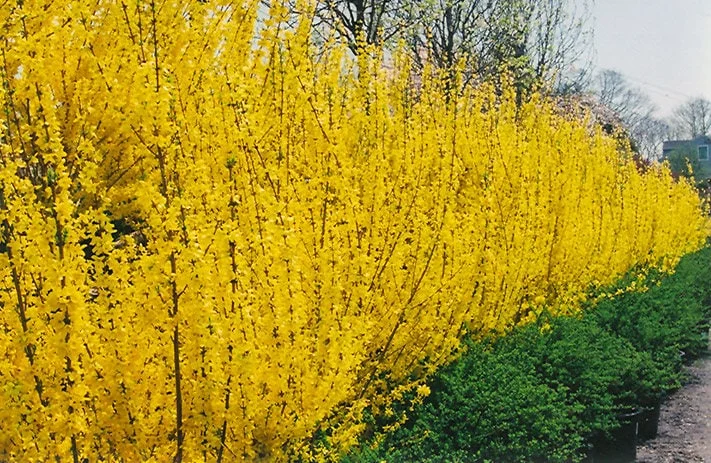
- Versatile Landscaping Plant: The ‘Golden Bells’ Forsythia is incredibly adaptable and can be used in various landscape designs, including informal hedges, mass plantings, erosion control on slopes, or as an outstanding backdrop for perennial and shrub borders. It is a true outdoor landscape plant.
- Low Maintenance and Easy Care: This shrub is remarkably unfussy and tolerant of a wide range of soil conditions and environmental factors. Once established, it requires minimal attention, making it perfect for both novice and experienced gardeners.
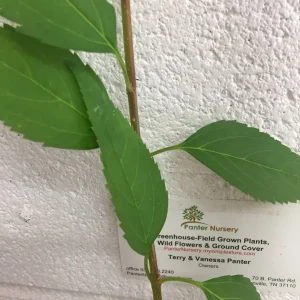
- Attractive Foliage: After the spectacular floral display, the bright green leaves provide a lush backdrop throughout the summer, offering continued visual interest until they turn to warm yellow and purple tones in autumn.
- Hardy and Resilient: The ‘Lynwood Gold’ Forsythia is known for its robust nature and ability to withstand various climates, thriving in USDA Hardiness Zones 5-8, ensuring reliable performance year after year.
- Pollinator Friendly: Although not heavily scented, the early blooms provide a valuable nectar source for early emerging pollinators, contributing to local biodiversity.
Plant Care & Growing Tips
Caring for your Forsythia Lynwood Gold live plant is straightforward, ensuring a magnificent display each spring. This resilient shrub thrives with basic attention and rewards gardeners with abundant blooms. The ‘Golden Bells’ variety prefers a location with full sun, meaning at least 6 hours of direct sunlight per day, which is crucial for maximizing its flowering potential. While it can tolerate partial shade, too little sun will result in fewer flowers. Ensure the planting site has well-draining soil, as forsythias do not like wet feet. They are adaptable to various soil types, from clay to sandy, as long as drainage is adequate.
Watering is important during the establishment phase. Keep the soil consistently moist but not waterlogged for the first year after planting. Once established, this early spring flowering shrub is relatively drought-tolerant, though it will benefit from supplemental watering during prolonged dry spells, especially in hot climates. Fertilize in early spring with a balanced, slow-release granular fertilizer formulated for trees and shrubs. Pruning is best done immediately after flowering to shape the plant and encourage new growth for the following year’s blooms. Avoid pruning in late summer or fall, as you risk removing the flower buds that have already formed.
This outdoor landscape plant is generally pest and disease resistant, making it a healthy addition to most gardens. Watch out for common garden issues like powdery mildew in humid conditions or cankers, which can be managed with proper air circulation and pruning. The ‘Lynwood Gold’ Forsythia is hardy in USDA zones 5-8, meaning it can tolerate winter temperatures down to -20°F (-29°C). In colder parts of its range, a layer of mulch around the base can provide extra winter protection. Providing these simple care requirements will ensure your fast growing forsythia flourishes and delivers a spectacular show every spring.
Size & Details
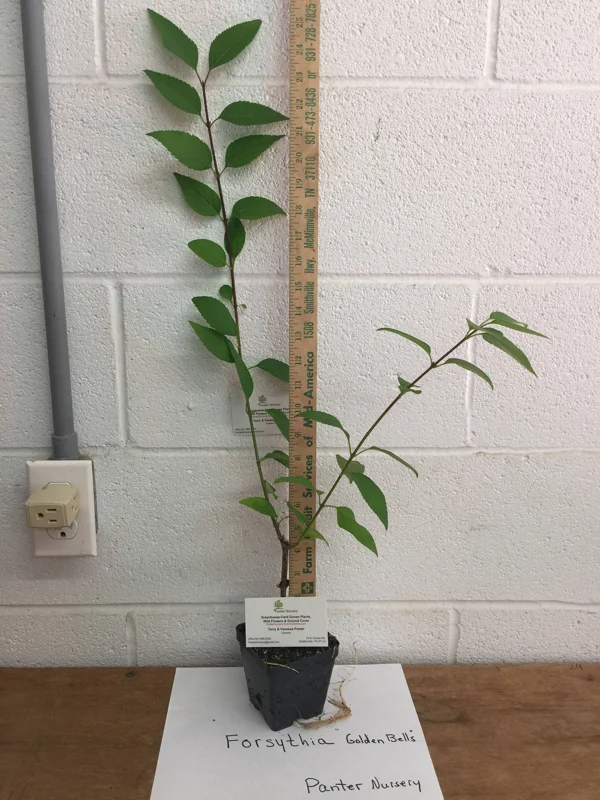
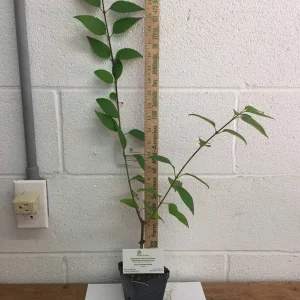
This offering is for one healthy Forsythia Lynwood Gold live plant, ‘Golden Bells’ cultivar, shipped in a 4 inch nursery pot. The young plant typically stands between 6-12 inches tall upon arrival, ready for transplanting into your garden. This fast growing forsythia can reach an impressive mature size, growing to approximately 8 feet tall and 8 feet wide, forming a large, rounded shrub with arching branches. Its vigorous growth rate means you won’t have to wait long to enjoy its full splendor.
The plant will arrive with its root ball intact within the 4-inch pot, ensuring a smooth transition to its new home. Expect it to begin putting on significant growth once established in your landscape. While it will bloom in its first year, the floral display will become more pronounced and abundant as the plant matures over subsequent seasons. This outdoor landscape plant is perfect for creating impactful statements in your garden design, whether as a specimen plant or as part of a larger planting scheme.
Frequently Asked Questions
- Q: How big does this plant get? A: The Forsythia Lynwood Gold live plant is a vigorous grower and can reach a mature size of approximately 8 feet tall and 8 feet wide, forming a large, rounded shrub.
- Q: Is this an indoor or outdoor plant? A: This ‘Golden Bells’ Forsythia is an outdoor landscape plant and is not suitable for long-term indoor cultivation. It requires outdoor conditions to thrive and bloom.
- Q: How much sunlight does it need? A: For the best flowering display, the fast growing forsythia needs full sun, meaning at least 6 hours of direct sunlight per day. It can tolerate partial shade, but blooming may be reduced.
- Q: Is this plant easy to care for? A: Yes, the ‘Lynwood Gold’ Forsythia is known for being an easy to grow forsythia. It is low-maintenance and tolerant of various conditions once established, making it suitable for beginners.
- Q: What condition will it arrive in? A: Your Forsythia Lynwood Gold live plant will arrive well-packaged in a 4-inch pot, with its root ball intact and protected, ensuring it is ready for successful planting.
- Q: When is the best time to plant? A: The best time to plant this early spring flowering shrub is in spring or early fall, allowing the plant sufficient time to establish its root system before extreme temperatures.
- Q: Will it survive winter in my zone? A: This ‘Golden Bells’ Forsythia is hardy in USDA Zones 5-8, meaning it will reliably survive winter in these regions. In colder zones, it may require winter protection.
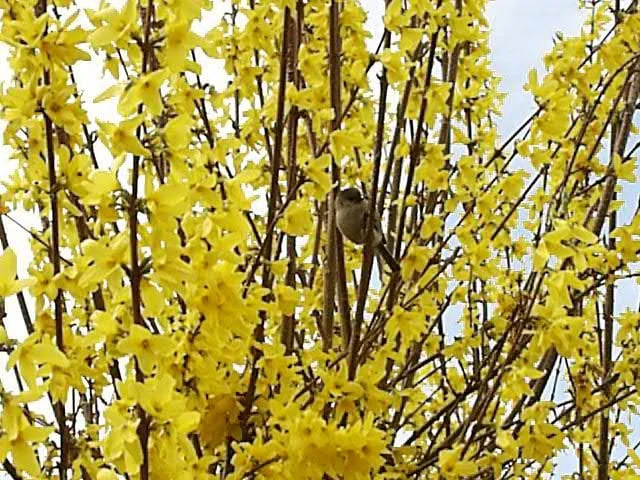
- Q: What are the flowers like? A: The flowers are a striking lemon-yellow, bell-shaped, and appear in profusion along the bare stems in early spring, creating a bright and cheerful display.
- Q: Can I use it for hedging or screening? A: Absolutely! Due to its fast growth and dense habit, the Forsythia Lynwood Gold live plant is an excellent choice for creating informal hedges, privacy screens, or mass plantings.
- Q: What kind of soil does it prefer? A: It prefers well-draining soil and is adaptable to a range of soil types, including clay, loam, or sandy soils, as long as they are not waterlogged.


Reviews
There are no reviews yet.