Overview
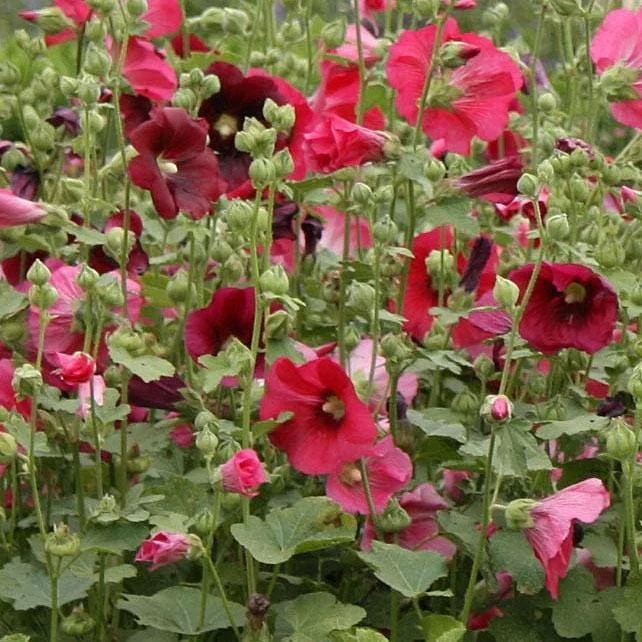
Transform your garden with the majestic hollyhock live plant ‘Indian Spring’ (Alcea Rosea ‘Indian Spring’). This remarkable biennial plant, often grown as a short-lived perennial due to its prolific self-seeding, is a true classic in cottage gardens and traditional landscapes. Known for its towering spires adorned with beautiful, cup-shaped flowers, the ‘Indian Spring’ variety features a delightful mix of colors, including shades of pink, red, white, and yellow. Each bloom measures an impressive 3-5 inches across, creating a dramatic visual impact. Our Indian Spring hollyhock is offered as a well-rooted starter plant in a 2.5 x 3.5 inch pot, ready to establish quickly in your garden. Perfect for creating a stunning backdrop in borders or against fences, this plant promises to bring an old-world charm and vibrant beauty to your outdoor sanctuary. Its robust growth and ease of care make it a favorite among gardeners seeking both elegance and resilience.
The Alcea Rosea plant ‘Indian Spring’ is a magnificent addition for anyone looking to add vertical interest and a burst of color to their garden. It’s renowned for its ability to self-seed, ensuring a continuous display of these charming flowers year after year. This makes it an excellent choice for gardeners who appreciate low-maintenance yet high-impact plants. Whether you’re an experienced gardener or just starting, the ‘Indian Spring’ hollyhock will provide an unforgettable floral spectacle.
Key Benefits
Adding the hollyhock live plant ‘Indian Spring’ to your garden offers a multitude of benefits, enhancing both its aesthetic appeal and ecological value. This plant is a fantastic choice for creating a vibrant, dynamic outdoor space.
- Stunning Visual Impact: The ‘Indian Spring’ hollyhock produces tall, stately flower stalks, reaching up to 8 feet, adorned with large, mixed-color blooms that create an immediate focal point in any garden. Its vibrant hues brighten up landscapes and add a touch of classic cottage garden elegance.
- Attracts Pollinators: The abundant, open flowers are a magnet for bees, butterflies, and other beneficial pollinators, contributing to the biodiversity and health of your garden ecosystem. Enjoy watching your garden come alive with activity.
- Self-Seeding for Continuous Blooms: As a biennial that readily self-seeds, once established, the Indian Spring hollyhock will often return year after year, providing new generations of plants without additional effort. This ensures a consistent display of its beautiful flowers.
- Versatile Garden Placement: Ideal for planting at the back of borders, along fences, or against walls, these tall plants create an excellent backdrop for shorter flowering plants. They add vertical dimension and structure to your garden design.
- Low Maintenance: Once established, hollyhocks are relatively low-maintenance plants. They are drought-tolerant and generally resistant to common garden pests, making them suitable for gardeners seeking beauty without excessive upkeep.
- Mixed Color Palette: The ‘Indian Spring’ variety boasts a delightful mix of colors, offering a surprise with each bloom. This natural color assortment adds a dynamic and cheerful element to your garden, ensuring a diverse and engaging display.
- Hardy and Resilient: Thriving in USDA Zones 3-7, this perennial hollyhock is quite hardy and can withstand a range of climatic conditions, making it a reliable choice for many regions across the US.
Plant Care & Growing Tips
Caring for your hollyhock live plant ‘Indian Spring’ is straightforward, ensuring a spectacular display of blooms with minimal effort. To achieve the best results, understanding its basic needs for sunlight, water, and soil is crucial. Hollyhocks thrive in full sun, meaning they need at least 6-8 hours of direct sunlight per day. While they can tolerate light shade, particularly in hotter climates, full sun encourages the most vigorous growth and abundant flowering. Place your plant in a location where it will receive ample morning sun, and some afternoon shade if your summers are particularly intense, to prevent leaf scorch.
When it comes to watering, hollyhocks prefer consistently moist, but not waterlogged, soil, especially during their active growing season. Water deeply at the base of the plant to encourage strong root development and avoid wetting the foliage, which can help prevent fungal diseases. Once established, they are somewhat drought-tolerant, but regular watering during dry spells will promote healthier growth and more prolific blooms. The ideal soil for an Alcea Rosea plant is well-drained, fertile, and rich in organic matter. They can tolerate a range of soil types, from sandy to clay, as long as drainage is good. Amend heavy clay soils with compost to improve drainage and aeration, and add organic matter to sandy soils to enhance moisture retention and nutrient availability.
Hollyhocks are biennials, meaning they grow foliage in their first year and flower in their second year, often self-seeding to create a continuous cycle. They are hardy in USDA Zones 3-7. Fertilize sparingly; a balanced, all-purpose fertilizer applied in early spring can boost growth, but avoid over-fertilizing, which can lead to excessive foliage at the expense of flowers. Provide staking for taller varieties, especially in windy areas, to prevent the flower stalks from toppling. Deadhead spent flowers to encourage more blooms, or allow them to go to seed if you wish for the plant to self-propagate. Watch out for rust, a common fungal disease; good air circulation and avoiding overhead watering can help mitigate this. With proper care, your tall flowering plant will become a cherished feature in your garden.
Size & Details
The hollyhock live plant ‘Indian Spring’ is provided as a robust starter plant, well-rooted in a 2.5 x 3.5 inch pot, ensuring a healthy beginning for your garden. This biennial variety typically grows to an impressive height of 5-8 feet tall, creating a dramatic vertical element in your landscape. The large, cup-shaped blooms measure 3-5 inches in diameter, appearing in a beautiful mix of colors. While it is a biennial, it generously self-seeds, allowing for a continuous presence in your garden over many years, effectively acting like a short-lived perennial. This plant is known for its relatively fast growth rate, quickly establishing itself and producing its characteristic tall flower stalks. It is designed to be planted outdoors and will flourish in the appropriate conditions. Upon arrival, the plant will be actively growing and ready for transplanting into your garden. Expect blooms in its second year of growth, with subsequent generations appearing from self-sown seeds.
Frequently Asked Questions
- Q: How big does this hollyhock live plant get? A: The ‘Indian Spring’ hollyhock is a tall flowering plant that can reach an impressive height of 5-8 feet, making it an excellent choice for the back of borders or against structures. Its vertical growth habit adds significant drama to the garden.
- Q: What size pot does the plant come in? A: Each Indian Spring hollyhock starter plant is well-rooted and shipped in a convenient 2.5 x 3.5 inch pot, providing a strong foundation for transplanting into your garden.
- Q: Is this an indoor or outdoor plant? A: The ‘Indian Spring’ hollyhock is strictly an outdoor plant. It requires full sun exposure and ample space to grow to its full potential, making it unsuitable for indoor cultivation.
- Q: How much sunlight does it need? A: This Alcea Rosea plant thrives in full sun, needing at least 6-8 hours of direct sunlight daily to produce the best blooms and strongest growth. It can tolerate light shade, but full sun is preferred.
- Q: Is this plant easy to care for? A: Yes, once established, the ‘Indian Spring’ hollyhock is considered relatively easy to care for. It requires well-drained soil, consistent watering, and occasional staking for its tall stalks.
- Q: What condition will it arrive in? A: Your hollyhock live plant will arrive as a healthy, well-rooted starter plant, actively growing and carefully packaged to ensure its safe transit and readiness for planting.
- Q: How long until it blooms? A: As a biennial, the ‘Indian Spring’ hollyhock typically blooms in its second year of growth. However, it readily self-seeds, so you can expect continuous blooms from subsequent generations of plants.
- Q: When is the best time to plant this hollyhock? A: The best time to plant your hollyhock starter plant is in spring or early fall, allowing it ample time to establish its root system before extreme weather conditions.
- Q: Will it survive winter in my zone? A: Yes, the perennial hollyhock ‘Indian Spring’ is hardy in USDA Zones 3-7, meaning it is well-suited to survive winters in a wide range of climates across the United States.
- Q: Does this hollyhock attract pollinators? A: Absolutely! The open, cup-shaped flowers of the ‘Indian Spring’ hollyhock are very attractive to bees, butterflies, and other beneficial pollinators, making it a great addition to a pollinator-friendly garden.


Reviews
There are no reviews yet.