Overview
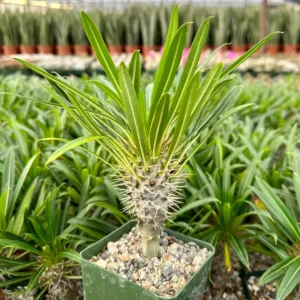
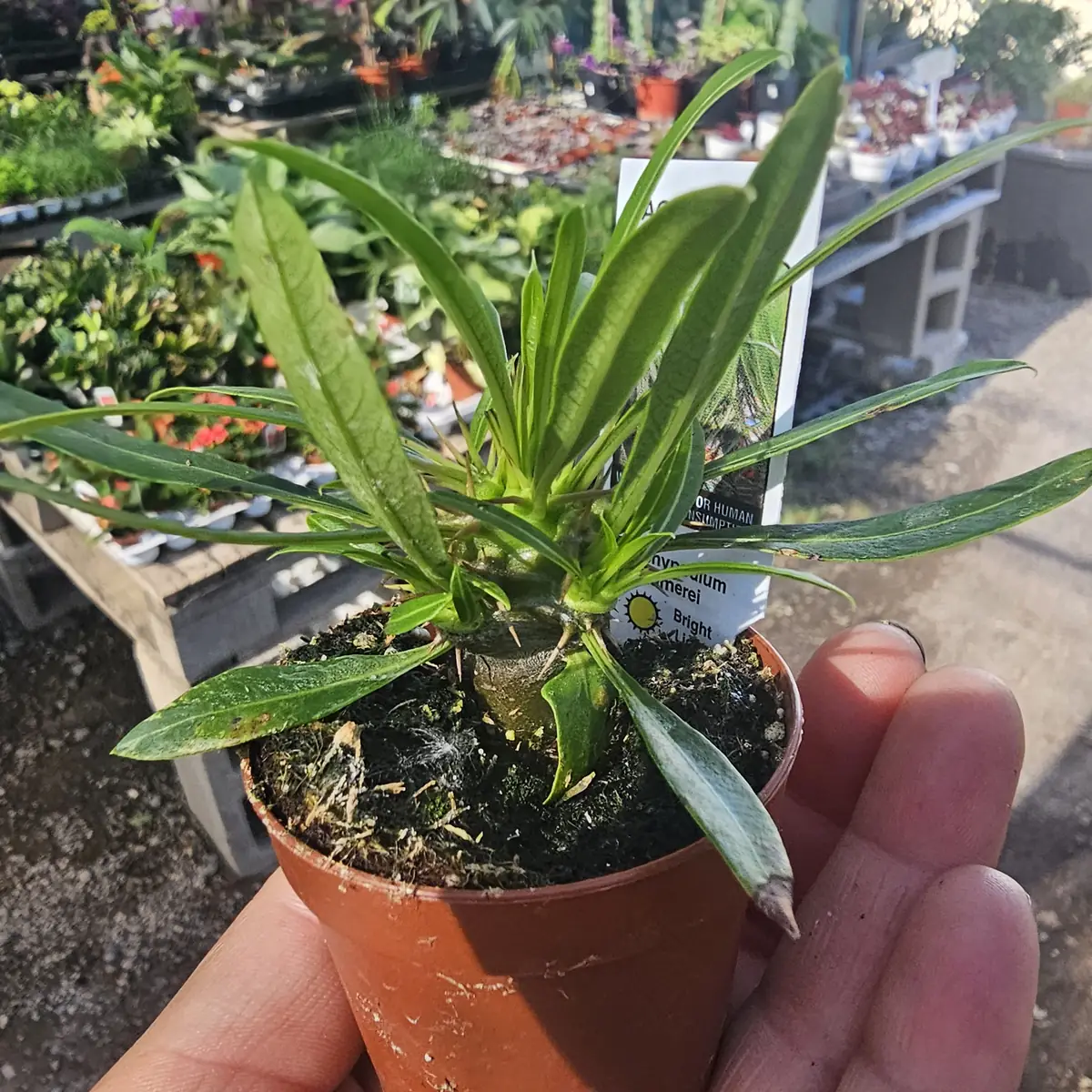
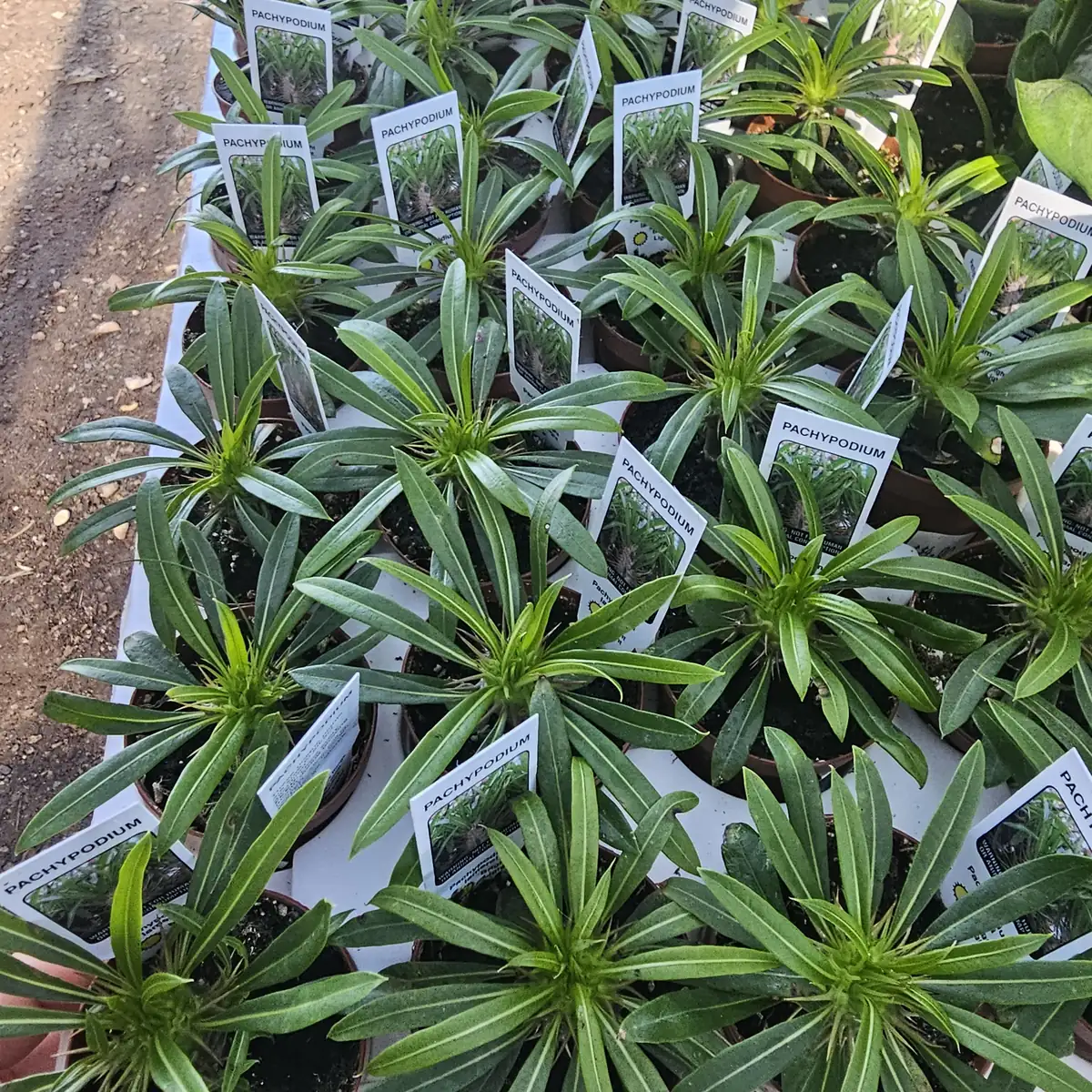
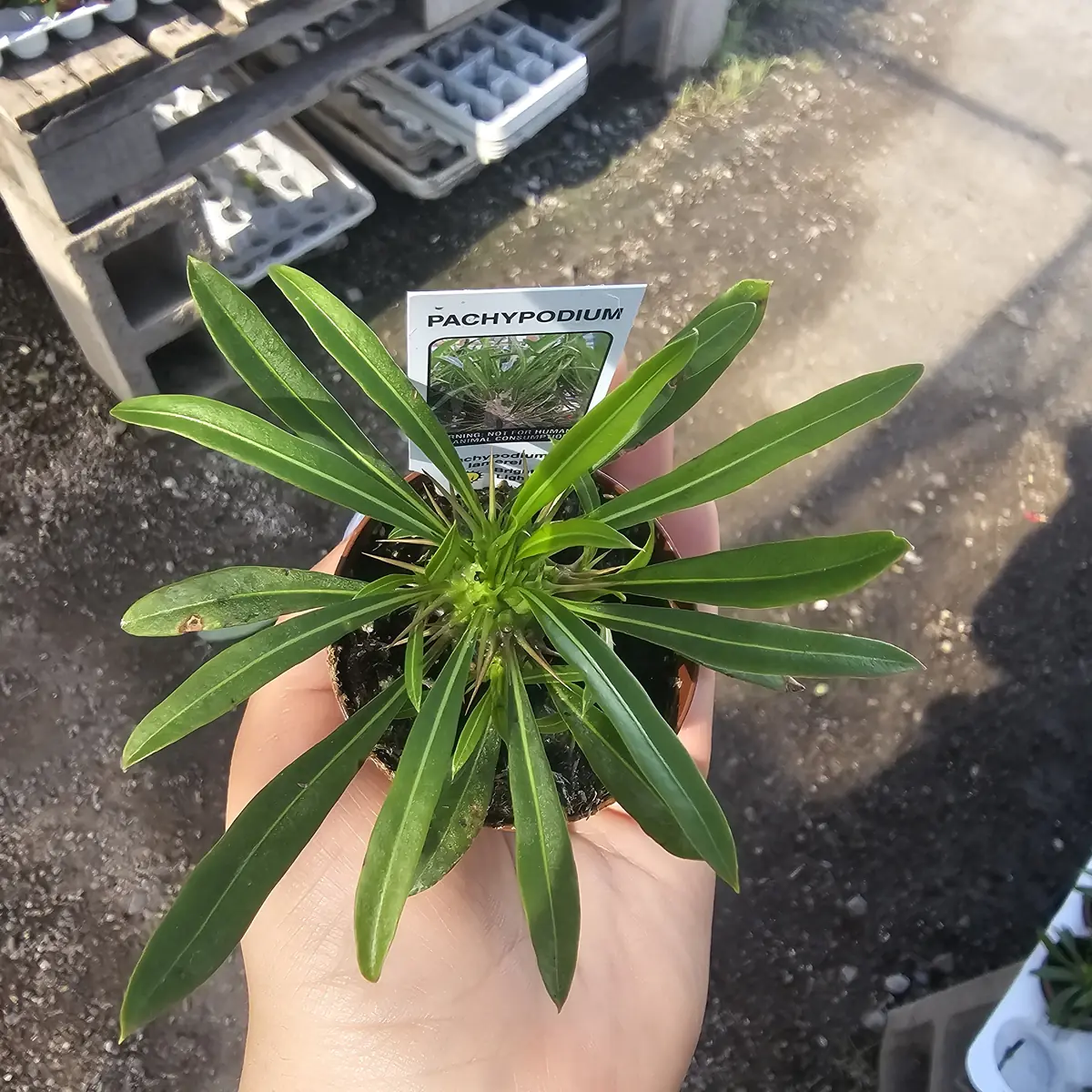
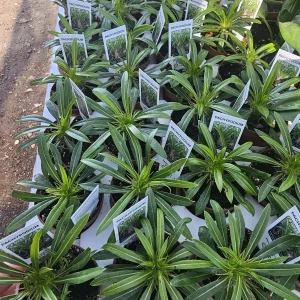
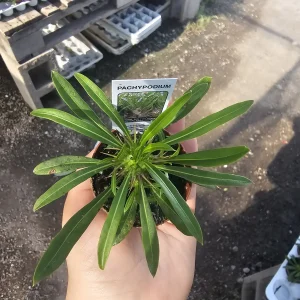
Introduce a touch of the exotic to your plant collection with the remarkable Madagascar Palm live plant, scientifically known as Pachypodium lamerei. This fascinating succulent, despite its common name, is not a true palm but rather a member of the dogbane family (Apocynaceae) native to Madagascar. It’s admired for its thick, spiny trunk and a crown of long, narrow leaves that give it a distinctive palm-like silhouette. This unique appearance makes it a captivating specimen for both experienced plant enthusiasts and beginners alike. Our Madagascar Palm live plant comes rooted in a 2 inch pot, making it an ideal starter plant ready to establish itself in your home or garden. Its architectural form and resilience make it a popular choice for adding a desert-chic aesthetic to any space.
Key Benefits
The Madagascar Palm live plant offers several advantages for plant lovers, combining unique aesthetics with practical benefits:
- Striking Visual Appeal: With its stout, spiny trunk and crown of lush leaves, the Madagascar Palm creates a dramatic focal point in any room or landscape. Its distinctive form adds an exotic, sculptural element.
- Drought-Tolerant: As a succulent, Pachypodium lamerei is highly adapted to arid conditions, requiring infrequent watering. This makes it a perfect choice for those with busy schedules or who tend to forget watering.
- Low Maintenance: This robust plant thrives on neglect, making it an excellent option for beginners or those seeking an easy-care plant. Its needs are minimal once established, proving that an indoor succulent plant can be both beautiful and undemanding.
- Architectural Form: The unique growth habit of the Madagascar Palm live plant provides a strong architectural statement, complementing modern and minimalist decor styles.
- Adaptable to Environments: While typically grown as an indoor plant in most climates, it can flourish outdoors in suitable warm, dry environments, offering versatility in placement.
- Long-Lived: With proper care, a Madagascar Palm can be a long-term companion, growing slowly but steadily over many years, becoming an impressive specimen.
- Conversation Starter: Its unusual appearance and intriguing common name, despite not being a true palm, always spark curiosity and conversation among guests.
Plant Care & Growing Tips
Caring for your Madagascar Palm live plant is relatively straightforward, as this succulent is quite forgiving. Originating from Madagascar’s dry regions, it thrives in conditions that mimic its natural habitat. For optimal growth, provide plenty of sunlight. This plant prefers full sun to partial shade, meaning at least 6 hours of direct sunlight per day. When grown indoors, a south-facing window is ideal. If placed outdoors in a very hot climate, some afternoon shade can prevent scorching, especially for a young Pachypodium lamerei care. Good drainage is paramount for this plant. Use a well-draining potting mix, ideally one formulated for cacti and succulents, which typically contains sand, perlite, or pumice to prevent waterlogging. Overwatering is the most common cause of problems for the Madagascar Palm, leading to root rot.
Water thoroughly when the soil is completely dry to the touch, then allow it to dry out again before the next watering. During its dormant period in winter, reduce watering significantly, perhaps once a month or even less, depending on your home’s humidity. The ideal temperature range for the Madagascar Palm is between 65-80°F (18-27°C). It is not frost-tolerant and should be protected from temperatures below 40°F (4°C). If you live in a region with cold winters, it’s best to grow this as an indoor succulent plant and bring it inside before the first frost. Fertilize sparingly during the growing season (spring and summer) with a balanced liquid fertilizer diluted to half strength. Repot only when the plant is root-bound, choosing a pot that is only slightly larger than the current one to avoid excess moisture retention. Keep an eye out for common pests like spider mites or mealybugs, especially if the plant is under stress, and treat promptly with an appropriate horticultural oil or insecticidal soap. Understanding Pachypodium lamerei care is key to a thriving plant.
Size & Details
This offering is for one Madagascar Palm live plant, Pachypodium lamerei, cultivated in a 2 inch pot. At this young stage, the plant will have a small, developing trunk and a cluster of leaves at its apex. While initial size may vary slightly as it is a living product, it typically stands a few inches tall above the soil line. The Madagascar Palm is known for its relatively slow growth rate, but with proper care, it will gradually develop its characteristic thick, spiny trunk and can eventually reach impressive sizes in optimal conditions, growing several feet tall over many years. It ships as a healthy, rooted plant in its nursery grow pot, ready for you to transplant into a slightly larger decorative container or directly into your garden if you reside in a suitable climate. This desert plant for sale is a fantastic starting point for growing a magnificent specimen.
Frequently Asked Questions
- Q: How big does this plant get? A: While our Madagascar Palm live plant starts in a 2 inch pot, it can eventually grow quite tall, reaching several feet in height over many years, especially when mature and given ample space. Its growth rate is relatively slow.
- Q: Is this an indoor or outdoor plant? A: The Madagascar Palm can be grown both indoors and outdoors. It thrives outdoors in USDA zones 9-11 where temperatures do not drop below freezing. In colder climates, it is best kept as an indoor succulent plant and brought inside during winter.
- Q: How much sunlight does it need? A: This plant requires abundant bright light. Provide at least 6 hours of direct sunlight daily. Indoors, a south-facing window is ideal. Outdoors, full sun is preferred, though some afternoon shade might be beneficial in extremely hot regions.
- Q: Is this plant easy to care for? A: Yes, the Madagascar Palm is considered a low-maintenance plant, making it suitable for beginners. Its drought-tolerant nature means it doesn’t require frequent watering, simplifying Pachypodium lamerei care.
- Q: What condition will it arrive in? A: Your Madagascar Palm live plant will arrive healthy and carefully packaged in its original nursery grow pot, ensuring minimal disturbance during transit. We take utmost care to protect the plant.
- Q: How often should I water my Madagascar Palm? A: Water thoroughly only when the soil has completely dried out. During the growing season (spring to fall), this might be every 2-4 weeks. In winter, reduce watering significantly to once a month or less.
- Q: What kind of soil is best for this plant? A: A well-draining cactus or succulent mix is essential. This type of soil prevents water from sitting around the roots, which can lead to rot for this desert plant for sale.
- Q: Does this plant have actual thorns? A: Yes, the trunk of the Madagascar Palm is covered in sharp, prominent spines, contributing to its unique spiky texture, hence its common comparison to a ‘spiky palm lookalike’. Handle with care.
- Q: When is the best time to repot this plant? A: Repot your Madagascar Palm in spring or early summer when it becomes root-bound. Choose a pot that is only slightly larger than the current one to avoid overwatering issues.
- Q: Is this plant toxic to pets? A: Like many plants in the Apocynaceae family, the Madagascar Palm can be toxic if ingested, due to a milky sap it produces. It’s advisable to keep it out of reach of pets and children.


Reviews
There are no reviews yet.