Overview
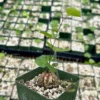
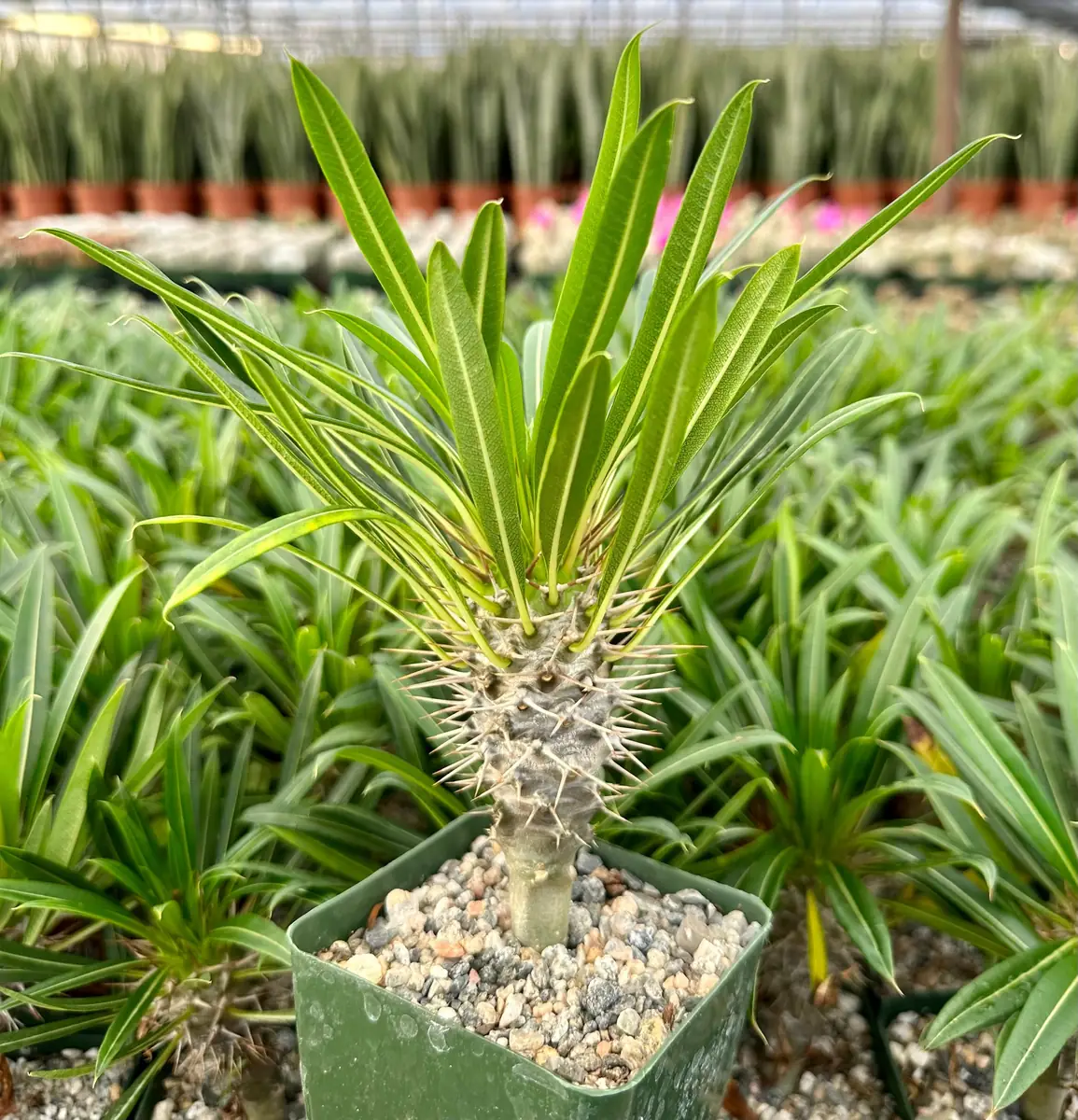
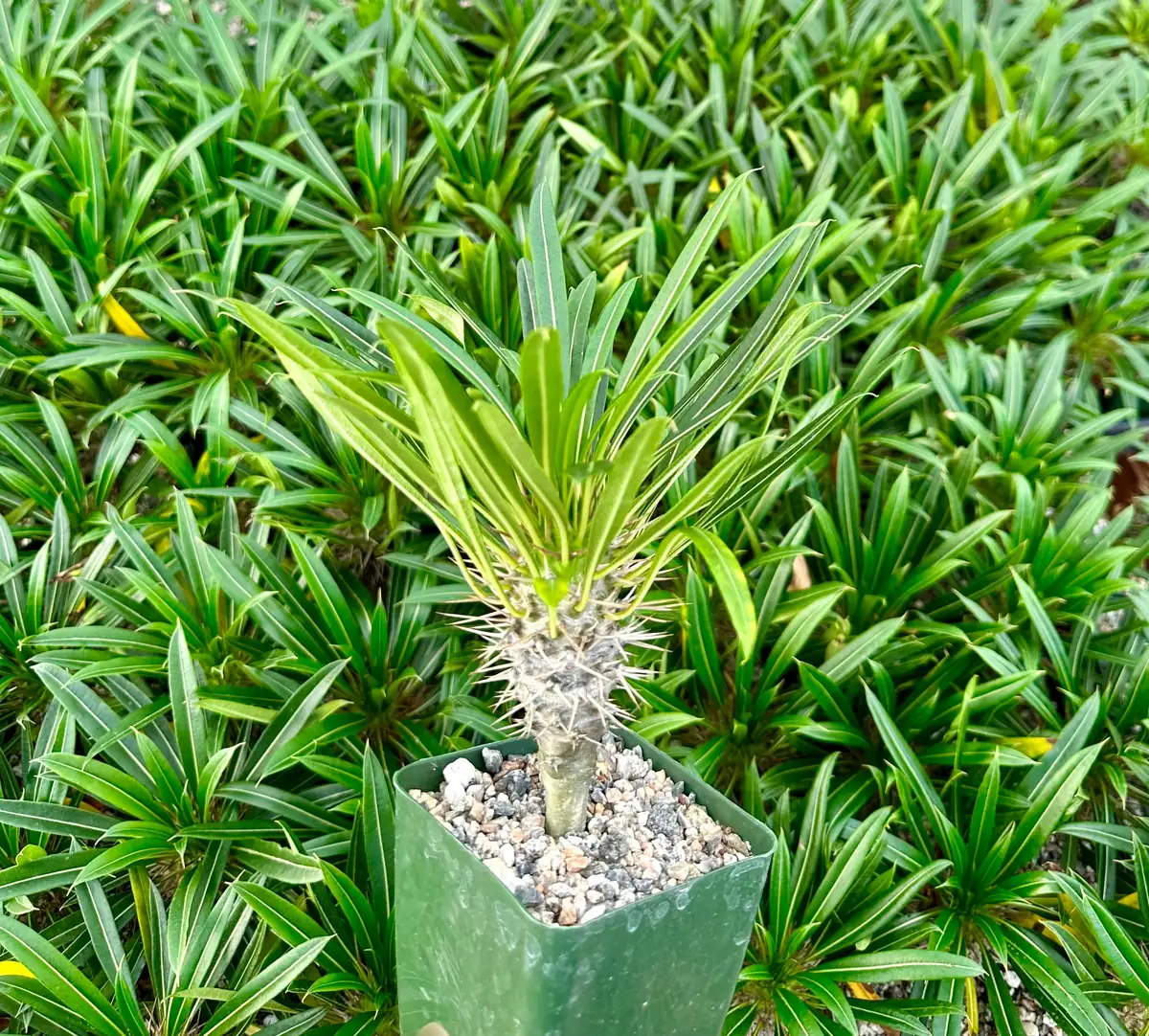
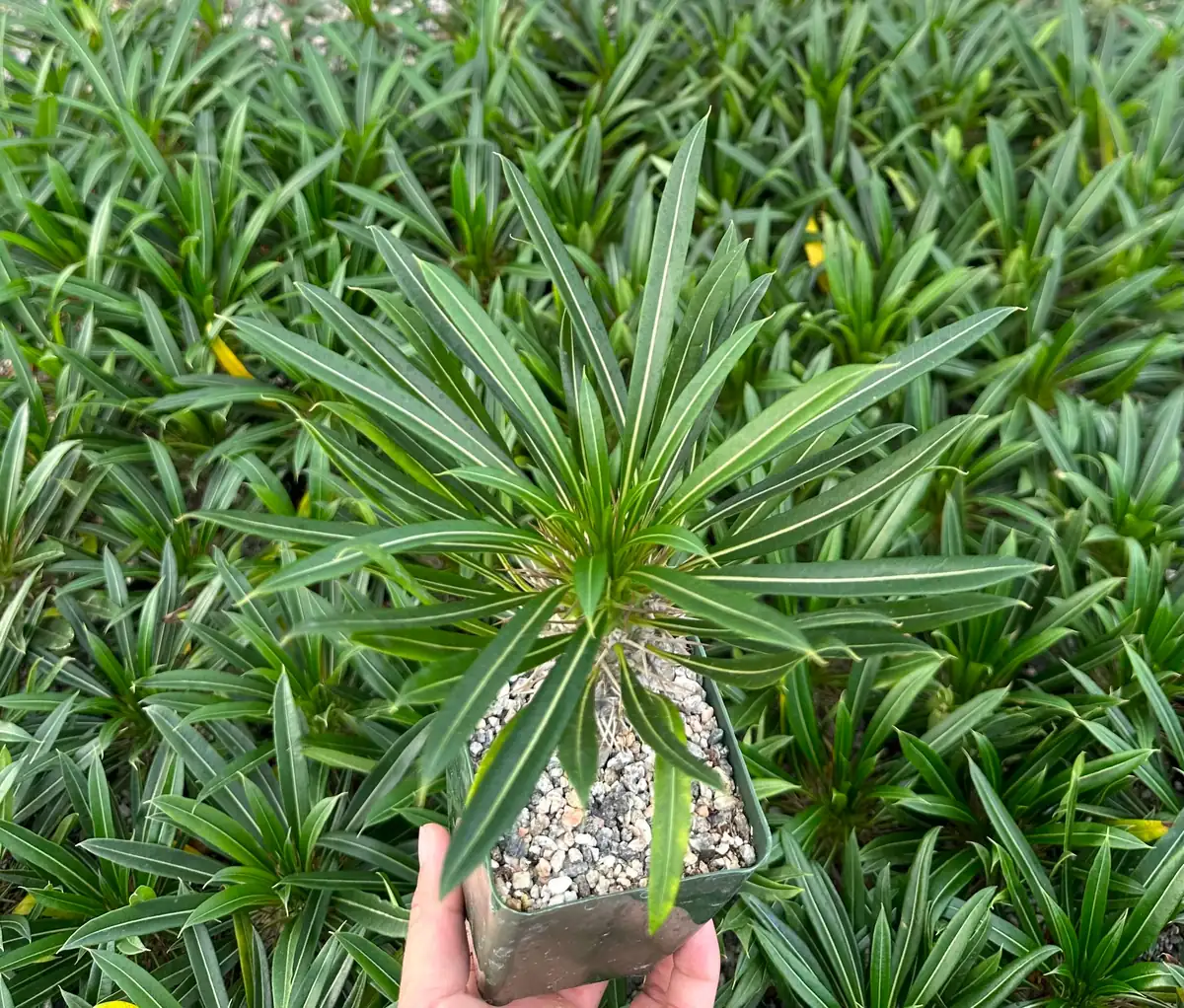
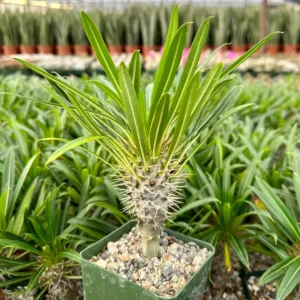
Introduce an extraordinary botanical specimen into your home or garden with the Madagascar Palm live plant. Despite its common name, this captivating succulent, scientifically known as Pachypodium lamerei, is not a true palm but rather a member of the Apocynaceae family. Native to the arid regions of Madagascar, it boasts a unique and striking appearance that draws immediate attention. Its thick, silvery-gray trunk is densely covered in prominent spines, serving both as a water storage organ and a defense mechanism. Crowning this formidable trunk is a lush rosette of lance-shaped, glossy green leaves, giving it a resemblance to a miniature palm tree. This intriguing combination of succulent and tree-like characteristics makes the Madagascar Palm live plant a truly special addition for any plant enthusiast looking for something out of the ordinary.
The Pachypodium plant care is relatively simple, appealing to those who appreciate low-maintenance yet visually stunning flora. As it matures, this unusual plant can produce clusters of fragrant, tubular white flowers, further enhancing its ornamental appeal. Its ability to thrive in challenging conditions makes it a resilient choice, perfect for adding a touch of the exotic to diverse settings, from bright indoor spaces to warm outdoor landscapes. Explore the fascinating world of this rare succulent plant and enjoy its distinctive beauty for years to come.
Key Benefits
The Madagascar Palm live plant offers a multitude of benefits that make it a standout choice for plant collectors and home decorators alike. Its unique features contribute to its ornamental value and ease of care.
- Unique Aesthetic Appeal: With its thick, spiny trunk and palm-like foliage, the Madagascar Palm provides a striking architectural element to any space. It’s an instant conversation starter and a focal point in a plant collection.
- Low Maintenance: As a succulent, the Madagascar Palm live plant is incredibly forgiving and requires minimal attention once established. It’s well-suited for busy individuals or those new to plant care.
- Drought Tolerance: This plant naturally stores water in its trunk, making it highly tolerant of dry periods. This characteristic makes it an ideal drought tolerant plant for xeriscaping or for those who occasionally forget to water.
- Air Purification: Like many plants, the Madagascar Palm contributes to a healthier indoor environment by absorbing toxins and releasing oxygen, improving air quality in your home.
- Adaptable Growth: While it can grow quite large in its natural habitat, it remains a manageable size in containers, making it suitable for indoor cultivation or smaller outdoor spaces.
- Rare & Intriguing: Often considered a rare succulent plant, owning a Madagascar Palm adds a unique and exotic touch that distinguishes your plant collection from the ordinary.
- Pest Resistant: Its spiny trunk offers natural protection, making it less susceptible to common garden pests compared to other plants.
Plant Care & Growing Tips
Proper Pachypodium plant care ensures a healthy and thriving specimen. The Madagascar Palm is relatively easy to care for, provided its basic needs are met, especially regarding light and watering.
This spiny trunk plant thrives in conditions ranging from full sun to partial shade. For optimal growth and potential flowering, aim for at least 6 hours of direct sunlight per day if grown outdoors. Indoors, place it in your brightest window, preferably south-facing. While it can tolerate some shade, insufficient light may lead to leggy growth and reduced vigor. Being a succulent, it’s highly sensitive to overwatering, which can quickly lead to root rot. Allow the soil to dry out completely between watering sessions. During its active growing season (spring and summer), water thoroughly until water drains from the bottom of the pot. Reduce watering significantly in fall and winter when the plant is dormant.
A well-draining soil mix is crucial for the Madagascar Palm. A cactus or succulent potting mix is ideal, or you can create one by amending regular potting soil with perlite, pumice, or coarse sand to improve drainage. The plant is frost-sensitive and should be protected from temperatures below 40°F (4°C). If you live in a colder climate, it’s best to grow this drought tolerant plant in a container that can be brought indoors during winter. Fertilize sparingly during the growing season with a balanced liquid fertilizer diluted to half strength, once every 4-6 weeks. Repot only when necessary, typically every 2-3 years, choosing a pot only slightly larger than the current one to prevent excess moisture retention.
Size & Details
This offering is for a healthy Madagascar Palm live plant, typically shipped in a 3 inch pot. At this stage, the plant will have begun developing its distinctive spiny trunk and a rosette of leaves. The initial height will vary, generally ranging from 4 to 8 inches tall from the soil line. With proper Pachypodium plant care, this plant can grow quite large over many years, potentially reaching several feet in height when mature, especially if planted in the ground in suitable climates. However, when grown in a container, its size will be more constrained, making it an excellent indoor specimen or patio plant.
The growth rate of this rare succulent plant is moderate, allowing you to enjoy its evolving form over time. It is shipped as a rooted plant in its nursery pot, ready for you to place in your desired location or repot into a decorative container. This plant is a fantastic choice for adding an exotic, architectural element to your garden or indoor plant collection. The unique texture of its spiny trunk combined with its lush green foliage ensures it will be a captivating feature wherever it is placed.
Frequently Asked Questions
- Q: How big does this plant get? A: When grown in a container, a Madagascar Palm typically reaches 2-4 feet tall indoors, but it can grow much taller (up to 15-20 feet) if planted in the ground in its ideal climate. Our Madagascar Palm live plant ships in a 3-inch pot and will be smaller upon arrival.
- Q: Is this an indoor or outdoor plant? A: The Madagascar Palm can be grown both indoors and outdoors. It thrives outdoors in USDA zones 9-11 where there is no frost. In colder climates, it should be brought indoors during the winter months.
- Q: How much sunlight does it need? A: This drought tolerant plant prefers full sun to partial shade. Aim for at least 6 hours of direct sunlight daily for the best growth, especially if you want it to flower.
- Q: Is this plant easy to care for? A: Yes, the Madagascar Palm is considered relatively easy to care for, especially for those familiar with succulents. The key is to avoid overwatering and provide plenty of sunlight, which are crucial for good Pachypodium plant care.
- Q: What condition will it arrive in? A: Your Madagascar Palm live plant will arrive as a healthy, rooted plant in its nursery pot, carefully packaged to ensure its safe journey to you.
- Q: Can this plant tolerate cold temperatures? A: No, the Madagascar Palm is very sensitive to frost and cold. It should be protected from temperatures below 40°F (4°C) to prevent damage.
- Q: What kind of soil is best for this spiny trunk plant? A: A well-draining soil mix is essential. A commercial cactus or succulent mix is perfect, or you can amend a regular potting soil with perlite or coarse sand to improve drainage.
- Q: How often should I water my Madagascar Palm? A: Water thoroughly only when the soil has completely dried out. Reduce watering significantly during the cooler, dormant months to prevent root rot.
- Q: Is the Madagascar Palm a true palm tree? A: Despite its common name, the Madagascar Palm is not a true palm. It is a succulent from the genus Pachypodium, known for its unique appearance that resembles a palm.
- Q: Why is it called a ‘rare succulent plant’? A: While not extremely rare in cultivation, its distinctive appearance and origin from Madagascar make it a unique and less commonly encountered succulent compared to more widespread varieties, classifying it as a rare succulent plant for many enthusiasts.


Reviews
There are no reviews yet.