Overview
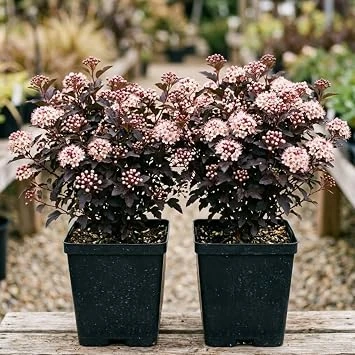
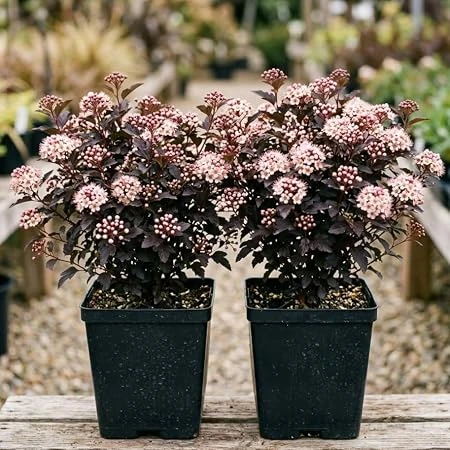
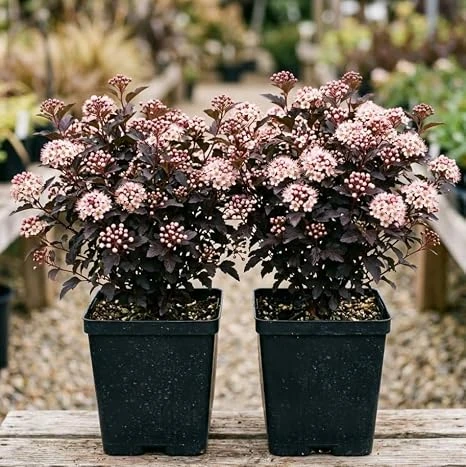
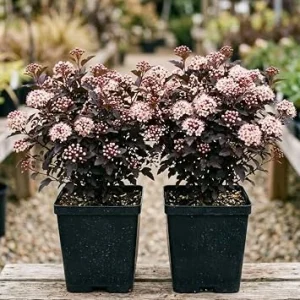
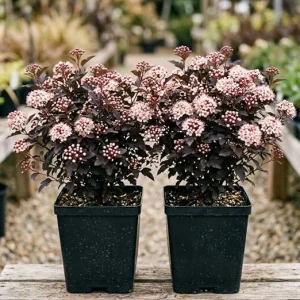
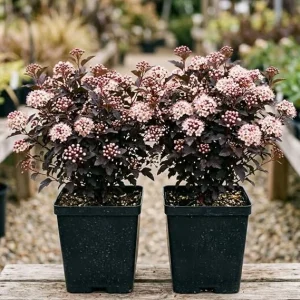
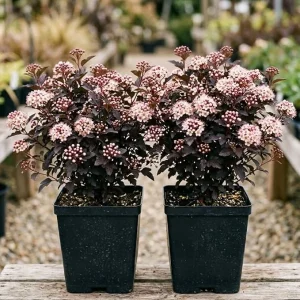
Transform your garden with the stunning beauty of the crimson ninebark live plant. This exceptional shrub, scientifically known as Physocarpus opulifolius ‘Crimson Ninebark’, is renowned for its rich, deep purple foliage that maintains its vibrant color throughout the growing season. Unlike many flowering plants that offer seasonal interest, the ‘Crimson Ninebark’ provides continuous visual appeal with its bold leaf color and attractive texture. Originating as a hardy native shrub, it is well-adapted to a variety of climates and soil types, making it an excellent choice for gardeners seeking a resilient and impactful landscape addition. Each plant arrives ready to thrive, establishing quickly to become a focal point in your outdoor space. Its robust nature and striking appearance make the crimson ninebark live plant a must-have for creating dynamic and colorful garden designs.
The ‘Crimson Ninebark’ is celebrated not only for its dramatic foliage but also for its ease of care. As a cold hardy perennial, it withstands harsh winter conditions and reliably regrows year after year, offering a long-term investment in your garden’s beauty. This shrub is an ideal solution for those looking to add structure, color, and texture without demanding extensive maintenance. Its versatility allows it to be used in various settings, from formal borders to naturalized plantings, providing a sophisticated touch wherever it’s placed. Embrace the enduring charm and effortless elegance of this remarkable purple foliage shrub.
Key Benefits
The crimson ninebark live plant offers a multitude of benefits, making it a highly desirable addition to any garden. Its unique characteristics contribute significantly to both aesthetic appeal and garden resilience.
- Dramatic Purple Foliage: Enjoy rich, deep purple leaves that provide year-round color and texture, creating a bold visual statement in any landscape. This striking hue ensures your garden stands out.
- Exceptional Hardiness: As a hardy native shrub, it is incredibly resilient, tolerating a wide range of temperatures and soil conditions. It’s a reliable choice even in challenging environments.
- Low Maintenance: This shrub requires minimal care once established, making it perfect for busy gardeners or those new to planting. Enjoy its beauty without constant upkeep.
- Adaptable to Various Settings: Ideal for borders, hedges, accent plantings, or mixed shrub beds, the ‘Crimson Ninebark’ adds versatility to your garden design. Its adaptability makes it a valuable asset.
- Cold Hardy Perennial: The crimson ninebark live plant is a true perennial that withstands tough winter conditions, returning vibrantly year after year with its captivating purple foliage shrub.
- Attracts Pollinators: While primarily grown for its foliage, the small white-pink flowers that appear in late spring can attract beneficial pollinators to your garden.
- Erosion Control: Its strong root system can help stabilize soil on slopes, contributing to erosion control in your landscape.
Plant Care & Growing Tips
Caring for your crimson ninebark live plant is straightforward, ensuring it thrives and displays its beautiful purple foliage for years to come. This hardy native shrub is quite forgiving and adapts well to various conditions, making it an excellent choice for both novice and experienced gardeners.
For optimal growth, plant your ‘Crimson Ninebark’ in a location that receives full sun to partial shade. Full sun (at least 6 hours of direct sunlight daily) will intensify the deep purple color of the foliage, while partial shade might result in a greener hue. Ensure the soil is well-draining, as ninebarks do not tolerate soggy conditions. They are adaptable to a wide range of soil types, including clay, loam, and sandy soils, but prefer a slightly acidic to neutral pH. When planting, amend heavy clay soils with organic matter to improve drainage. Water regularly during the first growing season to help establish a strong root system. Once established, the crimson ninebark live plant is relatively drought-tolerant, though it benefits from occasional watering during prolonged dry spells.
This cold hardy perennial is suitable for USDA hardiness zones 3-7, meaning it can withstand winter temperatures down to -40°F. Fertilization is generally not heavily required; a balanced, slow-release granular fertilizer applied in early spring can promote vigorous growth. Pruning can be done in late winter or early spring to maintain shape, remove dead or damaged branches, or control size. Ninebarks are generally pest and disease resistant, making them a low-maintenance option for a vibrant purple foliage shrub. Keep an eye out for common garden pests, but severe issues are rare for this robust plant. The Physocarpus opulifolius variety is known for its resilience and ease of care, ensuring your garden remains beautiful with minimal effort.
Size & Details
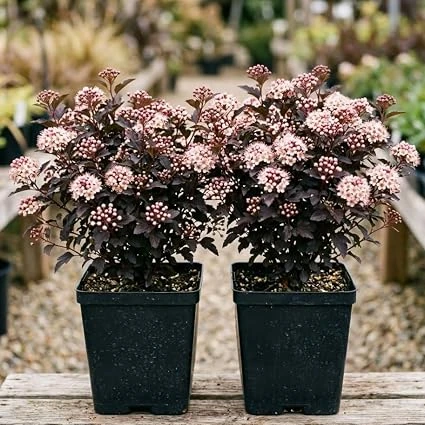
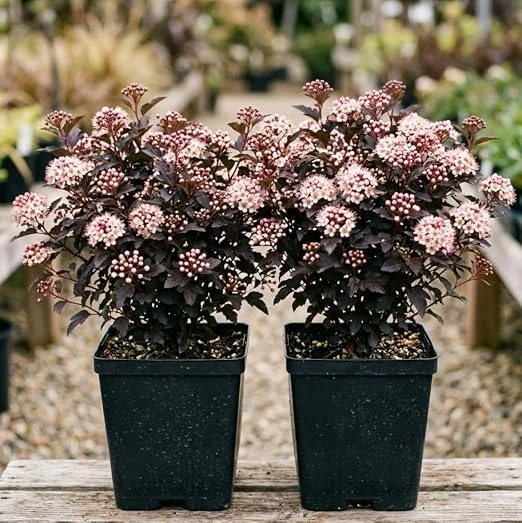
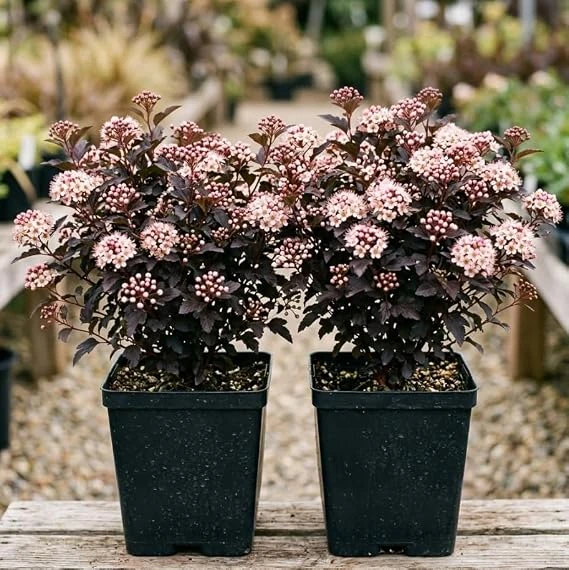
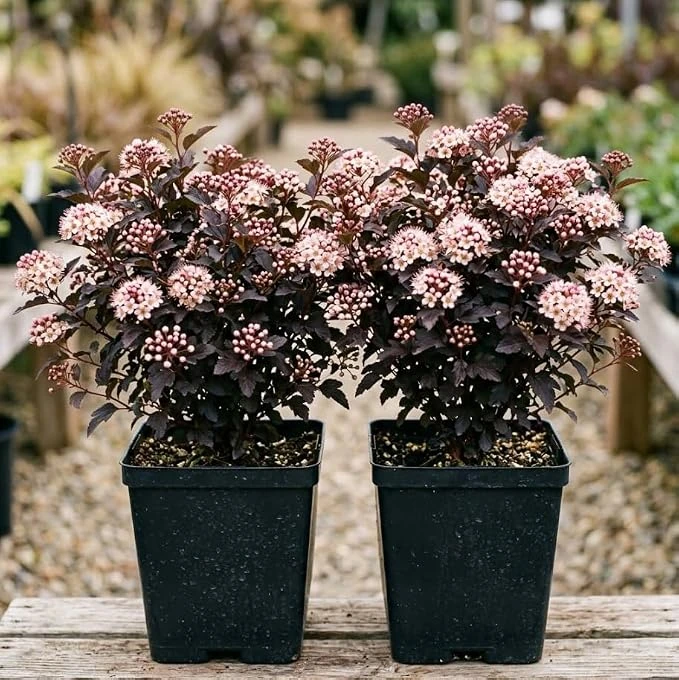
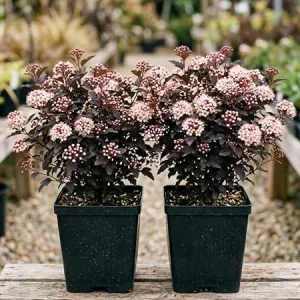
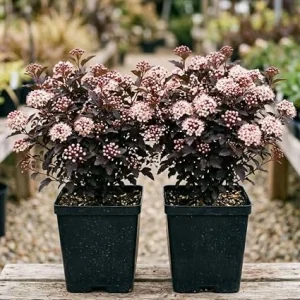
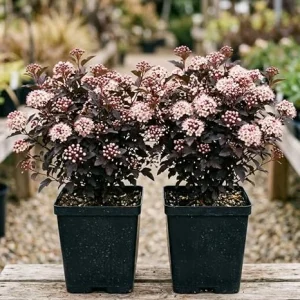
Each order includes a pack of two crimson ninebark live plant specimens, arriving as young starter plants. Each plant measures approximately 8-12 inches tall from the base of the pot to the top of the foliage, and is securely potted in a 2.5-inch nursery container. These plants are shipped young and may not have flowers when they arrive; blooming will occur as the plant matures under proper growing conditions, typically in late spring to early summer. During winter months, plants may arrive dormant with little or no foliage present, which is a natural part of their growth cycle as a cold hardy perennial.
The ‘Crimson Ninebark’ is known for its moderate growth rate, typically reaching a mature size of 6-10 feet tall and wide, depending on growing conditions and pruning. This purple foliage shrub is delivered in a healthy, ready-to-plant condition, allowing for easy transplanting into your garden or larger containers. Expect this hardy native shrub to establish quickly and begin showcasing its vibrant color and texture, adding year-round interest to your landscape. Proper care will ensure a thriving and robust plant that enhances your outdoor space for many seasons.
Frequently Asked Questions
- Q: How big does this plant get? A: The crimson ninebark live plant typically grows to a mature size of 6-10 feet tall and wide. Its ultimate size can be influenced by growing conditions and how often it is pruned.
- Q: What size pot does it come in? A: Each plant arrives in a 2.5-inch nursery pot, with the plant itself measuring approximately 8-12 inches tall. This size is ideal for easy transplanting.
- Q: Is this an indoor or outdoor plant? A: The ‘Crimson Ninebark’ is primarily an outdoor plant, thriving as a hardy native shrub in garden beds, borders, and landscape plantings. It requires outdoor conditions to flourish.
- Q: How much sunlight does it need? A: This purple foliage shrub prefers full sun to partial shade. Full sun exposure will help to maintain the most intense deep purple color of its leaves.
- Q: Is this plant easy to care for? A: Yes, the crimson ninebark live plant is considered low-maintenance and easy to care for, making it suitable for gardeners of all experience levels. It’s a very resilient cold hardy perennial.
- Q: What condition will it arrive in? A: Your plants will arrive as young starter plants, approximately 8-12 inches tall in their 2.5-inch pots. During winter, they may arrive dormant with no foliage, which is normal.
- Q: When is the best time to plant? A: The best time to plant your ‘Crimson Ninebark’ is in spring or early fall, allowing the roots to establish before extreme temperatures. However, potted plants can be planted throughout the growing season.
- Q: Will it survive winter in my zone? A: Yes, this hardy native shrub is a cold hardy perennial, suitable for USDA zones 3-7, meaning it can tolerate very cold winter temperatures and reliably return each year.
- Q: Does this plant have flowers? A: While primarily grown for its stunning foliage, the ‘Crimson Ninebark’ does produce clusters of small white-pink flowers in late spring, followed by attractive red seed capsules.
- Q: What kind of soil does it prefer? A: It prefers well-draining soil and is adaptable to a wide range of soil types, including clay, loam, and sand. Good drainage is key to preventing root rot.


Reviews
There are no reviews yet.