


Overview
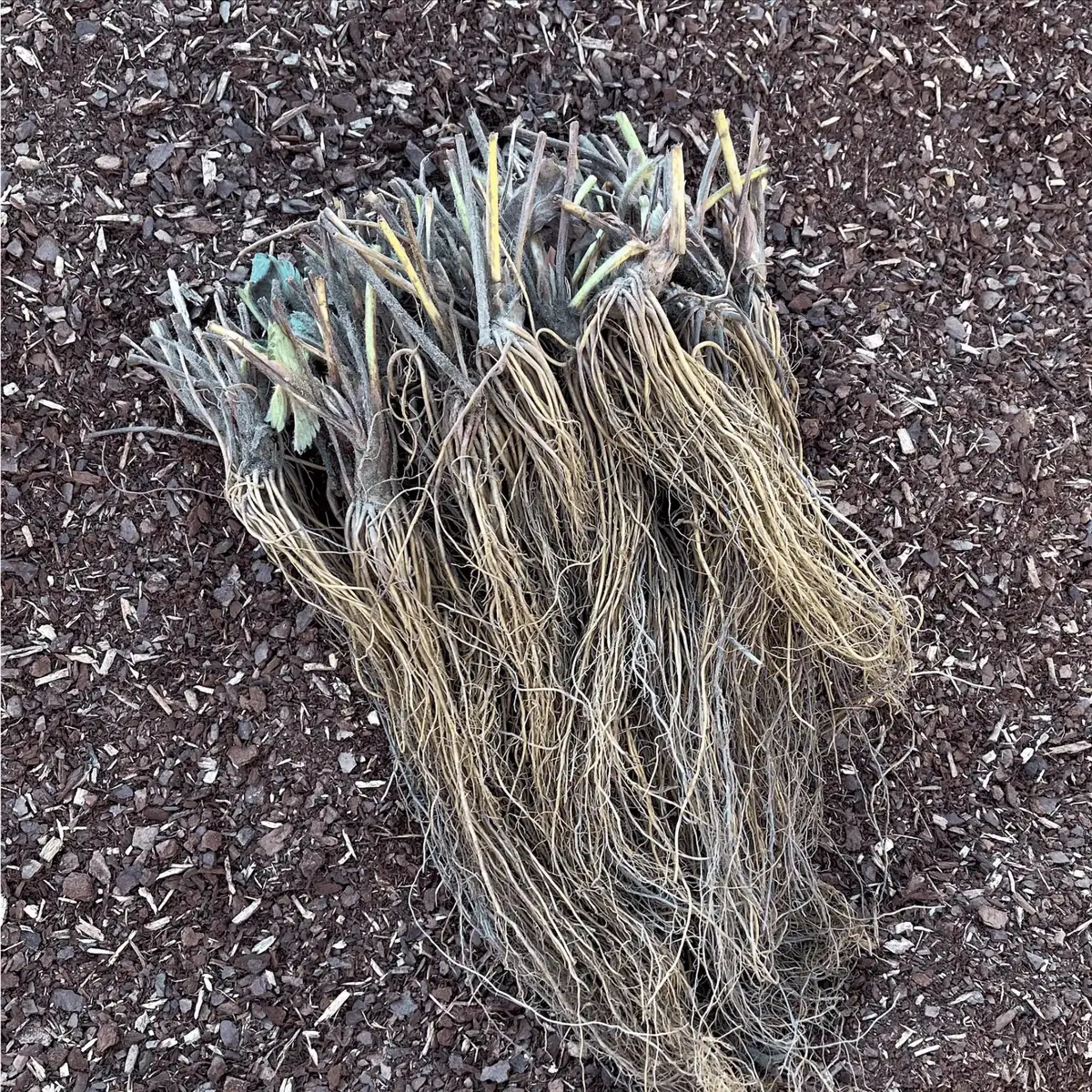
Bring the joy of homegrown fruit to your garden with premium Rutgers Scarlet strawberry roots. This high-performing June-bearing variety is celebrated for its exceptional flavor and strong plant vigor, making it a favorite among home gardeners. Each order contains healthy, vigorous bare root plants, carefully selected to ensure successful establishment and abundant harvests. These plants are ideal for creating a productive strawberry patch in garden beds, raised beds, or containers, rewarding you with years of delicious fruit. The Rutgers Scarlet strawberry roots are known for their ability to produce large, firm, and exceptionally sweet berries, perfect for a variety of culinary uses from fresh eating to jams and desserts.
The Rutgers Scarlet variety is a robust choice for both novice and experienced growers seeking consistent yields and premium berry quality. Its reliability and ease of care contribute to a rewarding gardening experience. These bare root plants are a cost-effective and efficient way to start your strawberry patch, allowing the roots to establish quickly in their new environment. Get ready to enjoy the unparalleled taste of freshly picked strawberries right from your own backyard.
Key Benefits
Choosing Rutgers Scarlet strawberry roots offers numerous advantages for the home gardener, providing both aesthetic appeal and a bountiful harvest of delicious fruit. These plants are designed for success, delivering a rewarding experience from planting to picking.
- Produces Large, Sweet, Firm Berries: The primary appeal of this variety is its fruit. You’ll harvest generously sized, firm berries bursting with a delightful sweetness, making them ideal for eating fresh straight from the plant or incorporating into your favorite recipes.
- June-Bearing Variety for Abundant Harvests: As a June-bearing type, these plants produce one substantial harvest in late spring to early summer. This concentrated fruiting period makes it easy to plan for preserving, baking, or simply enjoying a flush of fresh strawberries.
- Excellent for Versatile Culinary Use: The superior flavor and firm texture of Rutgers Scarlet strawberries make them incredibly versatile. They are perfect for fresh eating, baking delicious pies and tarts, crafting homemade jams and jellies, or freezing for later enjoyment.
- Cold Hardy and Disease Resistant: These plants are robust, thriving in USDA Zones 4–8, and offer reliable cold hardiness. Their natural disease resistance helps ensure a healthy patch with less intervention, contributing to easier maintenance and greater success.
- Adaptable to Various Growing Environments: Whether you have a spacious garden bed, a compact raised bed, or prefer container gardening, these June bearing strawberry plants adapt well. This flexibility allows almost any gardener to cultivate their own strawberries.
- Promotes Strong Plant Vigor and Productivity: Known for their strong plant vigor, Rutgers Scarlet plants establish well and produce consistently. With proper care, they will reward you with years of abundant harvests, proving to be a highly productive addition to your garden.
- Suitable for Both Beginner and Experienced Growers: With a proven track record for productivity and good disease resistance, these sweet strawberry berries are an excellent choice for gardeners of all skill levels, offering reliable performance and delicious results.
Plant Care & Growing Tips
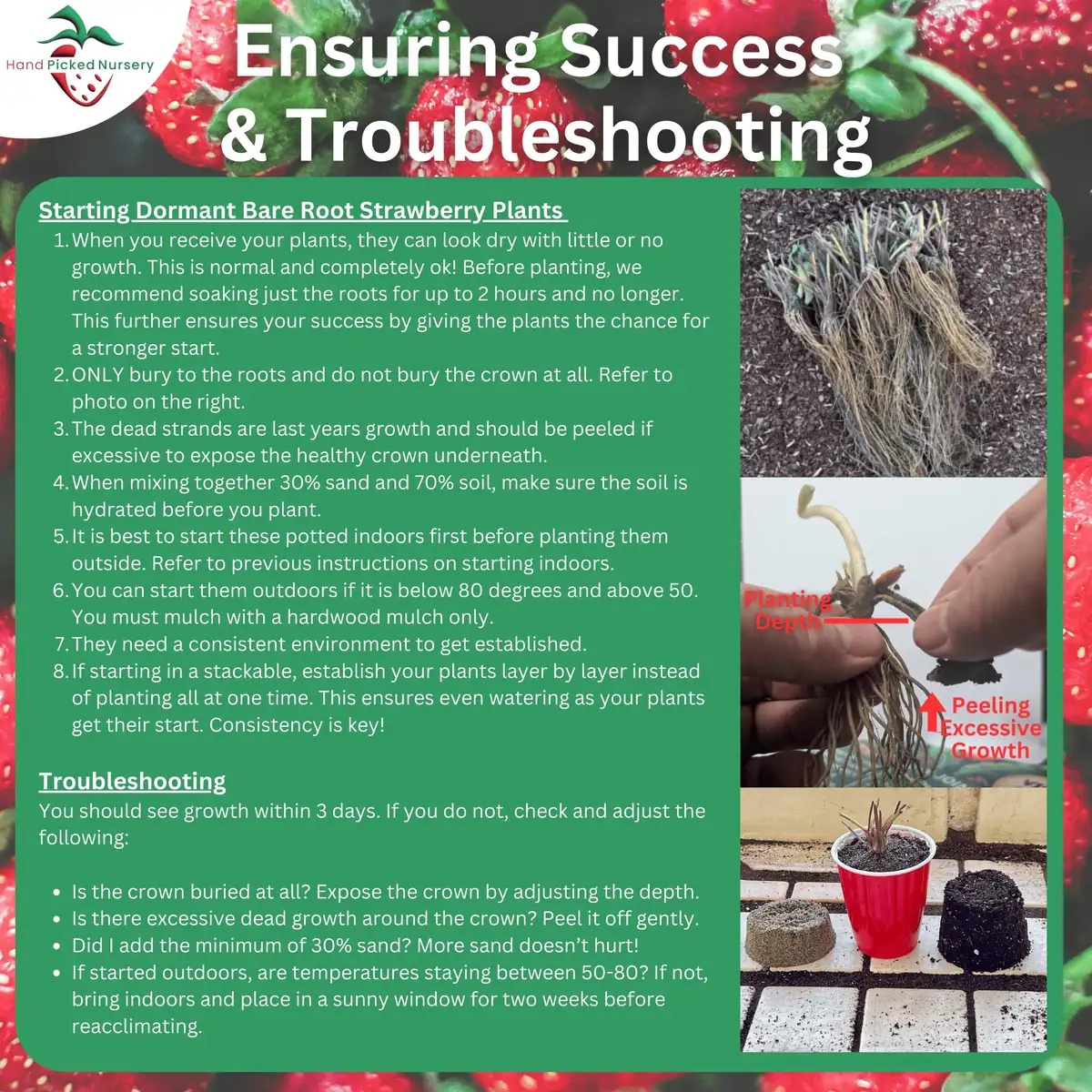
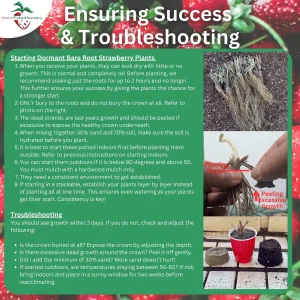
Caring for your Rutgers Scarlet strawberry roots is straightforward, ensuring a successful and productive patch. Begin by soaking the bare roots in water for 30–60 minutes prior to planting to rehydrate them. Choose a location that receives full sun, meaning at least 6–8 hours of direct sunlight daily, which is crucial for optimal fruit production and sweetness. Plant in well-drained soil with a pH between 5.5 and 6.5. When planting, set the crowns at soil level, ensuring the roots are spread outward in the planting hole. Space individual plants 12–18 inches apart, allowing 3–4 feet between rows to provide ample room for growth and air circulation.
Consistent watering is vital, especially during establishment and fruiting periods. Maintain even soil moisture, but avoid waterlogging, which can lead to root rot. For the first season after planting, it is highly recommended to remove all flowers. While this may seem counterintuitive, removing these initial blooms redirects the plant’s energy into developing a strong root system and robust foliage, which will lead to significantly greater fruit production in subsequent years. Fertilize with a balanced slow-release fertilizer in early spring and again after the main harvest. Protect your cold hardy strawberries from pests and diseases by practicing good garden hygiene and monitoring plants regularly.
In cooler regions, the reliable cold hardiness of Rutgers Scarlet strawberry roots makes them an excellent choice. Mulching around the plants in late fall can provide extra winter protection. With proper care, these plants will thrive and provide you with delicious fruit for many seasons. Learning how to grow strawberries at home successfully involves understanding these basic principles, ensuring your plants remain healthy and productive.
Size & Details
Each purchase includes bare root plants of the Rutgers Scarlet strawberry variety, ready for immediate planting upon arrival. These plants are shipped dormant to minimize transplant shock and encourage vigorous growth once established in your garden. Rutgers Scarlet is a medium-sized plant, typically forming a mound approximately 6-10 inches tall and spreading 12-18 inches wide through runners. It is a June-bearing type, meaning it produces one large, concentrated harvest in late spring to early summer, usually over a 2-3 week period. The berries are known for their large size, firm texture, and exceptional sweetness, making them ideal for a range of uses.
These June bearing strawberry plants are suitable for USDA Zones 4–8, demonstrating excellent cold hardiness and adaptability to various climates. The plants will begin to produce fruit in their second year, with production increasing significantly in subsequent years once a strong root system is established. Expect a rewarding yield of sweet strawberry berries with proper care and cultivation.
Frequently Asked Questions
- Q: How big do these strawberry plants get? A: Rutgers Scarlet strawberry roots typically grow to about 6-10 inches tall and spread 12-18 inches wide. They also send out runners that will form new plants, gradually expanding your strawberry patch.
- Q: Are these an indoor or outdoor plant? A: These are outdoor plants, ideally suited for garden beds, raised beds, or large containers where they can receive full sun exposure. They are not typically grown as indoor houseplants.
- Q: How much sunlight do these strawberry plants need? A: For optimal fruit production and sweetness, Rutgers Scarlet strawberries require full sun, which means at least 6-8 hours of direct sunlight per day.
- Q: Is this plant easy to care for, good for beginners? A: Yes, Rutgers Scarlet strawberry roots are considered relatively easy to care for and are an excellent choice for beginners. They are vigorous, disease-resistant, and provide reliable yields with basic care. This makes learning how to grow strawberries at home a pleasant experience.
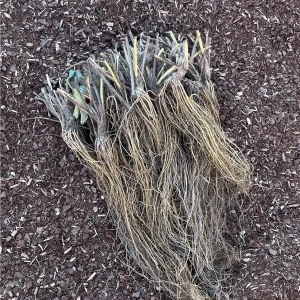
- Q: What condition will the bare root plants arrive in? A: Your bare root plants will arrive dormant, with healthy, vigorous root systems. They will be carefully packaged to ensure they are ready for planting upon receipt.
- Q: How long until these plants produce berries? A: While the plants will establish in the first year, it’s recommended to remove flowers to encourage root development. Significant fruit production of sweet strawberry berries typically begins in the second year after planting.
- Q: Will these strawberries survive winter in my zone? A: These are cold hardy strawberries, thriving in USDA Zones 4–8. With proper mulching in colder zones, they are well-equipped to survive winter and return to produce fruit the following spring.
- Q: Can I grow these in containers? A: Yes, these strawberry plants are suitable for growing in containers, raised beds, or traditional garden beds. Ensure containers are large enough to accommodate their root system and allow for runner development.
- Q: What is the best time to plant Rutgers Scarlet strawberry roots? A: The best time to plant bare root strawberries is in early spring as soon as the soil can be worked, after the last hard frost. This allows them ample time to establish before the summer heat.
- Q: Do I need to remove the flowers in the first year? A: Yes, removing the flowers in the first year is crucial for developing strong root systems. This practice helps ensure greater fruit production and overall plant health in subsequent years.


Reviews
There are no reviews yet.