Overview
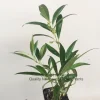
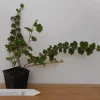
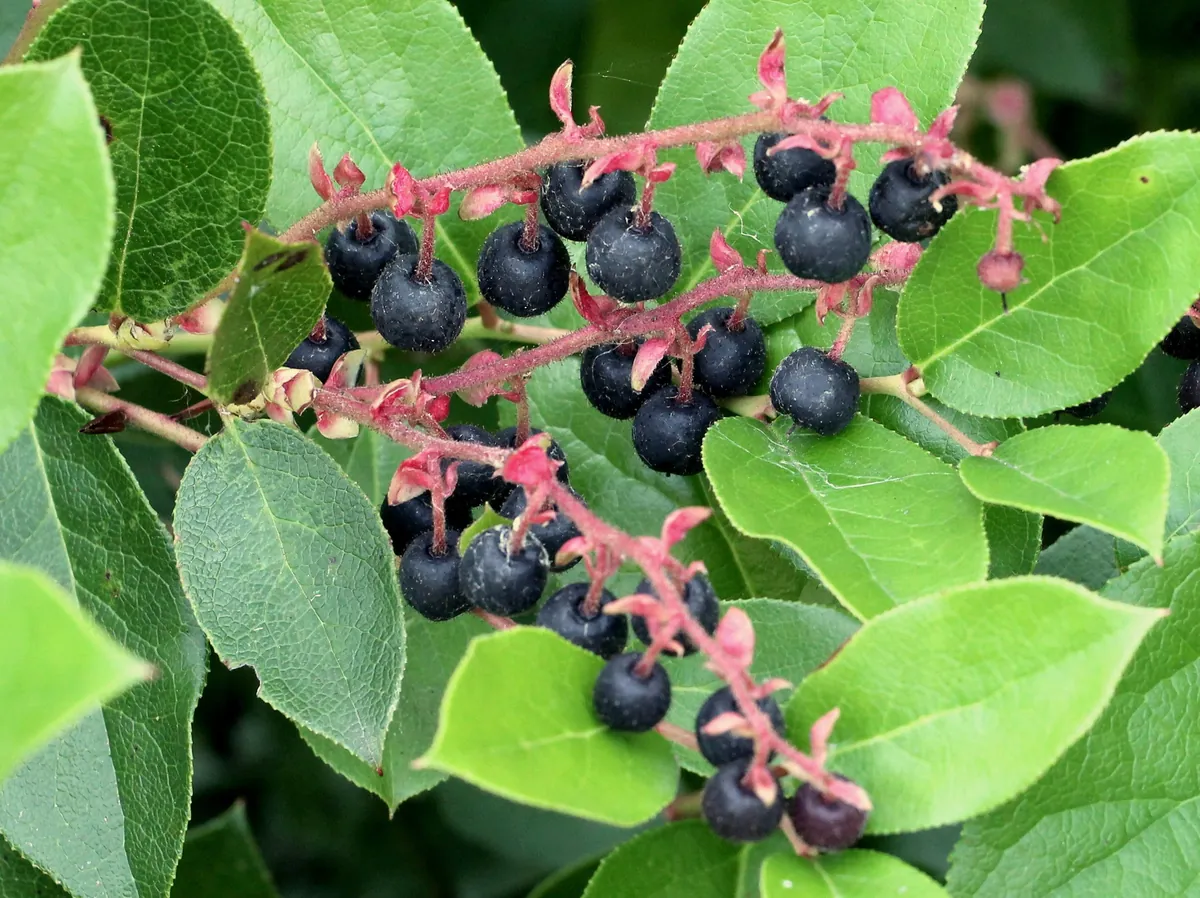
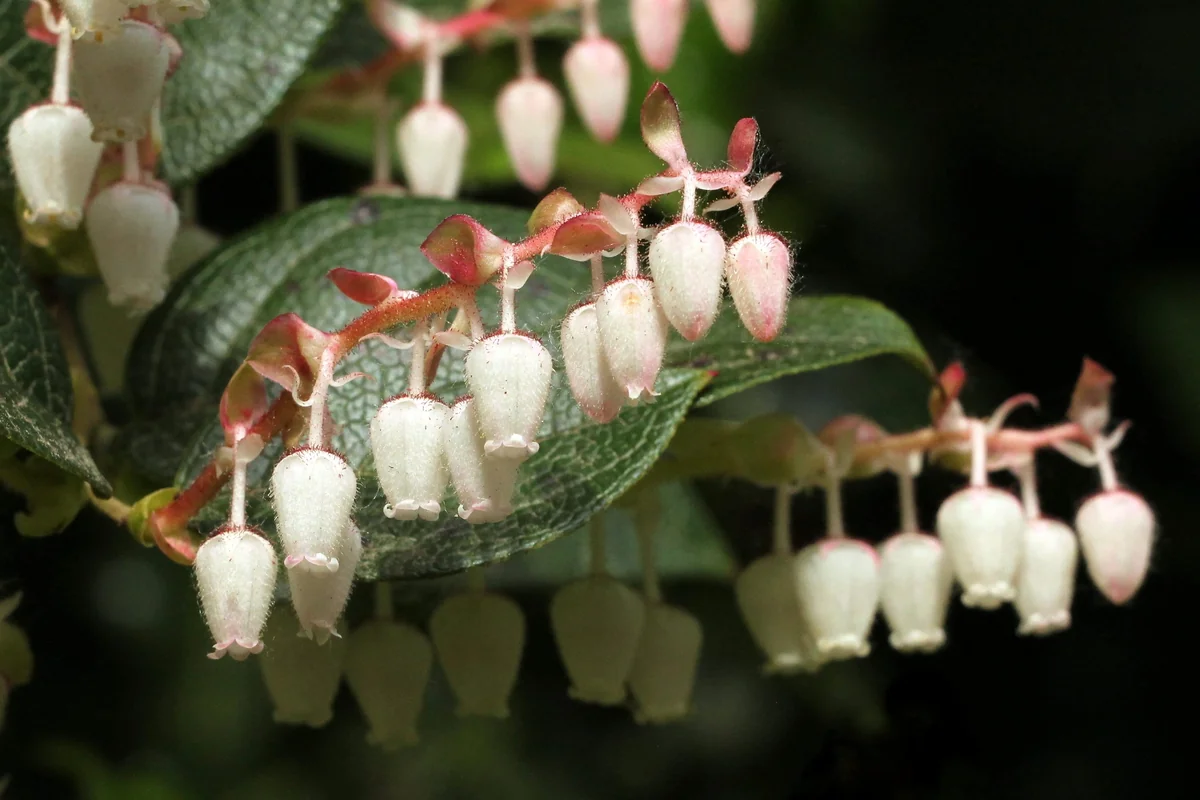
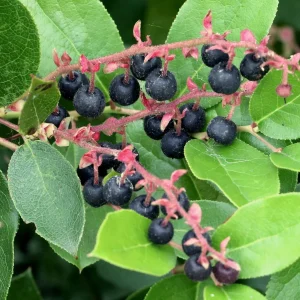
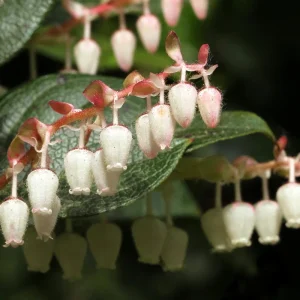
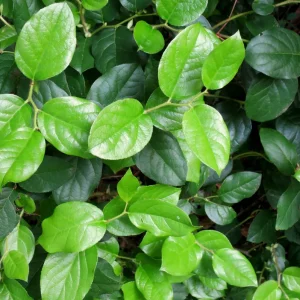
The salal live plant, scientifically known as Gaultheria shallon, is a remarkable broad-leaved evergreen shrub native to the Pacific Northwest, spanning from Alaska to California. This hardy and adaptable plant thrives in a variety of settings, making it an excellent choice for diverse landscape needs. Valued for its dense growth habit, it serves as an effective ground cover, helps with erosion control, and creates a lush woodland understory. Beyond its practical applications, Salal produces delicate late spring blooms followed by an abundance of dark, edible berries in late summer. These berries are not only a treat for humans, perfect for pies, jellies, or fresh consumption, but also a vital food source for local wildlife. Its branches are also highly sought after for use in floral arrangements, adding a touch of natural elegance to any display. The gaultheria shallon plant offers both aesthetic appeal and ecological benefits.
This resilient shrub is a fantastic addition to any garden, providing year-round interest with its glossy green leaves. Its ability to form dense thickets makes it an ideal choice for naturalizing areas or creating privacy screens. Whether you’re looking to establish a native garden, control soil erosion on a slope, or simply enjoy fresh, homegrown berries, the salal live plant is a superb selection. It adapts well to various light conditions, from full shade to full sun, and can reach different heights depending on its environment, making it a truly versatile and valuable landscape plant.
Key Benefits
The salal live plant offers a multitude of benefits for both gardeners and the environment, making it a highly desirable addition to many landscapes. Its robust nature and diverse uses contribute to its popularity:
- Excellent Ground Cover: Salal naturally forms dense thickets, effectively suppressing weeds and providing an attractive, evergreen carpet for your garden. This natural spread helps maintain a tidy landscape with minimal effort.
- Effective Erosion Control Shrub: With its extensive root system, Gaultheria shallon is highly effective at stabilizing soil on slopes and preventing erosion, making it perfect for challenging terrains or banks.
- Provides Edible Berries: In late summer, the plant produces delicious black berries that can be eaten raw, used in pies, jellies, or preserves. These tasty treats also attract and nourish local wildlife.
- Low Maintenance & Adaptable: Once established, Salal requires minimal care, thriving in a range of conditions from full sun to deep shade and adapting to various soil types, making it suitable for busy gardeners.
- Supports Local Wildlife: The berries are a food source for squirrels, bears, and many songbirds, while hummingbirds are drawn to its nectar-rich flowers. Its leaves are also a food source for deer and elk.
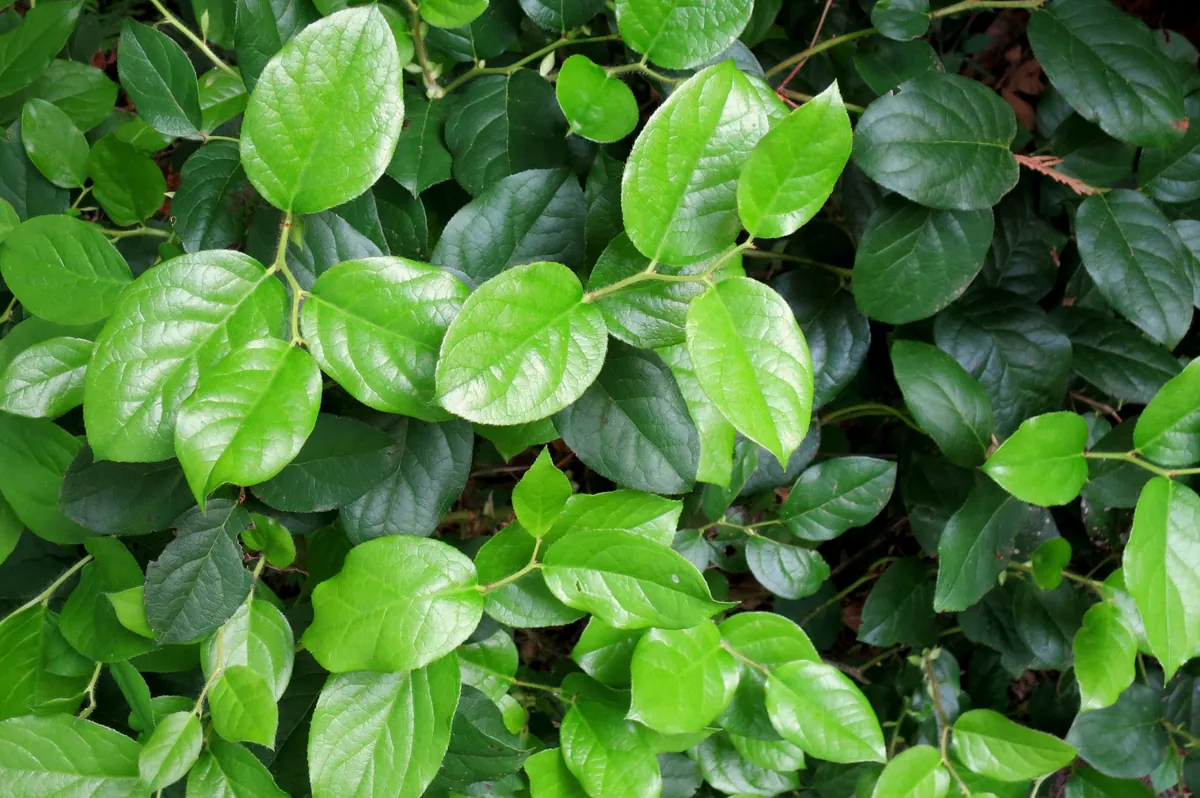
- Attractive Evergreen Foliage: Its broad, leathery, evergreen leaves provide year-round visual interest and a lush green backdrop, enhancing the beauty of any garden space.
- Versatile for Floral Arrangements: The sturdy branches and beautiful foliage of this plant are highly prized by florists for use in flower arrangements, adding a natural and long-lasting element.
Plant Care & Growing Tips
Caring for your salal live plant is relatively straightforward, thanks to its hardy and adaptable nature. For optimal growth, it prefers moist, acidic, and organic-rich soil. When planting, ensure the soil has good drainage to prevent root rot, especially in heavier clay soils. While Salal can tolerate a range of light conditions, its growth habit will vary. In full sun, it typically reaches about 2 feet tall and forms a dense, compact shrub. In shadier conditions, it can grow significantly taller, ranging from 4 to 10 feet, developing into more open, sprawling thickets. Providing a location with partial shade often results in a balanced growth habit and vibrant foliage.
Watering should be consistent, especially during dry periods, to keep the soil moist but not waterlogged. Once established, Salal is quite drought-tolerant but will perform best with regular moisture. Fertilization is generally not heavily required for this resilient plant; however, a light application of an acid-loving plant fertilizer in early spring can promote healthy growth. Pruning can be done to shape the plant or control its size, particularly if you’re using it as a hedge or ground cover. This erosion control shrub is hardy in USDA zones 7-10, making it suitable for a wide range of climates. Planting with companion plants like rhododendrons and ferns can create a beautiful and harmonious woodland garden setting, as they share similar soil and light preferences. Regularly check for pests and diseases, though Salal is generally quite resistant.
Size & Details
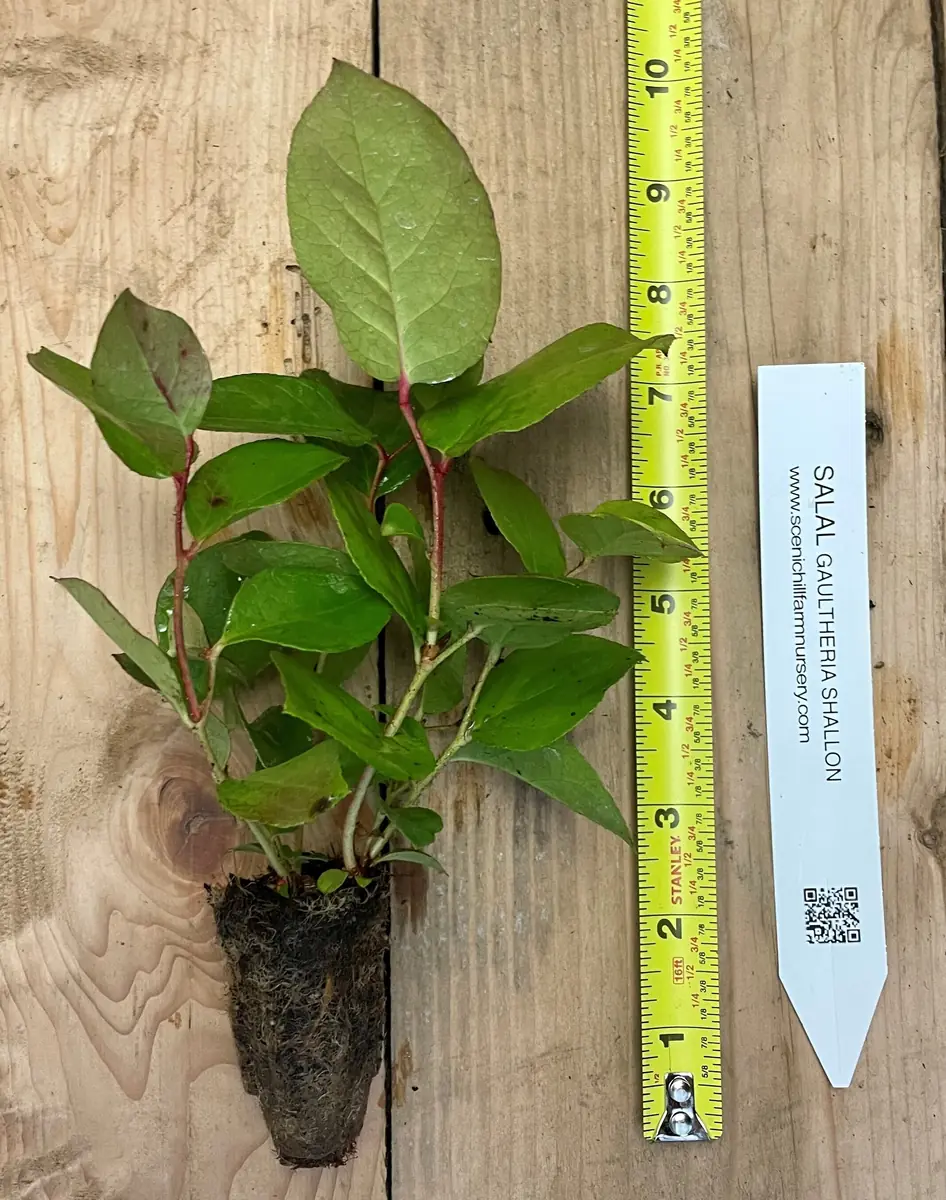
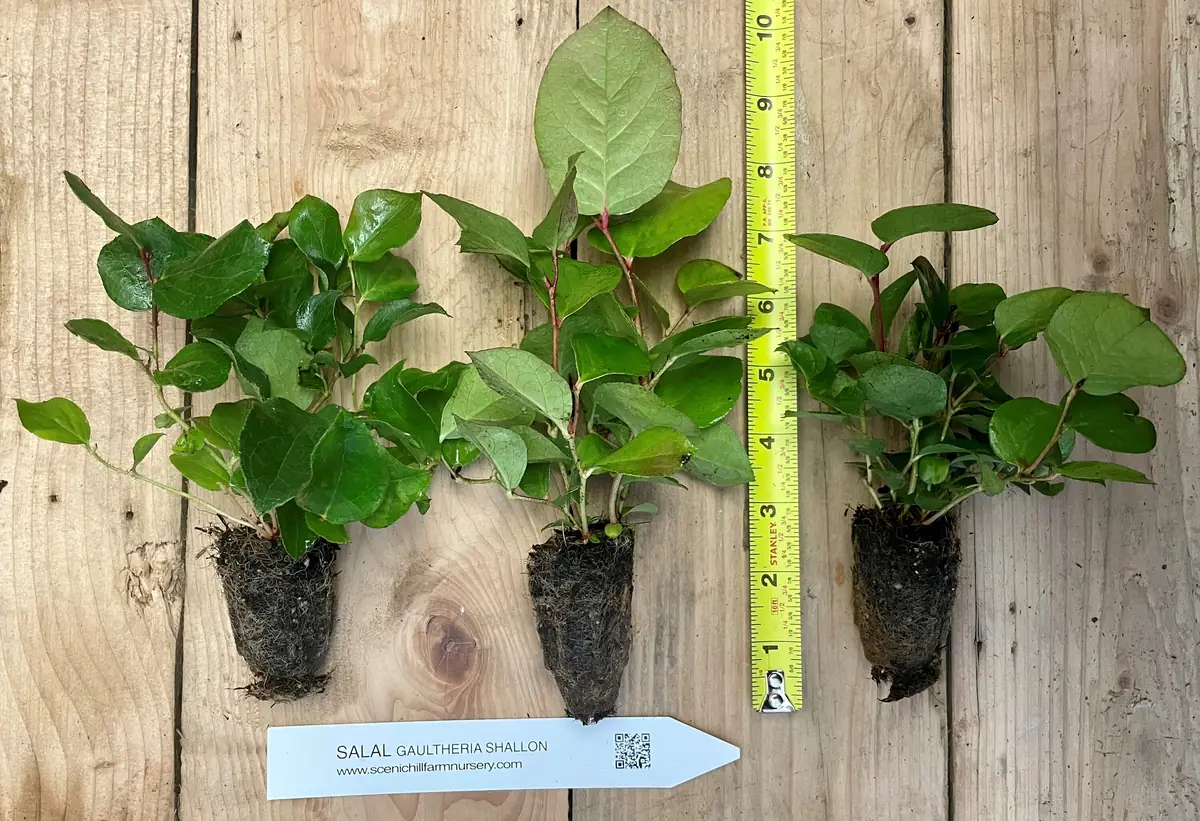
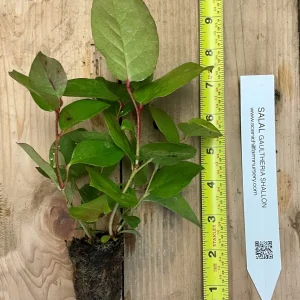
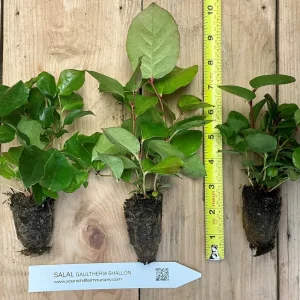
The salal live plant is typically shipped as a well-rooted live potted plant, with the pot removed for shipping to ensure safe transit. Its mature height can vary significantly based on growing conditions. When planted in full sun, it generally reaches a height of approximately 2 feet, forming a more compact and bushy appearance. In shadier environments, particularly under conifer forests where it is native, it can grow much taller, ranging from 4 to 10 feet, developing into sprawling, dense thickets. The plant’s spread can be equally impressive, creating a broad ground cover over time. It is a relatively fast grower, establishing itself well and expanding its presence in the garden. This makes it an ideal choice for both small and large landscapes where an edible berry plant with robust growth is desired. Expect the plant to bloom in late spring, with the delicious edible black berries ripening in late summer.
Frequently Asked Questions
- Q: How big does this plant get? A: The salal live plant can vary significantly in size. It typically grows about 2 feet tall in full sun, but can reach 4-10 feet tall in shaded conditions, forming dense thickets.
- Q: Is this an indoor or outdoor plant? A: Salal (Gaultheria shallon) is primarily an outdoor plant, hardy in USDA zones 7-10. It is best suited for garden beds, woodland areas, and erosion control.
- Q: How much sunlight does it need? A: This versatile plant can thrive in both full sun and full shade. Its height and density will vary depending on the amount of light it receives, with shadier spots promoting taller growth.
- Q: Is this plant easy to care for? A: Yes, Salal is known for being a low-maintenance and adaptable plant. Once established, it requires minimal care, making it suitable for gardeners of all experience levels.
- Q: What condition will it arrive in? A: Your salal live plant will arrive as a healthy, live potted plant. The pot is typically removed for shipping to ensure the plant’s safety during transit.
- Q: Can I eat the berries from this plant? A: Absolutely! The black berries produced by the edible berry plant in late summer are indeed edible. They are delicious raw, or can be used to make pies, jellies, and preserves.
- Q: When is the best time to plant Salal? A: The best time to plant Salal is typically in spring or fall, allowing the plant to establish its root system before extreme summer heat or winter cold.
- Q: Will it survive winter in my zone? A: Salal is hardy in USDA zones 7-10. If your area falls within these zones, your plant should successfully overwinter outdoors with proper care.
- Q: What kind of soil does this plant prefer? A: This ground cover plant prefers moist, acidic, and organic-rich soil with good drainage. It can tolerate a range of soil types but thrives in these conditions.
- Q: Is Salal beneficial for wildlife? A: Yes, Salal is highly beneficial for wildlife. Its berries are eaten by various animals and birds, and hummingbirds are attracted to its flowers, making it an excellent choice for a wildlife-friendly garden.


Reviews
There are no reviews yet.