Overview
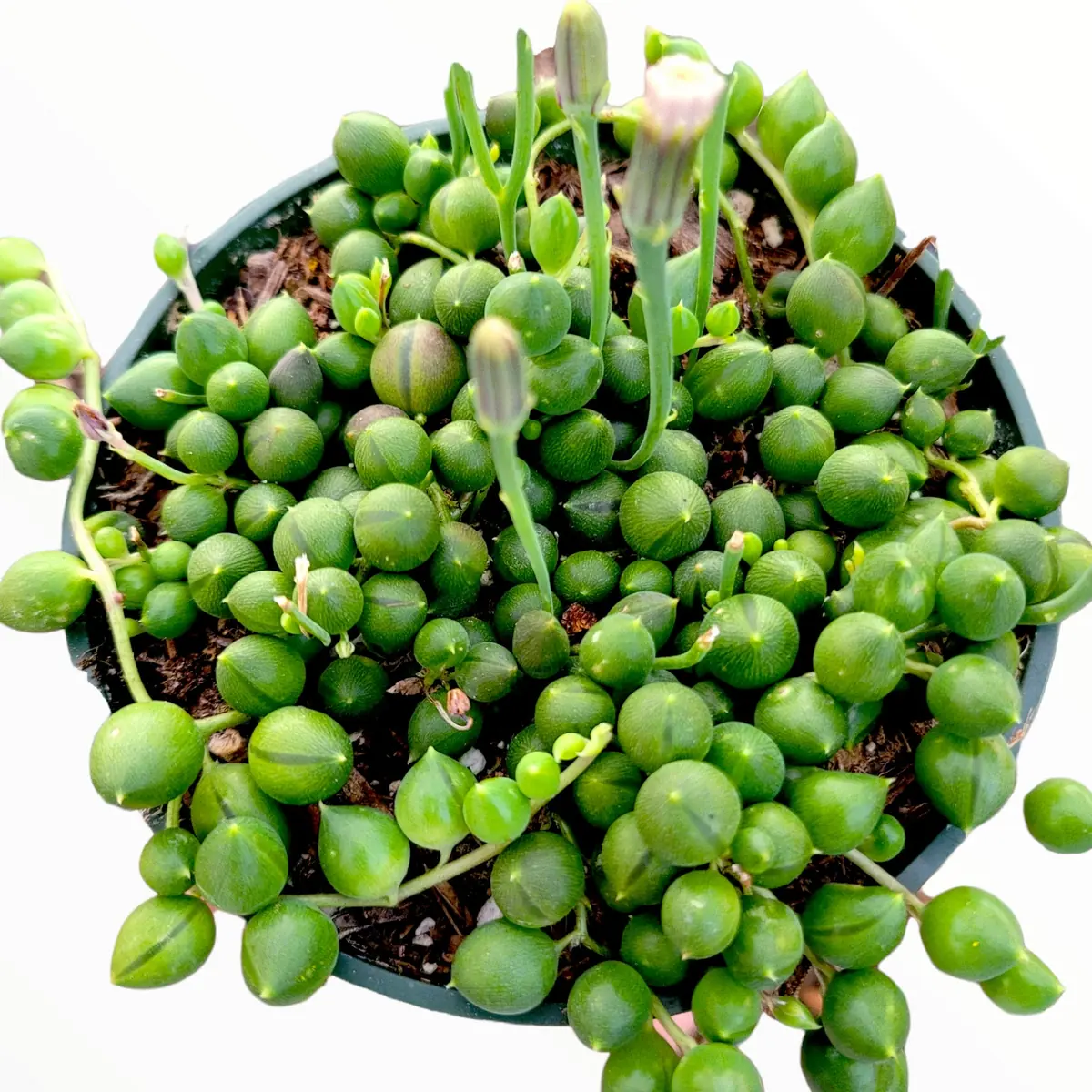
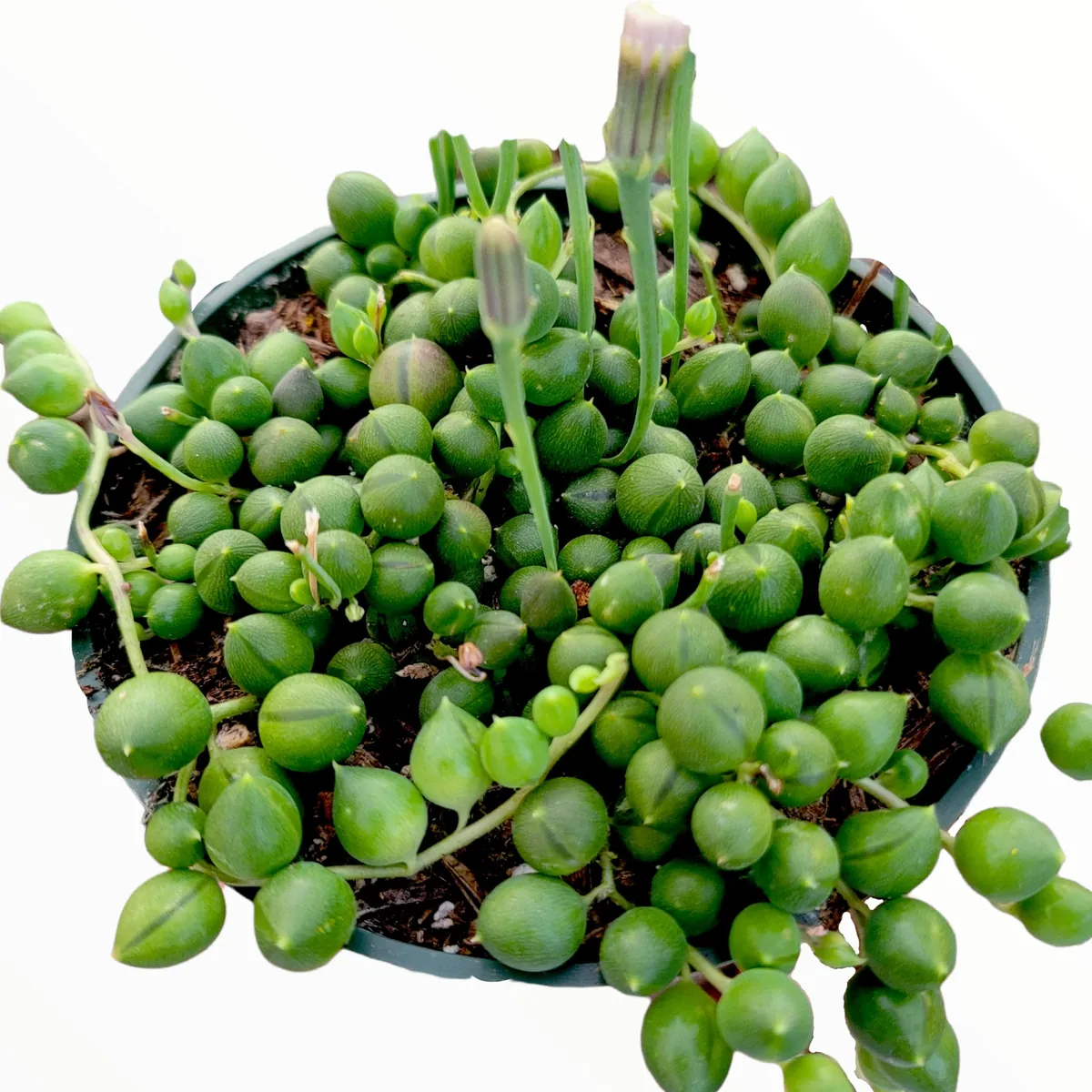
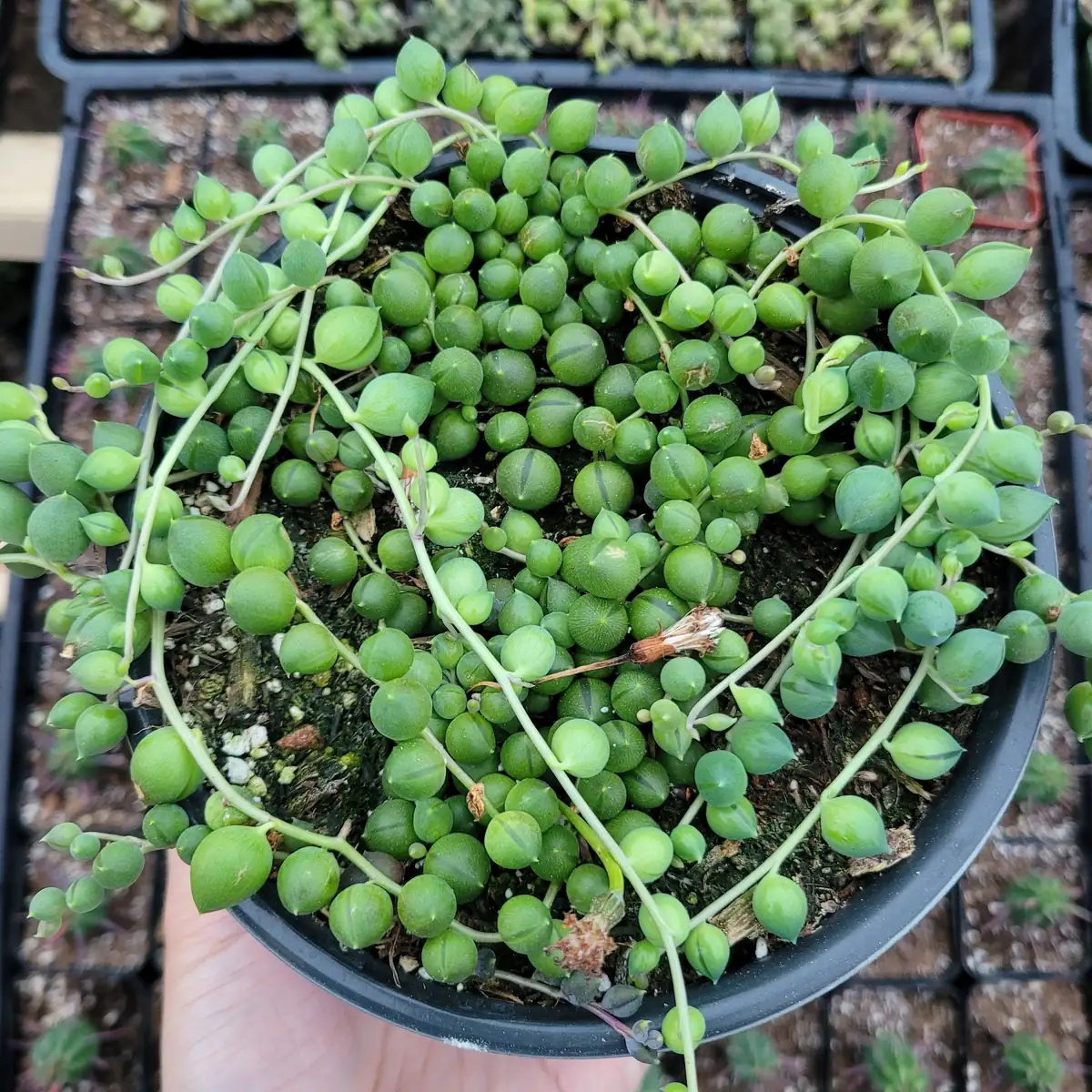
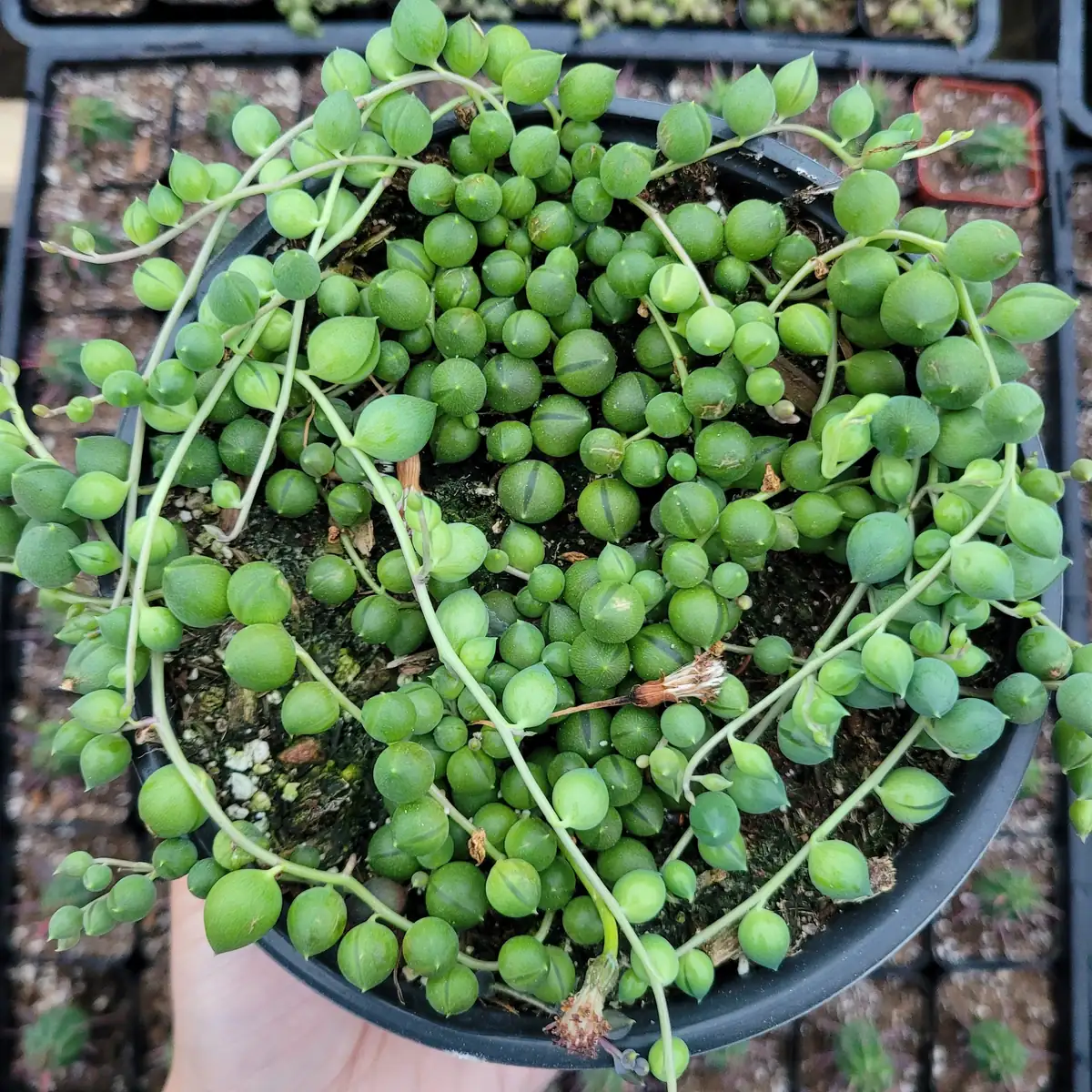
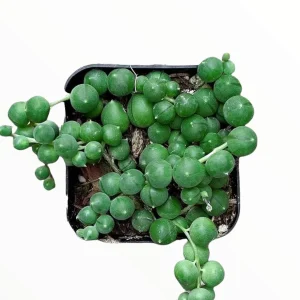
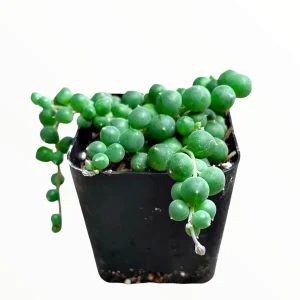
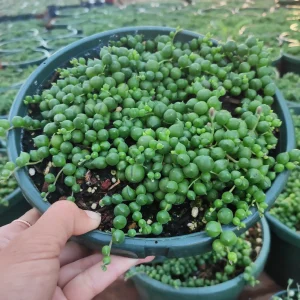
Introduce a touch of whimsical elegance to your home or garden with the exquisite string of pearls succulent plant (Senecio rowleyanus). This fascinating live plant is renowned for its unique, bead-like foliage that drapes gracefully, resembling strands of green pearls. A popular choice for both seasoned plant enthusiasts and beginners, the Senecio rowleyanus live plant is a true conversation starter. Commonly grown as a houseplant, it thrives in frost-free climates and is particularly stunning when cultivated in hanging baskets, allowing its trailing stems to spill downwards. Its distinctive appearance and relatively easy care requirements make it a must-have for anyone looking to enhance their living space with natural beauty.
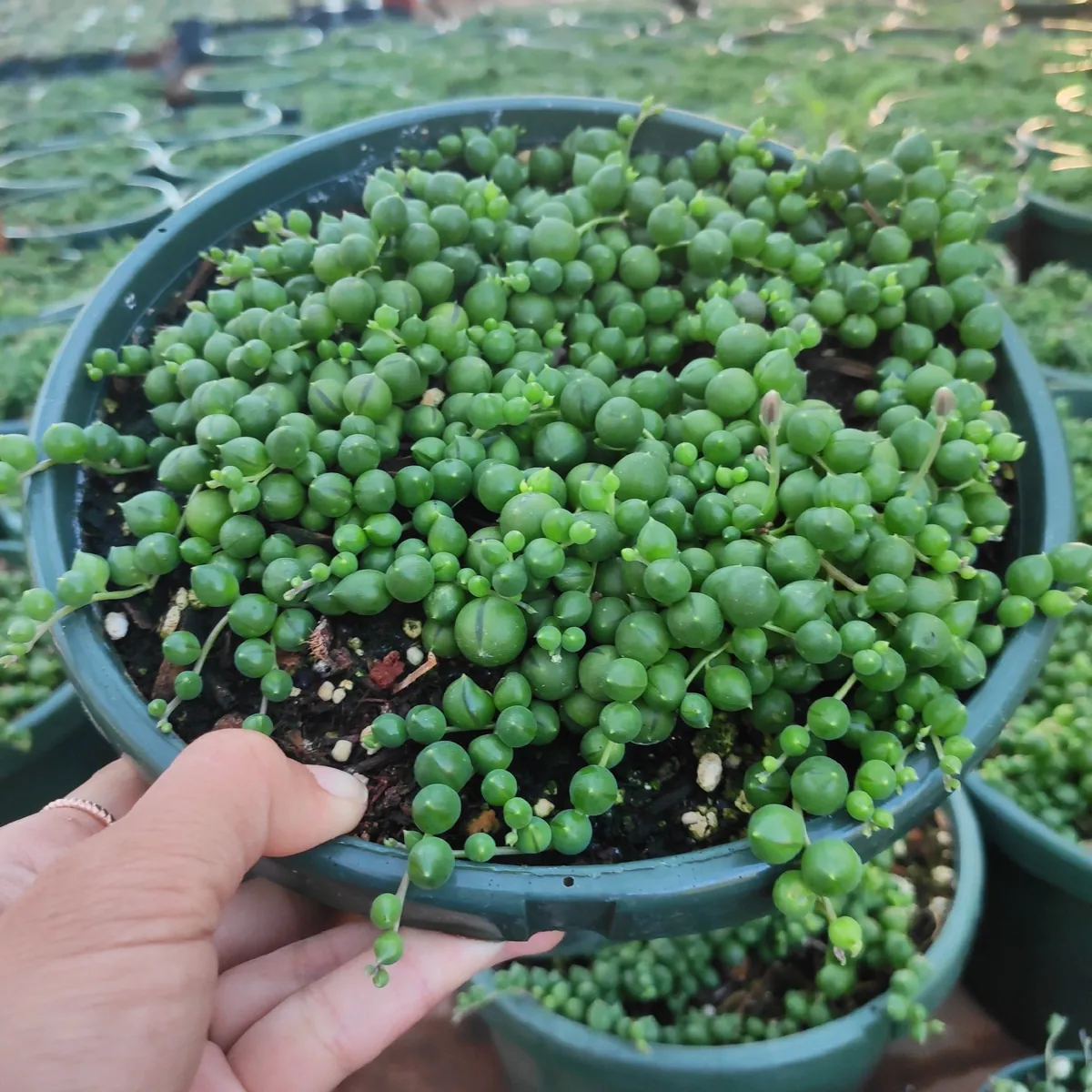
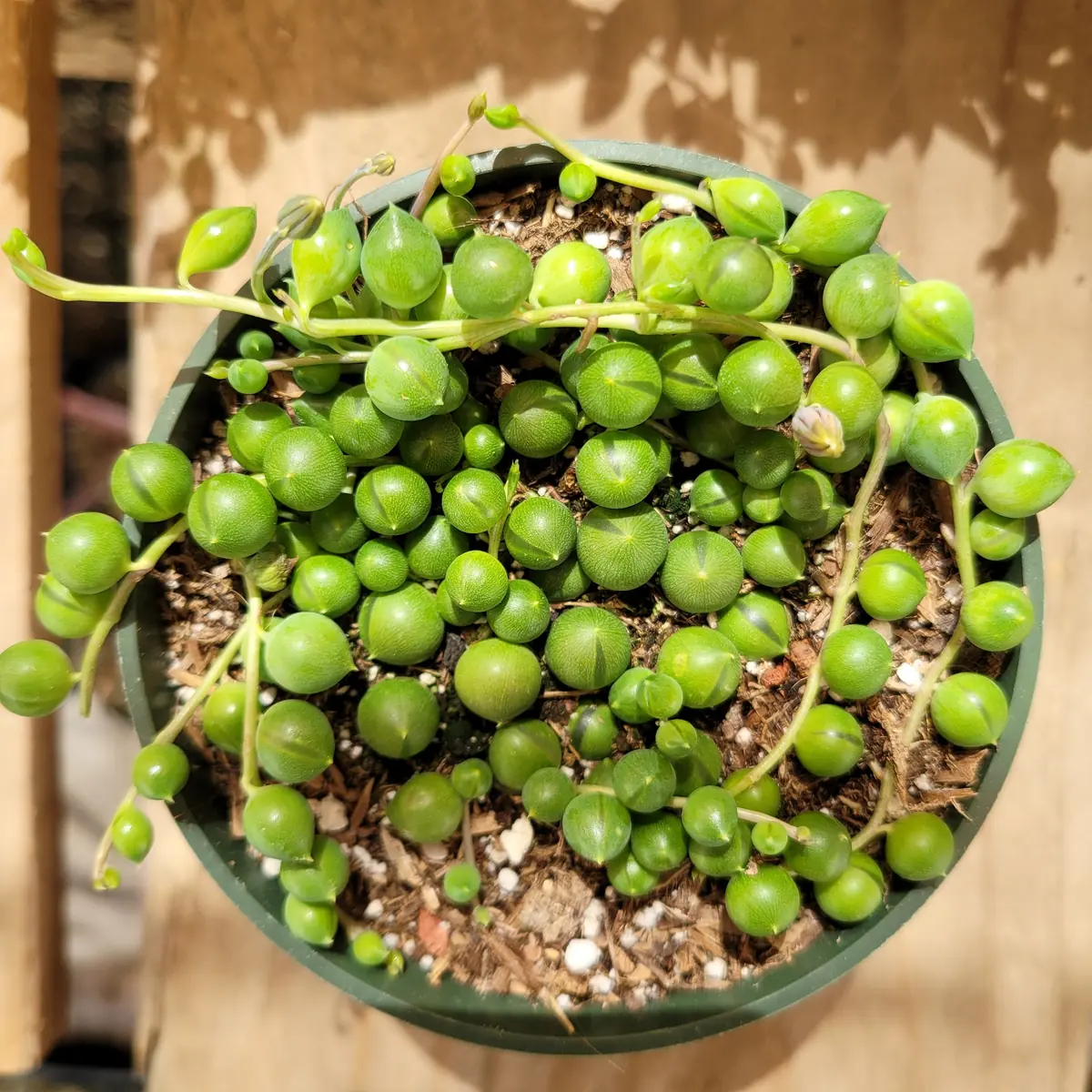
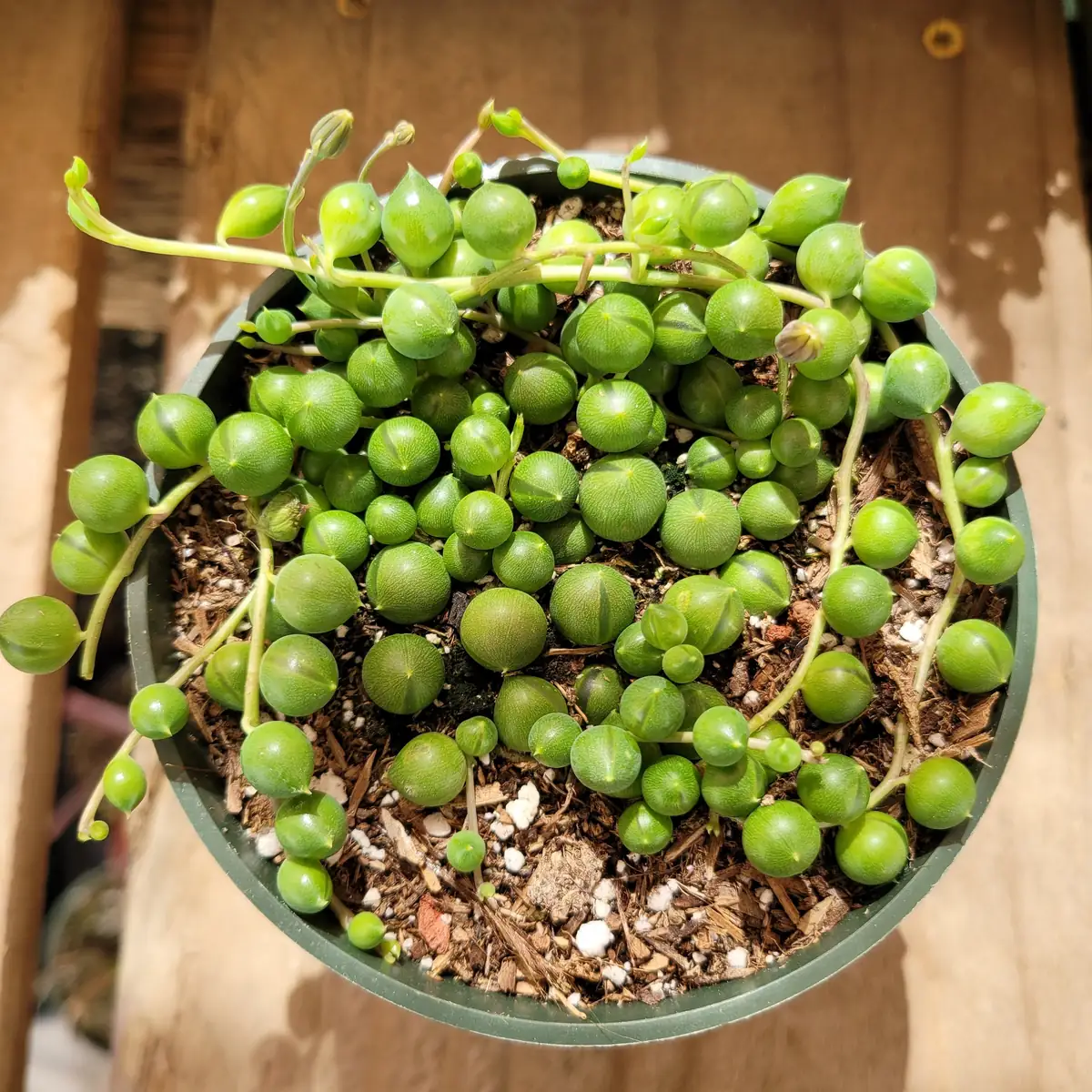
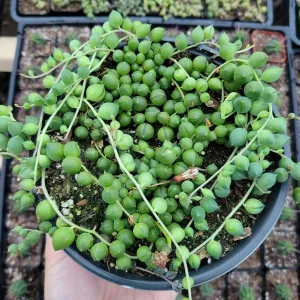
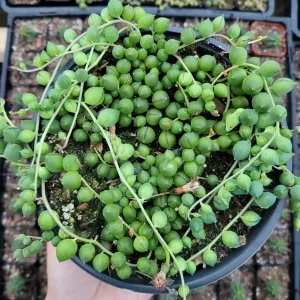
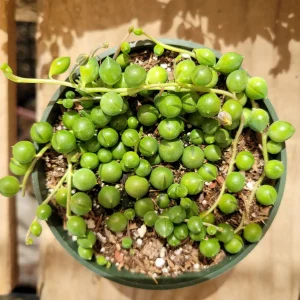
The string of pearls succulent plant gets its name from its alternate, water-storing leaves, which are the size and shape of small peas, each with a small pointed tip. These spherical leaves are perfectly adapted to minimize surface area exposed to dry desert air, thereby reducing evaporative water loss. While often enjoyed indoors, this versatile plant can also be grown outdoors in suitable climates, or moved outside during warmer months if gradually acclimated to prevent sunburn. Its rapid growth and ability to root where stems touch soil allow it to form dense mats, mimicking its natural growth habit under bushes or between rocks where it receives protection from intense sunlight.
Key Benefits
The string of pearls succulent plant offers numerous advantages, making it a beloved choice for plant lovers. Its captivating aesthetics and adaptability contribute to a serene and stylish environment.
- Unique Aesthetic Appeal: The distinctive spherical leaves and long, trailing stems create a visually stunning display, perfect for adding texture and interest to any room. It’s an excellent choice for hanging baskets, shelves, or elevated planters.
- Low Maintenance: As a succulent, the Senecio rowleyanus live plant is incredibly drought-tolerant and requires minimal watering, making it ideal for busy individuals or those new to plant care.
- Versatile Placement: Thrives indoors as a houseplant and can be moved outdoors in frost-free conditions, offering flexibility in decor.
- Natural Air Purifier: Like many houseplants, it contributes to improved indoor air quality by absorbing toxins and releasing oxygen.
- Easy Propagation: The trailing stems can easily root where they touch soil, allowing for simple propagation and sharing with friends and family.
- Drought Tolerant: Its water-storing leaves enable it to withstand periods of dryness, reducing the frequency of watering.
- Charming Growth Habit: The cascading growth creates a soft, organic feel, perfect for softening harsh lines in interior design.
Plant Care & Growing Tips
Caring for your string of pearls succulent plant is straightforward, ensuring it remains a vibrant and healthy addition to your home. Understanding its basic needs will help it thrive and grow into a magnificent specimen. For optimal growth, provide full to partial sunny locations indoors, such as directly behind a window. If placing it outdoors during summer, gradually acclimate it to direct sunlight to prevent leaf burn. The round shape of its leaves helps minimize water loss, but too much intense, unfiltered sun can still be harmful.
Being a succulent, Senecio rowleyanus live plant stores water in its thick leaves, so it’s crucial to allow the soil to dry out almost completely between waterings. Overwatering is the most common cause of problems for this plant. During winter, reduce watering significantly, especially if kept in a cooler location. For soil, a well-draining mix is essential. While a cacti mix is suitable, peat-free mixtures designed for indoor plants, herbs, or vegetables can also be used, as long as they provide excellent drainage. You can enhance drainage by adding pumice, perlite, or grit to standard potting soil.
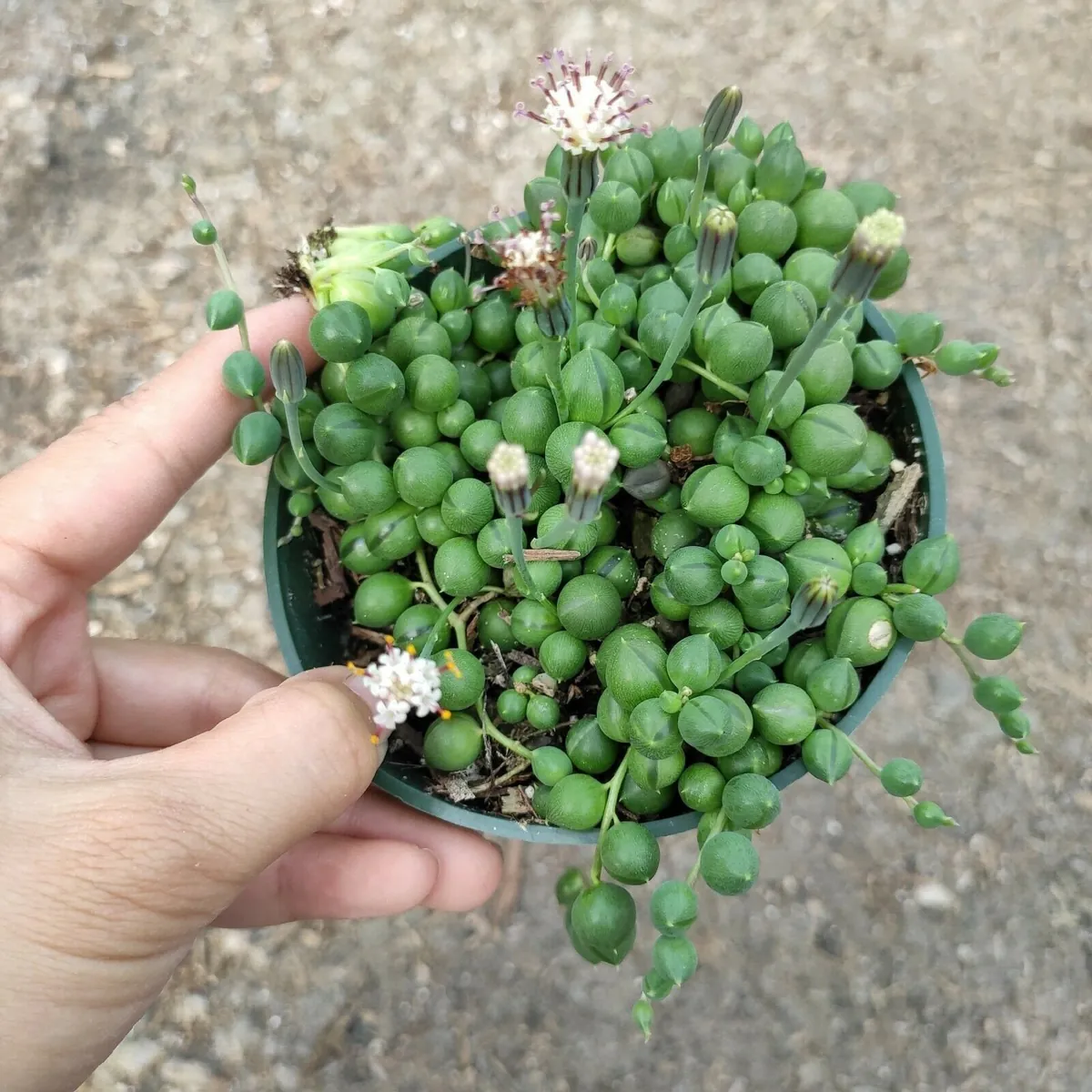
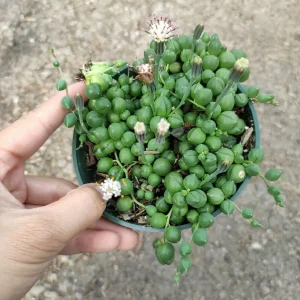
Temperature plays a role in encouraging blooms; a cool winter location between 50-59 °F (10-15 °C) is ideal for flowering, though it can also be wintered at room temperature. The minimum temperature it can tolerate is 41 °F (5 °C). Fertilization is not typically needed in the first year after purchase or repotting. Afterward, a liquid fertilizer can be applied every 4th to 8th week during its active growing season, which usually spans from spring to autumn. Any average household humidity level is generally fine for the ‘String of Pearls’, but maintaining around 50% or higher can be beneficial. Regular attention to these care tips will help you enjoy a flourishing trailing succulent for years to come.
Size & Details
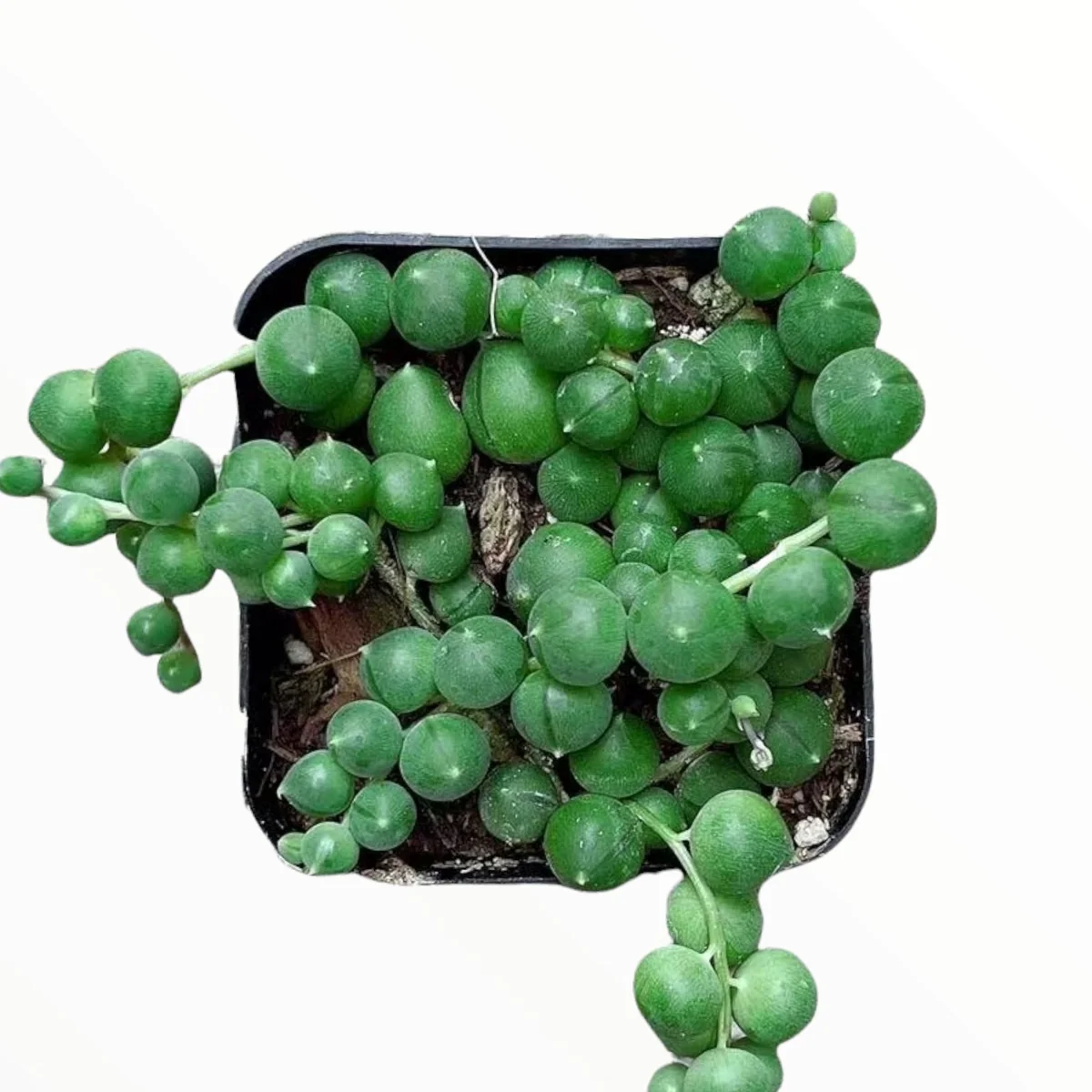
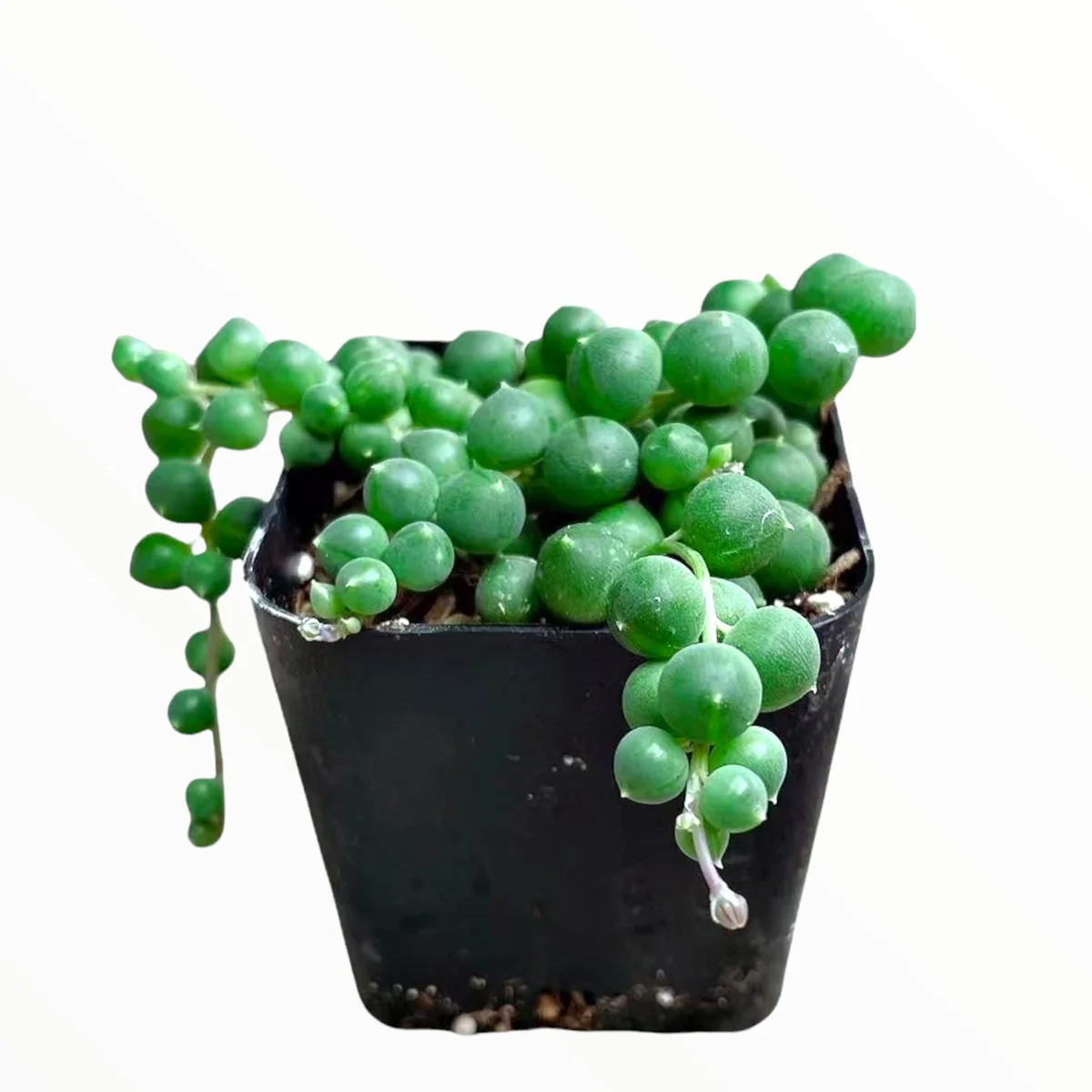
Our string of pearls succulent plant is offered in various sizes to suit your preference and display needs. Plants are typically shipped either in their nursery pots with soil (for smaller sizes like 2-inch and 4-inch pots) or as bare roots for larger specimens (6-inch and 8-inch sizes). When mature, the trailing stems can reach impressive lengths of up to three feet, creating a dramatic cascading effect. This plant exhibits a moderate to fast growth rate under ideal conditions, allowing it to quickly fill out a hanging basket or spread across a dish.
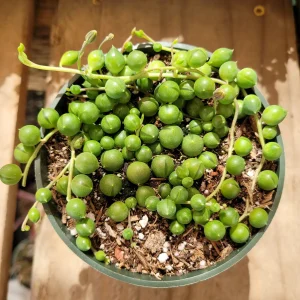
The distinctive leaves are approximately 1/4 inch in diameter, resembling small peas. The plant’s natural growth habit involves weak surface roots that allow it to spread and root where stems contact the soil. Expect to receive a plant very similar to the one pictured; however, as living organisms, slight variations in shape and color may occur. This indoor string of pearls is an excellent choice for adding a unique botanical element to your home or office, offering both beauty and relative ease of care.
Frequently Asked Questions
- Q: How big does this String of Pearls succulent plant get? A: The trailing stems of the string of pearls succulent plant can grow up to three feet long, creating a beautiful cascading effect. The individual ‘pearls’ are about 1/4 inch in diameter.
- Q: Is this an indoor or outdoor plant? A: The Senecio rowleyanus live plant is commonly grown as an indoor houseplant. It can be moved outdoors in frost-free climates during the warmer growing season, but needs gradual acclimation to direct sunlight.
- Q: How much sunlight does it need? A: This trailing succulent thrives in full to partial sunny locations indoors, or bright light directly behind a window. If kept outdoors, it prefers partial shade or dappled light to prevent sunburn.
- Q: Is this plant easy to care for? Is it good for beginners? A: Yes, the string of pearls succulent plant is considered relatively easy to care for, especially for beginners, due to its drought-tolerant nature. The key is to avoid overwatering.
- Q: What condition will it arrive in? A: Smaller 2-inch and 4-inch plants are typically shipped in their pots with soil. Larger 6-inch and 8-inch plants are usually shipped bare root to ensure their health during transit. You will receive a very similar plant to the one shown in photos.
- Q: How often should I water my String of Pearls? A: Water sparingly. Allow the soil to dry out almost completely between waterings. During winter, reduce watering frequency significantly.
- Q: What kind of soil is best for a String of Pearls? A: A well-draining soil mix is crucial. Cactus and succulent mixes are ideal, or you can amend regular potting soil with perlite, pumice, or grit to improve drainage for your indoor string of pearls.
- Q: What is the minimum temperature this succulent can tolerate? A: The minimum temperature for the string of pearls succulent plant is 41 °F (5 °C). It prefers cooler temperatures (50-59 °F) in winter if you want it to bloom.
- Q: Can I propagate my String of Pearls? A: Yes, propagation is quite easy. Simply cut a section of the trailing stem that includes several ‘pearls’ and lay it on top of moist soil, or gently press it into the soil. Roots will form where the stem touches the soil.
- Q: Why are my String of Pearls turning brown or mushy? A: Brown or mushy ‘pearls’ are typically a sign of overwatering or root rot. Ensure your soil is well-draining and allow it to dry out completely between waterings to prevent this issue with your succulent care.


Reviews
There are no reviews yet.