Overview
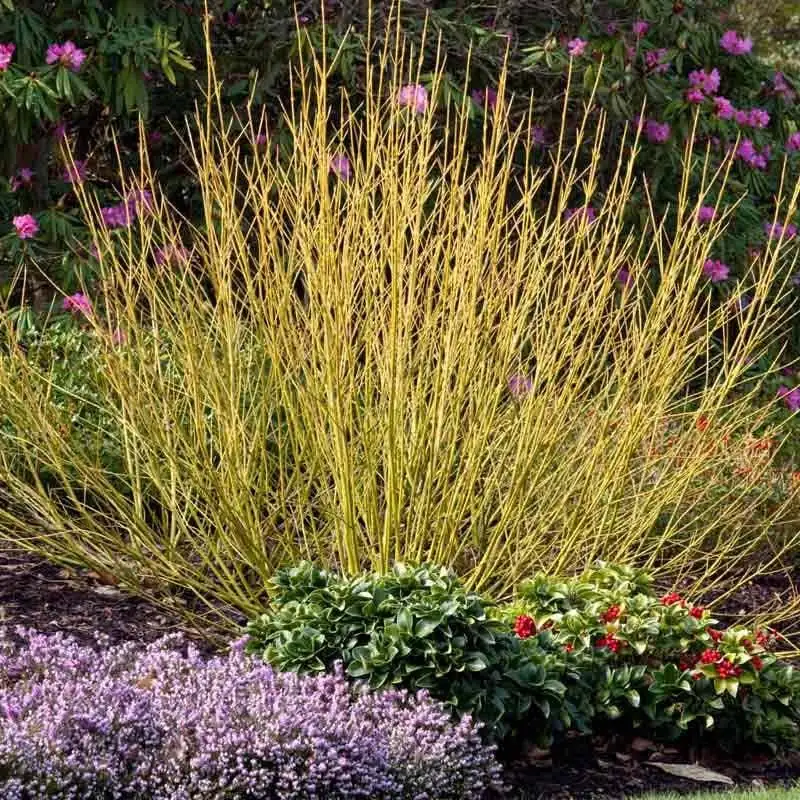
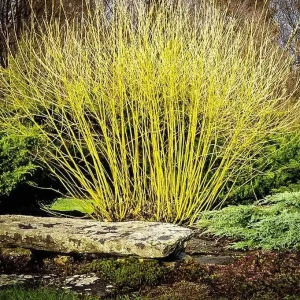
Introduce a splash of vibrant color and texture to your garden with the stunning yellow twig dogwood live plant. Also known by its botanical name, Cornus sericea ‘Flaviramea’, this deciduous shrub is celebrated for its brilliant greenish-yellow stems that offer exceptional ornamental value, particularly during the dormant seasons of fall and winter when most other plants have faded. This rapid-growing, multi-stemmed cultivar of the red twig dogwood provides year-round appeal, transitioning from lush green foliage in spring and summer to fiery reddish-orange leaves in autumn, culminating in a spectacular display of golden stems. Beyond its visual charm, the yellow twig dogwood live plant is a versatile and robust addition to any landscape, thriving in a variety of conditions and offering practical benefits like erosion control.
As a live plant, this Cornus ‘Flaviramea’ is ready to be planted directly into your garden, providing immediate impact. It is a vital component for those looking to create dynamic garden spaces that remain engaging throughout all four seasons. Its distinctive stem color makes it a focal point in winter gardens, contrasting beautifully with snow or evergreen plants. The plant’s ability to attract wildlife, such as butterflies for its creamy-white flowers and birds and small mammals for its bluish-tinged white berries, further enhances its appeal as an ecological asset in your outdoor space.
Key Benefits
The yellow twig dogwood live plant offers a multitude of benefits, making it an excellent choice for a wide range of garden designs and functional needs. Its hardiness and adaptability ensure it thrives in various settings, providing continuous beauty and environmental advantages.
- Year-Round Ornamental Interest: Enjoy vibrant golden stems in winter, dark green foliage in spring/summer, and striking reddish-orange leaves in fall. This ensures your garden remains captivating throughout the year, making it a standout feature.
- Wildlife Attraction: The creamy-white flowers attract pollinators like butterflies, while the bluish-tinged white berries provide a valuable food source for birds and small mammals, contributing to local biodiversity.
- Erosion Control: With its spreading root system, this dogwood shrub is highly effective for stabilizing soil on slopes and banks, preventing erosion and maintaining landscape integrity. This makes it an ideal choice for challenging areas in your garden.
- Adaptable & Hardy: Tolerant of various conditions, including clay soil, wet soil, and deer, this shrub is a resilient choice for many landscapes. It’s a low-maintenance option that can withstand diverse environmental pressures.
- Easy to Grow: The yellow twig dogwood live plant is relatively easy to care for, making it suitable for both novice and experienced gardeners. It establishes quickly and requires minimal intervention once settled, making yellow twig dogwood care straightforward.
- Seasonal Color: Beyond its winter stems, the changing foliage provides stunning seasonal color, from the fresh green of spring to the fiery hues of autumn. This ensures continuous visual interest and dynamic shifts in your garden’s palette.
- Specimen or Mass Planting: Whether planted as a solitary specimen to highlight its unique features or in mass for a dramatic display in naturalized areas, its versatility allows for diverse landscape applications.
Plant Care & Growing Tips
Proper yellow twig dogwood care ensures a healthy and vibrant plant, maximizing its ornamental appeal. This resilient shrub is relatively forgiving, but understanding its basic needs will help it thrive and display its best colors. It prefers organically rich and moist, well-drained soils, though it is quite tolerant of clay and even wet soil conditions. This adaptability makes it suitable for various garden settings, including rain gardens or areas with poor drainage. While it can tolerate full sun, it also performs well in part shade, particularly in hotter summer climates where some afternoon shade can prevent stress and reduce vulnerability to disease. For the most vibrant stem color, ensure the plant receives adequate light, as young stems tend to exhibit the brightest golden hues.
Watering is crucial, especially during dry spells and for newly planted specimens. Keep the soil consistently moist but not waterlogged. Once established, the shrub is more tolerant of varying moisture levels. Pruning is an important aspect of cornus sericea flaviramea maintenance, primarily to encourage the growth of new stems, which are responsible for the most intense yellow coloration. Annually, in late winter or early spring before new growth begins, remove about one-third of the oldest stems at ground level. This rejuvenation pruning stimulates fresh growth and maintains a compact, attractive form. Fertilize sparingly if your soil is already rich; otherwise, a balanced slow-release fertilizer in spring can support vigorous growth. Watch for common pests or diseases, though dogwoods are generally robust. Ensuring good air circulation and avoiding overhead watering can help prevent fungal issues.
This dogwood is known for its ability to spread by suckers, which can form thickets. If you prefer a more contained growth habit, these suckers can be easily removed. The plant is also deer tolerant, a significant advantage in many residential areas. Understanding these simple care tips will help you enjoy the beauty of your golden stem dogwood for years to come.
Size & Details
This yellow twig dogwood live plant arrives in a 4” pot, ready for planting. At maturity, this multi-stemmed shrub typically grows to a height of 5 to 6 feet with a similar spread, forming an upright habit. Its rapid growth rate means you won’t have to wait long to enjoy its full beauty. The plant is shipped as a young, actively growing specimen, carefully packaged to ensure its health upon arrival. While the leaves may be changing color or beginning to fall depending on the season, this is a natural part of its deciduous cycle and indicates a healthy, established plant ready for its new home.
The distinctive greenish-yellow stems provide a striking contrast against winter snow, making the golden stem dogwood a focal point in any cold-season landscape. Its spreading root system is excellent for stabilizing soil on slopes, offering effective dogwood shrub for erosion control. The plant will establish quickly once transplanted, and with proper care, will begin to showcase its vibrant stem color and seasonal foliage within its first year. Expect clusters of creamy-white flowers in late spring, followed by attractive bluish-tinged white berries, adding further interest to its seasonal display.
Frequently Asked Questions
- Q: How big does this yellow twig dogwood live plant get? A: This shrub typically reaches a mature height of 5 to 6 feet and can spread similarly, creating a multi-stemmed, upright form. Its rapid growth ensures it fills out quickly in your landscape.
- Q: What size pot does it come in? A: The yellow twig dogwood live plant is shipped in a 4” pot, providing a well-rooted specimen ready for immediate planting in your garden.
- Q: Is this an indoor or outdoor plant? A: This is an outdoor plant, best suited for garden beds, borders, and naturalized areas. It thrives in various outdoor conditions and is not recommended for indoor cultivation.
- Q: How much sunlight does it need? A: The yellow twig dogwood care requires full sun to part shade. For the most vibrant stem color, providing adequate sunlight exposure is beneficial, though it appreciates some afternoon shade in hot climates.
- Q: Is this plant easy to care for? A: Yes, the yellow twig dogwood is considered relatively easy to care for. It’s tolerant of various soil types and moisture levels, and its primary care involves annual pruning to maintain stem color.
- Q: What condition will it arrive in? A: Your live plant will arrive carefully packaged, healthy, and ready for planting. Depending on the season, leaves may be changing color or falling, which is normal for this deciduous shrub.
- Q: When is the best time to plant yellow twig dogwood? A: Spring or fall are generally the best times for planting, allowing the plant to establish its root system before extreme temperatures. However, with proper care, it can be planted any time the ground is not frozen.
- Q: Will it survive winter in my zone? A: The cornus sericea flaviramea is very hardy and typically thrives in USDA Zones 3-8, making it suitable for a wide range of temperate climates and ensuring it survives cold winters.
- Q: Is this a good choice for dogwood shrub for erosion control? A: Absolutely. Its spreading root system makes it an excellent choice for stabilizing soil on slopes and banks, effectively preventing erosion.
- Q: What makes the stems yellow? A: The vibrant yellow color is most prominent on young, new stems. Regular pruning encourages the growth of these new stems, ensuring a continuous display of bright golden hues, which is a key characteristic of the golden stem dogwood.


Reviews
There are no reviews yet.