




Blog Post
4 Best Indoor Ivy Plants for Your Living Space
Sep
Ivy plants are a timeless choice for indoor gardeners looking to add lush greenery and effortless elegance to their homes. Whether you want to create a cascading green corner, improve indoor air quality, or bring a natural vibe to your shelves, ivy offers incredible versatility for almost any room. In this blog, we will explore the best indoor ivy plants, to help you find the perfect greenery for your living space.
What Makes Indoor Ivy Plants So Special?
Ivy is celebrated for its graceful trailing vines and rich, architectural leaves that thrive year-round. These plants are well-loved not only for their classic aesthetic but also for their impressive adaptability to indoor environments. Beyond their beauty, indoor ivy varieties act as natural air purifiers, making your home feel fresher and more inviting.
As we explore the best types of indoor ivy plants, we’ll consider their unique characteristics, such as leaf shape, growth rate, and home decor value.
Top Indoor Ivy Plants for Your Living Space
1. English Ivy (Hedera helix)
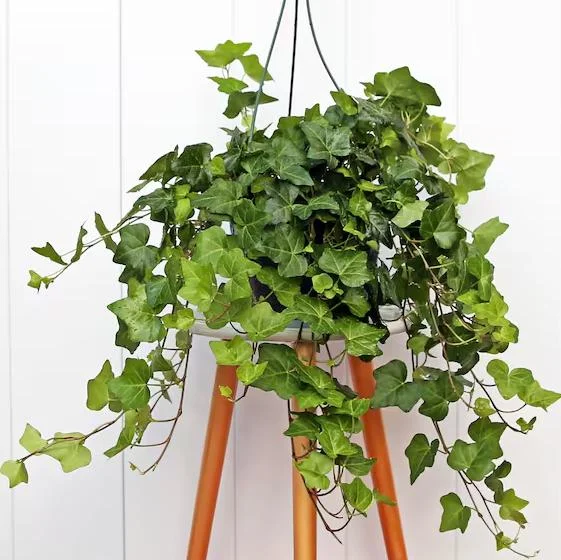
The Hedera helix, commonly known as English Ivy, is a classic favorite for home interiors. Its iconic star-shaped leaves and fast-growing vines make it an ideal choice for hanging baskets or tall bookshelves. This classic vine offers year-round charm, adding a touch of European elegance to modern living rooms. It is also known for filtering common household air pollutants, making it great for healthy indoor spaces.
Key Features:
- Foliage: Deep green, lobed leaves (variegated options available)
- Light: Bright, indirect sunlight
- Water: Prefers evenly moist soil; avoid overwatering
- Growth Habit: Vining and trailing
You may like: How to Care for English Ivy Indoors: A Complete Beginner’s Guide
2. Algerian Ivy (Hedera algeriensis)
The Hedera algeriensis, or Algerian Ivy, brings a bold, tropical feel to your indoor plant collection. Known for its extra-large, glossy green leaves and reddish stems, this species offers a striking appearance compared to its smaller cousins. Algerian Ivy is slightly more tolerant of warm, dry indoor air, making it a robust option for sunny living rooms.
Key Features:
- Foliage: Large, broad, shiny dark green leaves
- Light: Medium to bright indirect light
- Water: Keep soil slightly moist, tolerates warm indoor temperatures
- Growth Habit: Vigorous climber or trailing vine
3. Persian Ivy (Hedera colchica)
If you’re looking to make a big statement, Persian Ivy is the ideal choice for your home. Often called “Bullock’s Heart Ivy” due to its large, heart-shaped leaves, this plant thrives in spacious indoor areas. Persian Ivy features thick, leathery foliage that adds rich texture and a sense of luxury to any quiet corner or plant stand.
Key Features:
- Foliage: Large, leathery, heart-shaped green leaves
- Light: Tolerates lower light conditions better than other ivies
- Water: Moderate watering; allow topsoil to dry out slightly
- Growth Habit: Dense, cascading growth
4. Persian Variegated Ivy (Hedera helix ‘Glacier’)
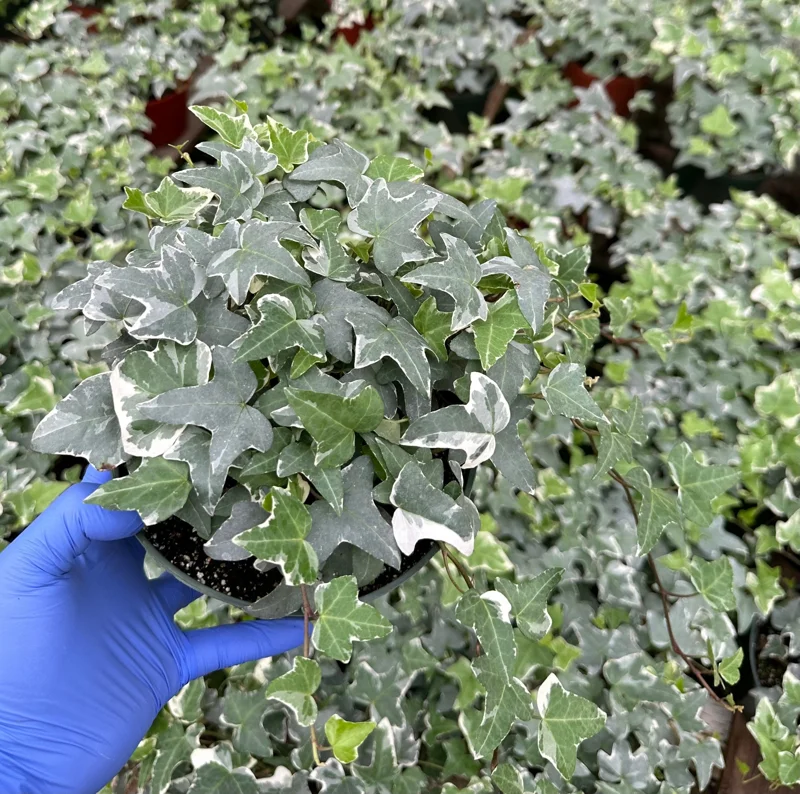
Looking for a splash of color and contrast for your interior decor? The ‘Glacier’ variety of English Ivy is a stunning addition to any room, prized for its eye-catching variegated leaves featuring silvery-green centers and creamy white edges.
This decorative ivy brings a bright, modern look to dark furniture or neutral walls. It is a compact, low-maintenance indoor plant that adds visual interest year-round. In hanging pots, its variegated vines spill over gracefully, creating a vibrant focal point in your living space.
Key Features:
- Foliage: Small green leaves with silver, grey, and creamy white accents
- Light: Bright, indirect light to maintain leaf coloration
- Water: Water when the top inch of soil feels dry
- Growth Habit: Compact trailing or climbing vine
Tips for Growing Ivy Indoors
-
Light and Placement: Indoor ivy generally thrives in bright, indirect light. Placing your plant near an east- or west-facing window ensures it receives adequate light without scorching its delicate leaves.
-
Watering and Humidity: Ivy prefers consistent moisture, but it hates soggy soil. Water thoroughly when the top inch of soil feels dry, and mist the foliage occasionally to maintain comfortable humidity levels.
-
Soil and Pruning: Plant your ivy in well-draining potting mix with a drainage hole at the bottom. Prune trailing vines regularly in spring to encourage fuller, bushier growth.
-
Protect from Pests: Keep an eye out for spider mites, which prefer dry indoor conditions. Regularly wiping the leaves with a damp cloth helps keep the plant clean and pest-free.
Decorating Your Home with Indoor Ivy
Indoor ivy plants are versatile enough to fit into any interior design style. Whether you prefer modern minimalism, bohemian chic, or classic cottage aesthetics, there’s an ivy variety that will complement your home.
Here are a few styling tips for incorporating ivy into your space: Focal Point: Place a trailing ivy on top of a tall bookshelf or mantelpiece to let the vines cascade naturally. Vertical Greenery: Train your ivy to climb a small indoor trellis or moss pole for vertical structure. Air-Purifying Corners: Combine ivy with other air-purifying indoor plants like peace lilies and snake plants for a refreshed living environment.
Frequently Asked Questions (FAQs)
-
How fast do indoor ivy plants grow? Under bright, indirect light, indoor ivy grows at a moderate to fast rate, adding up to 12–18 inches of vine length per year.
-
Can ivy grow in low-light indoor areas? While ivy can tolerate medium to low light, it grows best and maintains vibrant leaf patterns when given bright, indirect light.
-
Is indoor ivy safe for pets? Ivy foliage can be mildly toxic to dogs and cats if ingested. It is best placed in hanging planters or high shelves out of reach of curious pets.
Choosing the best indoor ivy plant for your living space allows you to enjoy lush foliage, clean air, and natural elegance every day. With minimal effort and proper placement, ivy will reward you with years of beautiful green growth. If you’re ready to refresh your home, now is the perfect time to add one of these versatile ivy plants to your decor.
For more indoor plant care tips, check out our other blog posts!
