Overview
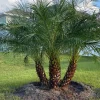
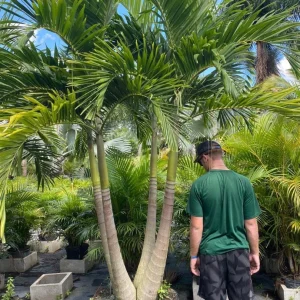
Transform your outdoor space into a tropical paradise with the addition of a beautiful Christmas Palm live plant. Also known as the Adonidia Palm or Adonidia merrillii, this ornamental palm is native to the Philippines and highly prized for its elegant appearance and festive red berries that emerge in winter. Our well-rooted 3-gallon specimen is ready to thrive in your landscape, offering an immediate impact with its slender trunk and bright green fronds. The Adonidia merrillii plant is a smaller, more manageable cousin to the Royal Palm, making it an excellent choice for a variety of settings where larger palms might be too overwhelming. It’s a fantastic focal point, perfect for accentuating pathways, patios, or even as a container plant on a sunny deck.
This Christmas Palm live plant is a true showstopper, especially during the colder months when its clusters of bright red berries provide a stunning contrast against the green foliage. It’s a popular choice for gardeners seeking a low-maintenance yet high-impact tropical tree. Whether you’re looking to create a resort-like ambiance or simply add a touch of exotic beauty, the Adonidia Palm delivers. Its graceful silhouette and vibrant seasonal colors make it a must-have for tropical and subtropical gardens across the US.
Key Benefits
Investing in a Christmas Palm live plant brings numerous advantages to your garden and home. This attractive palm offers both aesthetic appeal and ease of care, making it a favorite among plant enthusiasts. Discover the unique benefits:
-
Stunning Ornamental Value: The Adonidia Palm is renowned for its elegant, slender trunk and lush, green fronds. Its compact size and symmetrical crown make it a perfect specimen plant for focal points in your garden or patio.
-
Festive Winter Berries: True to its name, the Christmas Palm live plant produces vibrant red berries in clusters during the winter months, offering a festive and colorful display that brightens up any landscape during the holiday season.
-
Compact & Versatile Size: As a dwarf version of the Royal Palm, Adonidia merrillii is ideal for smaller gardens, courtyards, and container planting. It fits beautifully into tight spaces without overpowering the surrounding landscape.
-
Low Maintenance: This palm is relatively easy to care for, requiring minimal pruning and being largely pest-free. It’s a great option for gardeners who desire tropical beauty without extensive upkeep.
-
Adaptable to Various Conditions: While it thrives in full sun, the outdoor Christmas palm can also tolerate partial shade, offering flexibility in placement within your garden design. It prefers well-drained soil, a common requirement for many garden plants.
-
Tropical Ambiance: Instantly creates a tropical, resort-like atmosphere in your garden, enhancing the overall aesthetic and providing a sense of relaxation and exoticism.
-
Excellent Container Plant: Its moderate growth rate and relatively compact root system make it an ideal candidate for large pots and planters, allowing you to enjoy its beauty on patios, balconies, or even indoors in bright locations.
Plant Care & Growing Tips
Caring for your Christmas Palm live plant is straightforward, ensuring it remains a vibrant and healthy addition to your landscape. This palm is known for its resilience, but providing optimal conditions will encourage robust growth and abundant berry production. For best results, plant your Adonidia Palm in a location where it receives full sun to partial shade. Full sun (at least 6 hours of direct sunlight daily) will promote the most vigorous growth and berry development, but it can tolerate some afternoon shade, especially in hotter climates, which can prevent leaf scorching. When considering Adonidia palm care, proper light exposure is crucial.
Watering is key, especially during dry periods. While established palms are somewhat drought-tolerant, regular watering is recommended to keep the soil consistently moist but never waterlogged. Ensure your palm is planted in well-drained soil; sandy or loamy soils are ideal. Avoid heavy clay soils that retain too much moisture, as this can lead to root rot. If planting in a container, use a high-quality potting mix designed for palms or tropical plants. Fertilize your Adonidia merrillii plant with a slow-release palm fertilizer 2-3 times a year during the growing season (spring through fall) to provide essential nutrients and prevent deficiencies. Look for fertilizers specifically formulated for palms, often containing micronutrients like magnesium and potassium, which are vital for healthy frond development.
The Christmas Palm live plant thrives in warm, humid climates. It is not very cold-hardy and is best suited for USDA hardiness zones 10-11, where temperatures rarely drop below freezing. In areas that experience occasional dips below freezing, consider planting in a container so it can be moved indoors during cold snaps. Protect young palms from strong winds, which can damage fronds. While generally pest-free, occasionally monitor for common palm pests like spider mites or mealybugs, and address any infestations promptly with appropriate horticultural oils or insecticidal soaps. Pruning is minimal, usually limited to removing old, brown fronds to maintain its clean appearance. Understanding the specific needs of the small tropical palm will ensure its longevity and beauty in your garden.
Size & Details
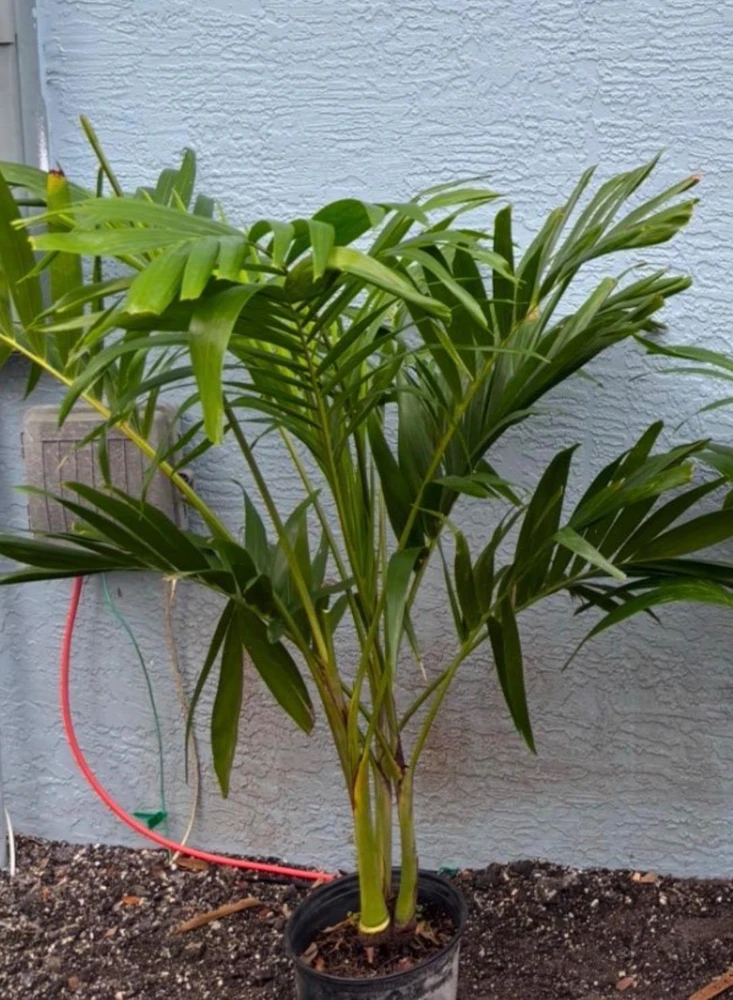
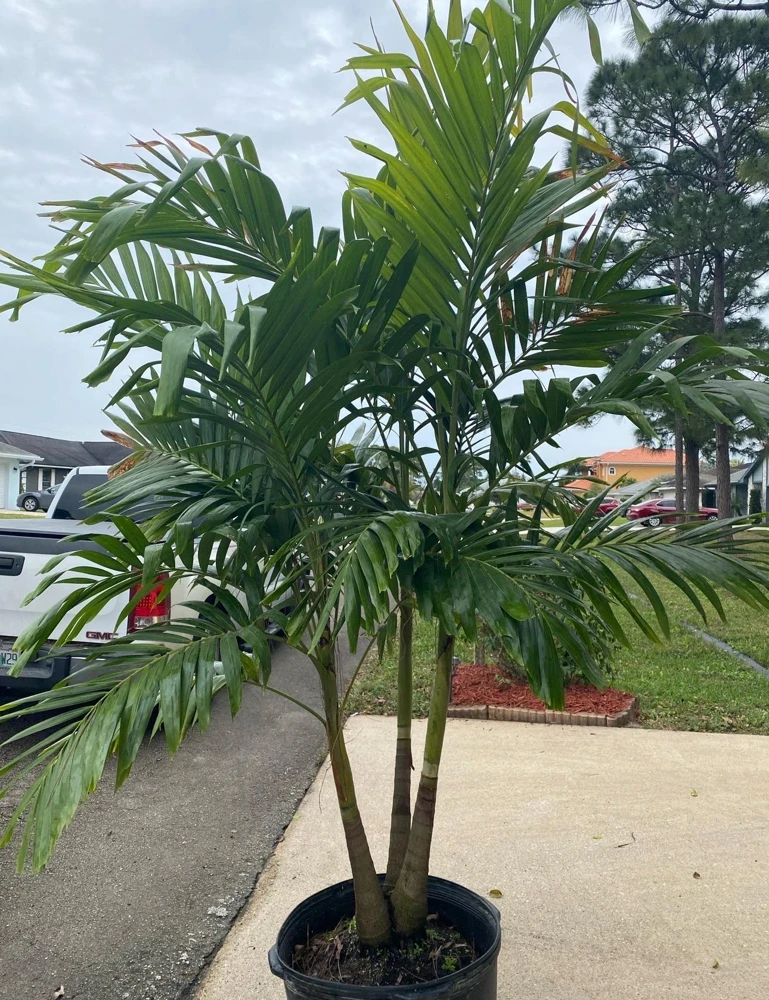
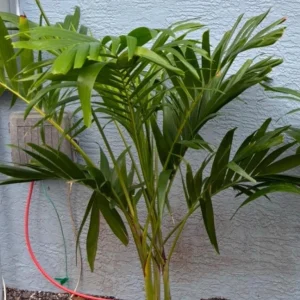
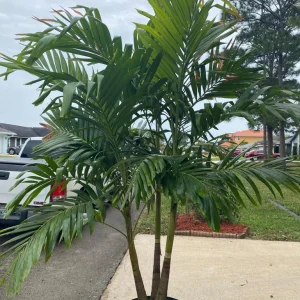
This offering is for one established Christmas Palm live plant, provided in a 3-gallon nursery pot. At the time of shipping, the plant will be well-rooted and actively growing, ready for transplanting into your garden or a larger decorative container. The typical height of a 3-gallon Adonidia Palm can range from approximately 2 to 4 feet tall (including the pot), though exact measurements may vary based on individual plant growth. This palm exhibits a moderate growth rate, eventually reaching mature heights of 15 to 25 feet in ideal outdoor conditions, with a spread of about 5 to 8 feet. When grown in containers, its size will be more restricted, making it a perfect small tropical palm for patios or indoors.
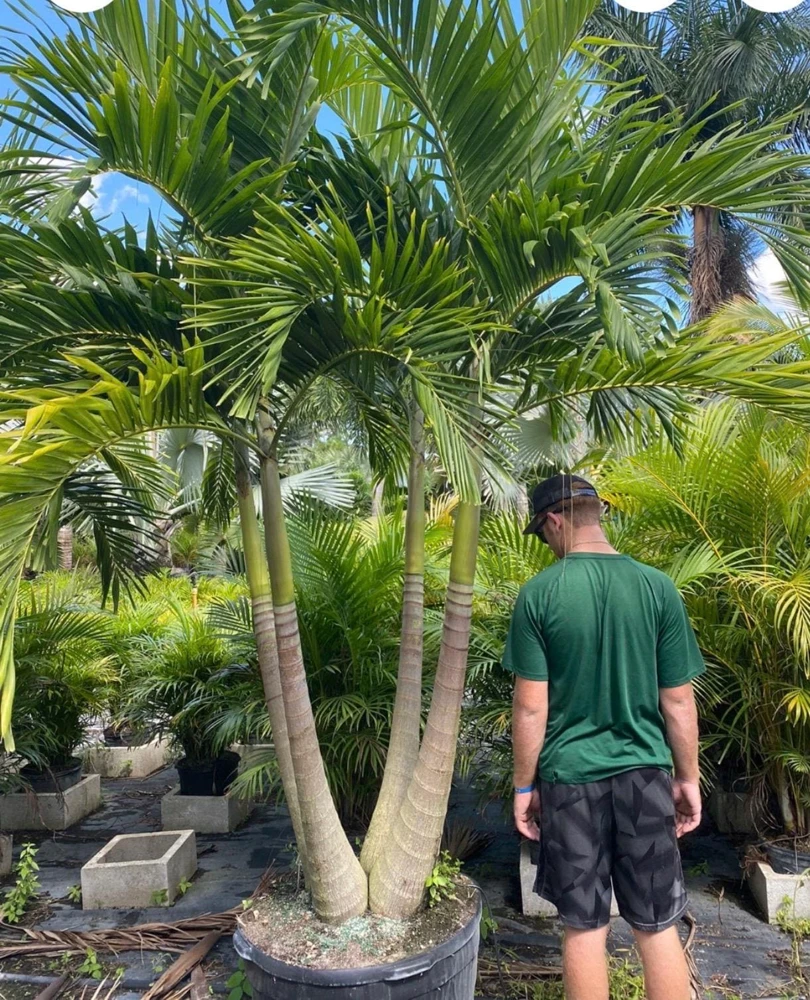
The Adonidia merrillii typically develops a single, slender trunk, though multi-trunk varieties can occur. Its pinnate fronds are bright green and gracefully arching, contributing to its elegant profile. Expect the characteristic red berries to appear on mature plants, usually in late fall to early winter, providing a stunning festive display. This palm is shipped with its root ball intact within the nursery pot, ensuring minimal transplant shock. It is a long-lived plant, capable of gracing your landscape for many years with proper care and suitable growing conditions.
Frequently Asked Questions
-
Q: How big will my Christmas Palm live plant get? A: In ideal outdoor conditions, the Christmas Palm typically grows to a mature height of 15-25 feet with a spread of 5-8 feet. If grown in a container, its size will be more restricted, making it a manageable patio or indoor plant.
-
Q: Is this an indoor or outdoor Christmas palm? A: While it can be grown indoors in a very bright location, the Christmas Palm thrives best as an outdoor plant in warm, tropical, or subtropical climates (USDA Zones 10-11). In colder zones, it can be grown in a container and brought inside during winter.
-
Q: How much sunlight does the Adonidia merrillii plant need? A: This palm prefers full sun (at least 6 hours of direct sunlight) for optimal growth and berry production. It can tolerate partial shade, especially in regions with intense afternoon sun, but too much shade will result in slower growth.
-
Q: What kind of soil is best for Adonidia palm care? A: The Christmas Palm prefers well-drained soil. A sandy or loamy soil mix is ideal. If planting in a container, use a good quality potting mix specifically formulated for palms or tropical plants to ensure proper drainage.
-
Q: How often should I water my Christmas Palm? A: Water regularly to keep the soil consistently moist but not waterlogged, especially during dry periods and in its first year of planting. Allow the top inch or two of soil to dry out slightly between waterings.
-
Q: When do the red berries appear on the Christmas Palm live plant? A: The characteristic red berries typically appear in clusters during late fall and early winter, providing a festive display that gives the palm its common name. The berries are ornamental and not edible.
-
Q: Is the Christmas Palm susceptible to pests? A: The Adonidia Palm is generally low-maintenance and relatively pest-free. Occasionally, it may encounter common palm pests like spider mites or mealybugs, which can be managed with appropriate horticultural treatments.
-
Q: What USDA hardiness zones is this small tropical palm suitable for? A: The Christmas Palm is best suited for USDA Hardiness Zones 10-11, where it can be grown outdoors year-round. It is not cold-hardy and will be damaged by freezing temperatures.
-
Q: Can I grow this plant in a pot indefinitely? A: Yes, the Christmas Palm can be successfully grown in a large container indefinitely. As it grows, you may need to repot it into a larger container every few years to accommodate its root system and provide fresh soil.
-
Q: What condition will the Christmas Palm live plant arrive in? A: Your palm will arrive well-rooted in a 3-gallon nursery pot, carefully packaged to ensure it reaches you in excellent condition, ready for planting or placement in your home or garden.


Reviews
There are no reviews yet.