Overview
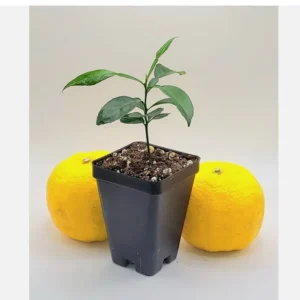
Cultivate your own exotic flavors with this vibrant sugar apple live plant. Also known as Annona squamosa, sweetsop, or custard apple, this tropical fruit tree is cherished for its uniquely delicious, segmented fruits with creamy, sweet pulp. Our healthy sugar apple live plant stands 10-14 inches tall and is ready to thrive in your garden or as a patio container plant. Originating from the American tropics, the sugar apple is a relative of the cherimoya and soursop, offering a delightful taste experience that combines notes of pineapple, mango, and vanilla. Growing your own provides the freshest, most flavorful fruit, perfect for tropical fruit enthusiasts and home gardeners looking to expand their edible landscape.
This deciduous or semi-evergreen tree is known for its relatively compact size, making it suitable for various growing environments. With proper care, your sugar apple live plant will develop into a productive specimen, gracing your space with fragrant flowers and abundant, succulent fruits. It’s an excellent choice for those who appreciate rare and delicious produce, or for anyone seeking to add a touch of the exotic to their home or garden.
Key Benefits
Growing a sugar apple live plant offers numerous rewards beyond just delicious fruit. Here are some of the key advantages:
- Delicious, Nutritious Fruit: Enjoy the sweet, custard-like flesh of fresh sugar apples, packed with vitamins C and B, and essential minerals. The unique flavor profile is a true tropical delight.
- Exotic Garden Addition: Adds a beautiful, tropical aesthetic to your garden, patio, or indoor space with its attractive foliage and unique fruit development.
- Compact Growth Habit: The annona squamosa plant typically maintains a manageable size, making it suitable for smaller gardens or container cultivation, especially when pruned.
- Fragrant Blooms: While often subtle, the flowers of the sugar apple emit a pleasant, sweet fragrance, adding another sensory dimension to your growing experience.
- Relatively Easy to Grow: Once established in warm, frost-free conditions, this plant is quite resilient and rewarding, requiring moderate care to produce fruit.
- Unique Culinary Ingredient: Beyond fresh eating, sugar apple fruit tree fruits can be used in smoothies, ice creams, desserts, and cocktails, offering versatility in the kitchen.
- A Source of Freshness: Having fresh, homegrown fruit readily available means you can enjoy the peak of flavor and nutritional value without relying on store-bought options.
Plant Care & Growing Tips
Caring for your sugar apple live plant is a rewarding experience, leading to bountiful harvests of delicious fruit. These tropical trees thrive in warm environments and require specific conditions to flourish. For sunlight, sugar apples prefer full sun, meaning at least 6-8 hours of direct sunlight per day. In very hot, arid climates, some afternoon shade can be beneficial to prevent leaf scorch. If growing indoors, place it near a south-facing window or use supplemental grow lights to ensure adequate light exposure.
Watering is crucial, especially during dry periods and when the tree is flowering and fruiting. Keep the soil consistently moist but never waterlogged. Allow the top inch or two of soil to dry out slightly before rewatering. Reduce watering during the dormant period (if deciduous). Good drainage is paramount; the annona squamosa plant does not tolerate wet feet. For soil, a well-draining, slightly acidic to neutral soil (pH 6.0-7.0) is ideal. A rich, loamy soil amended with organic matter will provide the best environment for root development. Fertilize young trees every 2-3 months with a balanced, slow-release fertilizer. As the tree matures and begins to bear fruit, switch to a fertilizer higher in phosphorus and potassium during the growing season.
The sugar apple is sensitive to cold and frost. It is best suited for USDA Hardiness Zones 9-11. In cooler zones, it must be grown in a container and brought indoors before temperatures drop below 40°F (4°C). Pruning helps maintain a desirable shape, encourages branching, and improves air circulation, which can reduce disease. Prune lightly after fruiting to remove dead or weak branches and to manage size. Watch out for common pests like mealybugs and scale insects, treating them with horticultural oil or insecticidal soap if spotted. Understanding how to grow sugar apple successfully involves consistent attention to these environmental factors.
Size & Details
This offering is for one healthy sugar apple live plant, standing approximately 10 to 14 inches tall from the base of the soil to the tip of the foliage. It is carefully grown and shipped in a half-gallon nursery pot, providing a robust root system ready for transplanting. Sugar apples are typically moderate growers, reaching a mature height of 10-20 feet in optimal conditions when planted in the ground, though they can be kept smaller through regular pruning, especially in containers. The plant will arrive with established foliage, ready to continue its growth in your care.
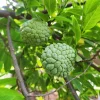
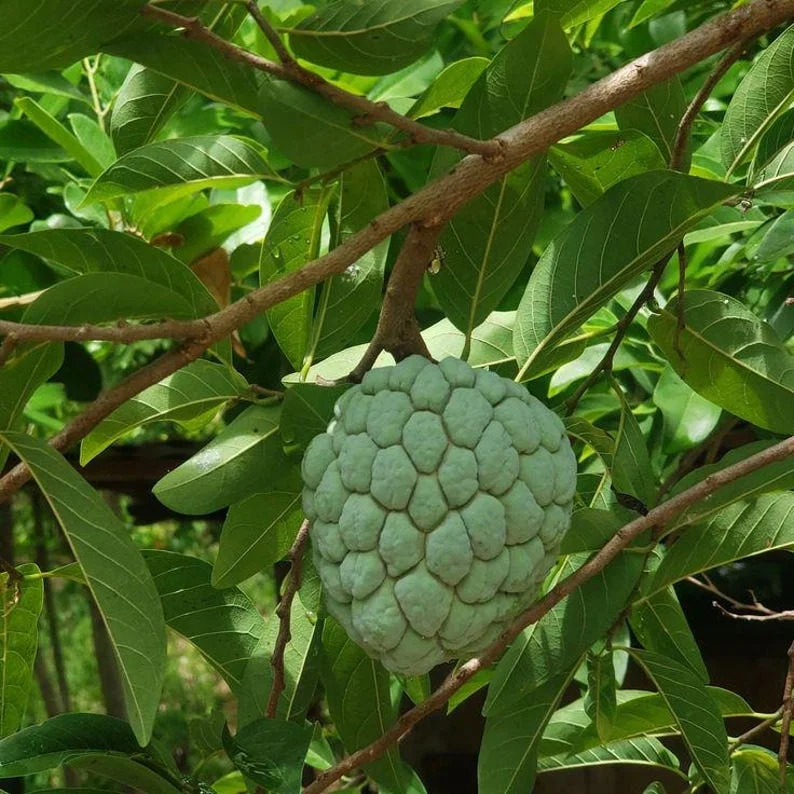
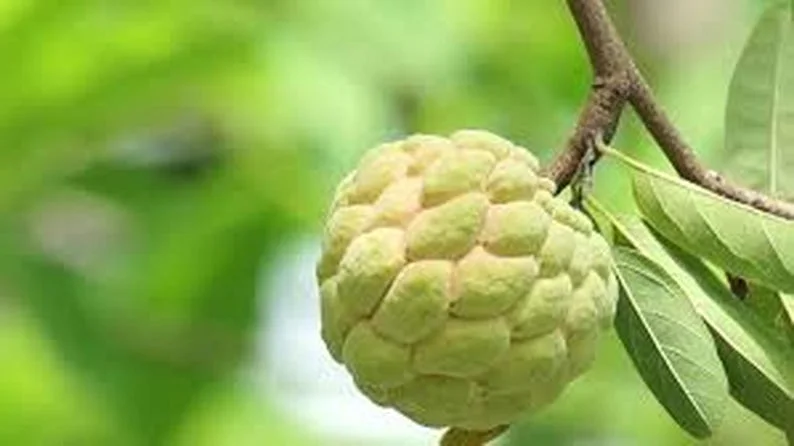
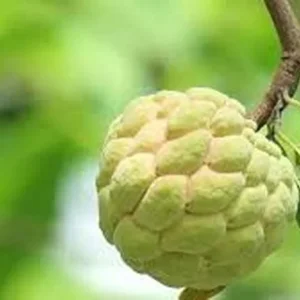
Expected time to first fruit production can vary, but typically a well-cared-for plant may start bearing fruit within 2-4 years. The fruit itself is typically round to heart-shaped, about 2-4 inches in diameter, and features a knobby, segmented skin. Each segment contains a portion of the sweet, aromatic pulp and typically a few black seeds. This size plant is perfect for establishing quickly and beginning its journey towards fruit production.
Frequently Asked Questions
- Q: How big does this plant get? A: This sugar apple live plant is currently 10-14 inches tall. In the ground, it can reach 10-20 feet, but can be maintained at a smaller size for container growing with proper pruning.
- Q: What size pot does it come in? A: The plant is shipped in a half-gallon nursery pot, ensuring a healthy and established root system for successful transplanting.
- Q: Is this an indoor or outdoor plant? A: Sugar apples thrive outdoors in USDA Zones 9-11. In cooler climates, they can be grown as container plants and brought indoors during cold weather.
- Q: How much sunlight does it need? A: This plant requires full sun, meaning at least 6-8 hours of direct sunlight daily for optimal growth and fruit production.
- Q: Is this plant easy to care for? A: With warm temperatures, consistent moisture, and good drainage, the annona squamosa plant is relatively easy to care for, especially for those familiar with tropical fruit trees.
- Q: What condition will it arrive in? A: Your plant will arrive carefully packaged, healthy, and with an established root system, ready for its new home.
- Q: Can I use sugar apple in cooking? A: Absolutely! The sweet, creamy pulp of the sugar apple is excellent fresh, in smoothies, ice cream, and other desserts. It’s a wonderful ingredient for tropical culinary creations.
- Q: How long until it blooms? A: A healthy sugar apple fruit tree typically begins to flower and fruit within 2-4 years from planting, depending on growing conditions and care.
- Q: Will it survive winter in my zone? A: Sugar apples are sensitive to frost. They will only survive outdoors year-round in USDA Zones 9-11. In colder zones, winter protection or indoor relocation is necessary.
- Q: Is it good for beginners? A: While not as simple as a houseplant, a beginner with some dedication to providing suitable tropical conditions can successfully grow and enjoy a sugar apple live plant. Researching how to grow sugar apple is highly recommended.


Reviews
There are no reviews yet.